Desert Online General Trading LLC
Dubai, United Arab Emirates
Desert Online General Trading LLC
Dubai, United Arab Emirates
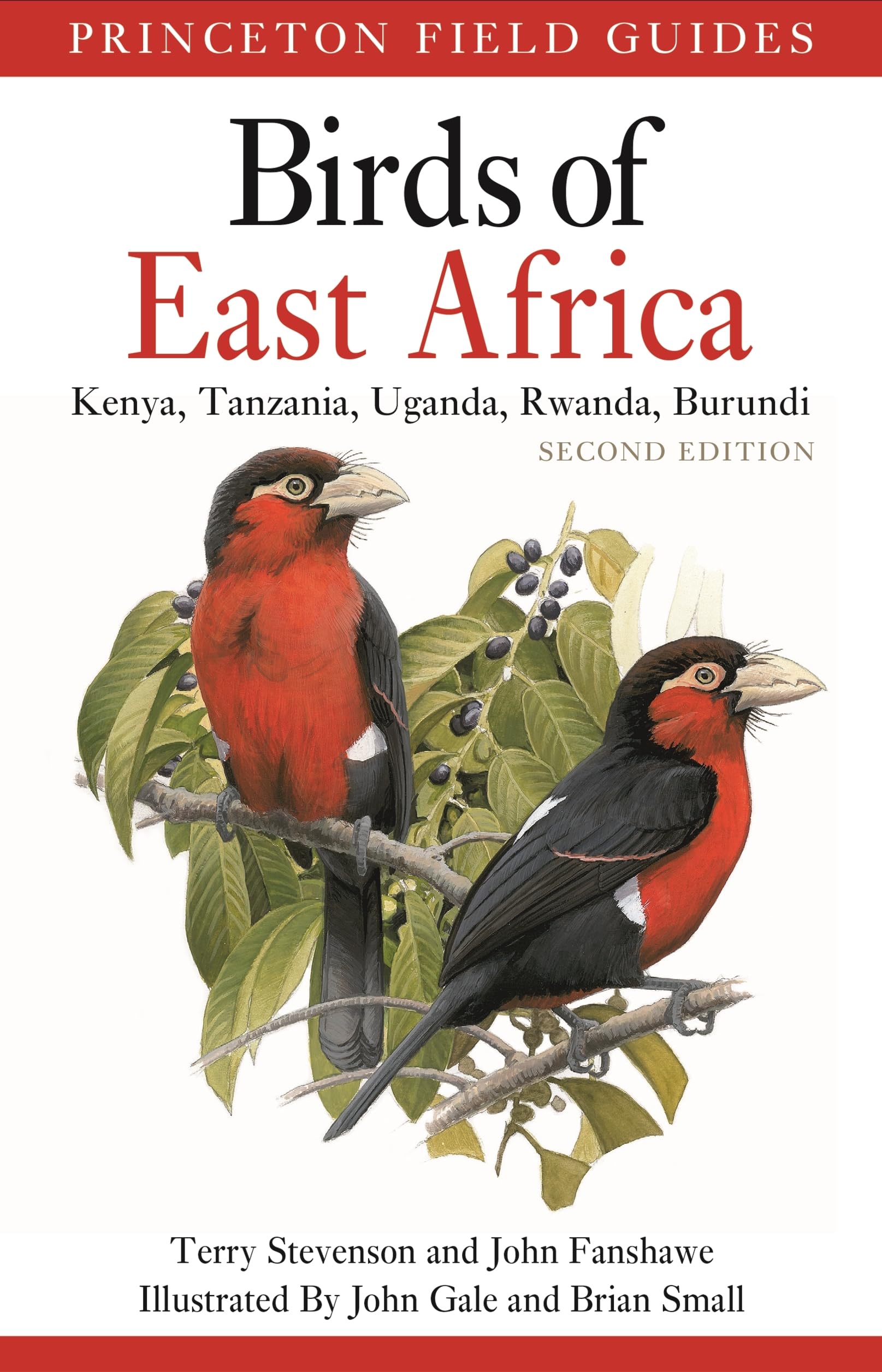
Birds of East Africa: Kenya, Tanzania, Uganda, Rwanda, Burundi Second Edition (Princeton Field Guides)

P**T
Outstanding photos of countless bird species, including variant forms
I bought this book to help me identify the birds I photographed while in Kenya and Tanzania. It's so much easier to use than doing google image searches or possible name and category searches. It's more than comprehensive enough for my purposes, and I like the organization, with photos on one page and descriptions on the facing page. It includes variant forms for gender and adult versus juvenile, which is very helpful since there can be significant differences within a species. I want a similar book for the birds I see at my bird feeders in Seattle.
W**S
Exhaustive work, not for beginners
This book is not for beginners. If you can't tell the family of what you are looking at (e.g. shrike, starling, sunbird), then this book leaves you absolutely no starting point for your bird. For those who have working knowledge of the birds, though, the information is very thorough. The spectacular color plates include several similar-looking birds, making it easy to pick your based on its field markings. On the con side, there is usually only a single "perched" pose per bird, which can make identification difficult. There is a lot of supplemental information, such as good birding spots in East Africa and endangerment status of the birds.
A**Y
Detailed and easy to use
Excellent book for identifying birds in East Africa, very easy to use
J**K
A solid guide for preparing to visit Eastern Africa
Like all Princeton guides, this one is well laid out, legible, and informative, all while keeping to a reasonably compact size. It's not going to fit in your back pocket, but that's more because of the huge amount of species in the region. The illustrations are good, and the descriptions are concise and useful. I've not gotten to visit the countries yet, but can attest that the species shared with South Africa are well-described and illustrated. If you have the good fortune to visit East Africa to go birding, this would be a good book to study on the way there (and probably for a few months before!).
C**
Just what i wanted
Thorough; good illustrations;
C**2
Comprehensive!
There are more than 1,000 bird species in Kenya alone, so you will definitely need this comprehensive guide's help. We just got back from a 10-day safari in Kenya and have more than 4,000 photographs to sort, so this hefty paperback is invaluable. I does take a bit of work because there are so many birds we saw. Very minor complaint: the blurb on the Lilac-Breasted Roller doesn't mention that is Kenya's National Bird. Highly recommended.
M**N
Comprehensive easy use
Like the title says, the sheer number of birds is astounding. The plates are done very well. Sometimes it is hard to tell which bird picture goes to which name. While the listing are pretty standard in terms of order. It seems some are out of place. For example owls are not listed with other raptors.
C**N
Not a Good Guide for Field Indetification
I purchased this volume to use in the field on a 3-week safari in Uganda. It is a very poor field guide. The plates and maps are professional and seemingly accurate, but this rant concerns its failings as an aid to identifying birds in the field. I have no idea who purchases field guides such as this. People birding on their own? Casual safari participants? People who keep world life lists? I hope that authors (who may inhabit a bubble of extreme life listers) and publishers will try harder to serve the needs of people like me. I’m increasingly inclined to take older, out of date field guides instead of purchasing new tomes such as this one that go overboard in adding the latest rare sightings.The volume covers 5 nations, and describes itself as a “comprehensive, compact book.” But it goes overboard in being comprehensive. It includes 1,448 species, which it says constitutes 70% of those in sub-Saharan Africa. If I want something that comprehensive, I’d buy a volume with 100% of the species in sub-Saharan Africa.I go typically to one country at a time, sometimes two adjacent ones. If I’m on a bird tour I might not need a field guide at all, because my professional guide will identify them for me. For those trying to sort species in the field unassisted, each species beyond the 500-600 most common in Uganda are needless and confusing. I am reasonably experienced in identifying East African birds and wrote Visions of a Vanishing Africa that recounts my adventures in hitchhiking the continent and discovering its wonderful birds 50 years ago.Weight is an issue for all travel, especially safaris. Bush planes often limit carryon weight. This volume weighs 2.5 pounds and should be pruned by half of more. By way of comparison, my Zeiss binoculars weigh 1.75 pounds and my Nikon camera and zoom lens weigh 2.75 pounds.What species can be eliminated? First, target a country. Ignore rare or extraneous species that have been seen there a handful of times. Don’t include seabirds (plates 2-6, 74, 80). I am a retired professional seabird biologist and am confident few safaris include offshore boat trips.It’s time for tailored field guides whereby the customer selects the geographical areas of interest and thereby the species to be included. Target the most common birds that may be seen. This would avoid 11 plates of 60 sunbirds, and 6 plates of 31 starling species. Technology is available to achieve this.I also wish field guides would return to the Peterson system of having the plates point out the key features to observe and wish the text to discuss similar species.Finally, I wish ornithologists would stop relentlessly changing the names of the birds. Every Ugandan guide I met complained to me about this. “Why are they doing this?” they asked. I don’t know, but it’s a form of cultural chauvinism for a handful of people on another continent to change names over and over. It can undermine interest in the birds and, at some point, undermine conserving birds and their habitats.
Trustpilot
2 days ago
1 month ago