
DOWNLOAD THE APP


Customer Services
Copyright © 2025 Desertcart Holdings Limited
DOWNLOAD THE APP
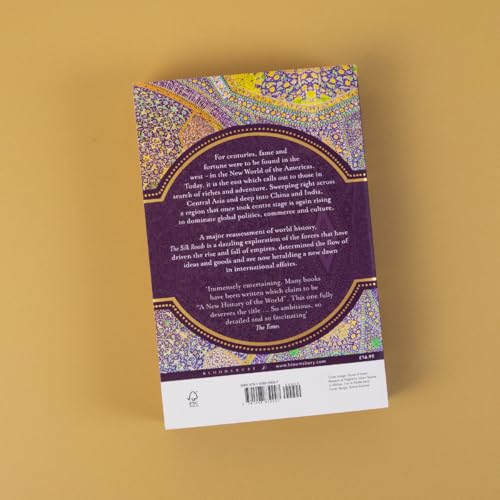
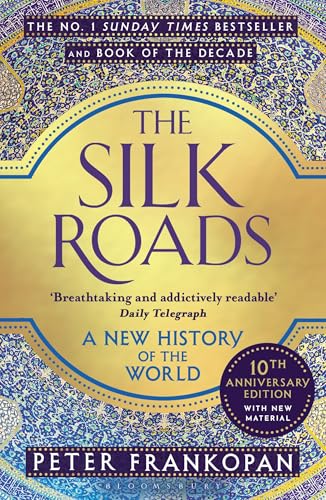
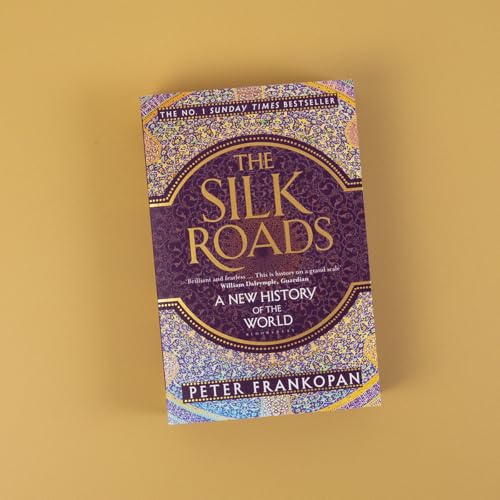


desertcart.co.jp: The Silk Roads: A New History of the World : Frankopan, Professor Peter: Foreign Language Books Review: Great read - Informative and detailed Review: 内容は非常に面白いが、地名が我々の知っている現在の地名と異なるので、一寸興味が減退する。
| Amazon Bestseller | #32,070 in Foreign Language Books ( See Top 100 in Foreign Language Books ) #615 in World History (Foreign Language Books) #5,103 in Children's Books (Foreign Language Books) |
| Customer Reviews | 4.6 4.6 out of 5 stars (9,283) |
| Dimensions | 5.04 x 1.97 x 7.72 inches |
| ISBN-10 | 1408839997 |
| ISBN-13 | 978-1408839997 |
| Language | English |
| Paperback | 736 pages |
| Publication date | June 1, 2016 |
| Publisher | Bloomsbury Publishing PLC (June 1, 2016) |
| Reading age | 10 - 13 years |
K**I
Great read
Informative and detailed
格**ん
内容は非常に面白いが、地名が我々の知っている現在の地名と異なるので、一寸興味が減退する。
K**R
タイトルの「絹の道」の「道」が複数形(roads)であることが示唆するように中国と地中海世界を結ぶ交易路は一本道ではなく、幾通りもの陸路と幾通りもの海路で結ばれていたというのが著者の認識でその幾通りもの交易路の歴史書。 アレキサンダー大王の東方遠征以前の古代ギリシャ文明全盛期には、すでにペルシャを経てインドに至る交易路は存在していたが、それ以東の中国に至る大陸横断の交易路シルクロードは紀元前119年頃に匈奴を制圧した前漢王朝の時代に中国側から扉が開かれた。 私を含めた日本人が抱くシルクロードのイメージはというと、西洋と東洋のかけ橋で文化や工芸品などが行き交う東西の交易路という平和なイメージが定着しているが、この本はそういうシルクロードの「光」の部分よりもむしろ領土や宗教や交易利権をめぐる戦争、陰謀、略奪、奴隷売買、疫病など「影」の部分を洗い出した歴史書で暗く血生臭い描写も多くロマンはほぼゼロ。 「シルクロード」は、はじめは陸路の互恵的通商路で文明の交叉路だったが、大航海時代を境に様相が一変して西洋が植民地化した東洋から富を略奪するための海路に変貌した。 かなりの紙幅を割いてキリスト教、ゾロアスター教、イスラム教、ヒンズー教、仏教等、シルクロード周辺諸国の様々な宗教を取り上げ、とりわけキリスト教やイスラム教などの教義や布教・伝道、宗教論争、宗派間の勢力争いや数次にわたる十字軍の遠征などを詳述しており、宗教史に関心の薄い方は読み疲れするかもしれません。 シルクロードというタイトルでこれだけのボリューム(本文522頁)の本でありながら、地中海沿岸や中近東諸国に割り振った紙幅に比べてインドより以東の中国を核とした東洋文明への言及があまりにも少ないと感じました。著者がアラビア語に堪能で中近東やアラブの歴史に精通しているせいなのか公平に見ても小アジアや中近東への偏りが強い。 第16章以降のざっと200頁は著しく中近東に偏ったただの近現代史。シルクロードというテーマに馴染まない話がほとんどで多くの読者が期待する内容ではないと思う。欧米列強の覇権争いやペルシャ湾岸の油田開発や第一次および第二次世界大戦、その後の冷戦等の近現代史でシルクロードというテーマから著しく逸脱して必要以上に長編になっていることは否めない。 新説を謳ってはいるが、シルクロードというテーマなのだから海路に拡大してもせいぜい大航海時代までで良いのではないか。
C**N
Superb
Surperb! brilliant! This book is extremely enjoyable and enlightening.
S**N
This is an epic book with an epic theme: the fascinating history of the cultures of the Silk Roads from ancient to modern times. Really, it's a history of the world, as it takes in events in the Americas and Africa as well. The point is well made that a Euro-centric view of the world leaves out the people and places of the utmost importance. Just one example: there were far more Christians in Asia than Europe for centuries. Author Peter Francopan delivers scholarly insight in a very readable style. His review of Western (read US) perfidy towards Islamic countries in our era aids our understanding of terrorism. He concludes by pointing out the rich renewal of the Silk Roads thanks to massive energy finds, and predicts that the centre of world power will shift back to this region. A must-read for all of us. Very enlightening.
A**I
Brilliant book, good read.
Y**O
⭐️⭐️⭐️⭐️⭐️ (5/5) „The Silk Roads“ – Weltgeschichte neu erzählt, vom Rand ins Zentrum 📌 Kurzfazit Frankopan rückt nicht Europa, sondern die Handels- und Kulturverbindungen entlang der Seidenstraßen ins Zentrum der Weltgeschichte. Von der Antike über das Mittelalter bis zur Moderne zeigt er, wie Zentralasien, Persien, China und der Nahe Osten entscheidend für Politik, Religion, Wissenschaft und Wirtschaft waren. Damit bricht er mit der klassischen westlichen Erzählung und eröffnet neue Perspektiven. 📚 Inhalt in Kürze Antike Seidenstraßen als Drehscheibe von Waren, Ideen und Religionen. Rolle des Nahen Ostens und Zentralasiens bei der Entwicklung von Weltreligionen und Wissenschaft. Bedeutung des Handels für Machtverschiebungen (von Persien über das Osmanische Reich bis Kolonialismus). Moderne „Silk Roads“: Öl, Geopolitik, neue Handelsnetzwerke (China, Russland, Naher Osten). 🔬 Wissenschaftliche Relevanz Stärken: Umfassend recherchiert, mit riesiger Quellenbasis. Greift aktuelle historiographische Trends auf: Dekolonialisierung der Geschichte, Globalgeschichte. Bietet interdisziplinäre Perspektiven (Politik, Religion, Wirtschaft, Kultur). Schwächen: Kritiker bemängeln, dass Frankopan teils zu stark vereinfacht oder dramatisiert. Einige Kapitel wirken essayistisch und weniger tief als akademische Spezialliteratur. 👉 Fazit Wissenschaft: Ein bedeutendes Werk der Globalgeschichte, das Forschungspfade populär zugänglich macht. 🌍 Kulturelle Relevanz Internationaler Bestseller, in über 30 Sprachen übersetzt. Hat die Seidenstraßen als Metapher für Globalisierung wieder populär gemacht. Politisch-kulturell aktuell, da China mit der „Belt and Road Initiative“ erneut auf die Seidenstraße Bezug nimmt. Stärker in der Öffentlichkeit rezipiert als in rein akademischen Kreisen – ein Brückenbuch zwischen Wissenschaft und Allgemeinheit. 💭 Meine persönliche Meinung 👍 Positiv: Spannend erzählt, horizonterweiternd, macht neugierig auf Regionen, die in klassischen Geschichtsbüchern oft fehlen. 👎 Negativ: An manchen Stellen spürt man die populärwissenschaftliche Zuspitzung; Leser:innen mit historischem Fachwissen wünschen sich mehr Tiefgang. Für mich: ein must-read, wenn man Weltgeschichte neu denken möchte. 🎯 Fazit The Silk Roads ist ein brillantes Werk der Globalgeschichte, das eurozentrische Narrative hinterfragt und die Seidenstraßen ins Zentrum der Menschheitsgeschichte rückt. Wissenschaftlich solide, kulturell relevant und spannend zu lesen. ⭐️⭐️⭐️⭐️⭐️ – 5 von 5 Sternen Weil: wissenschaftlich stark, kulturell hochaktuell, erzählerisch fesselnd.
R**D
Frankopan sets out to explore the ancient trading corridor, the silk road, not as a straight history but more as an analysis of the region's impact on the world. His purpose is to move beyond the standard inevitability of the rise of the west, you know, Greece-Rome-Christian Europe-Renaissance-Enlightenment-Democracy-Industrial Revolution. While the result is uneven, the book focuses in on what was at stake in each period and what it led to in a longitudinal perspective of exceptional value. It is also a riveting read, full of surprising details even for history buffs. The first quarter of the book is about the rise of various monotheisms that came to serve as the ideological underpinnings of several empires, as chosen by shrewd, perhaps cynical, leaders. However sincere the messianic founders must have been, Christianity was adopted by Constantine as a tool sustain his position as emperor; the same was true for Muslims, Zoroastrians, and others. It was a particular political context, at the end of the classical era, when military authoritarianism of vast empires decisively replaced the more chaotic city-states systems that were loosely polytheistic. Soon thereafter, the Islamic Empire was ascendant: open, eclectic, supremely confident, and militarily unstoppable. With the west fragmented and in decline, Russia and Scandinavia became most important as a source of slaves and furs, in particular to the Abassids. While there remained some export of spices and silk to Western Europe, this would grow later to huge proportions. Frankopan takes us through the Crusades, Mongol invasions, and Ottoman Empire, when the balances begin to shift back in favor of Europe. Once the Americas and new routes to the East are discovered, trade action turns away from the ancient silk road, eclipsing the region as the military balance shifts with the new technologies and techniques invested in the west. The region then becomes a place to exploit in the era of colonialism and industrialization. However, once the need for oil is recognized, Frankopan argues that it was only a matter of time before the producing countries begin to take control of their natural resources, though not after a terrible period of exploitation at the hands of the British and then the Americans, creating a legacy of distrust and bitterness that the Soviets attempt to exploit during the Cold War. Unfortunately, the region enters a terrible period of turmoil, ranging from religious ideologies to political ambitions. Nonetheless, with the industrialization of much of East Asia, there is new focus on the silk road connections, which are proliferating into vast new trading networks today. It is at this point that Frankopan makes his case that in spite of the instability and uncertainty, the balance is shifting away from the west and towards Asia. This will result, he asserts, in an entirely different historical narrative, one far away from the panglossian version of reality we indulge in in the west. This is compelling and frightening, if not yet completely convincing. Perhaps the era of western domination is ending, it is impossible to tell. Dense and beautifully written, this is a wonderful historical tour that comes with an original argument. With its unique point of view, I learned a great deal about the reasons for the Middle East upheavals and blood feuds. Recommended with enthusiasm and caution.
S**A
One of the most underrated aspects of World History comes to life through the author's research and analysis. I have ordered the book for a series of lectures in my school but now I faĺl in love with the writer.
Trustpilot
1 day ago
2 months ago