🔋 Power your off-grid lifestyle with confidence — never get caught powerless again!
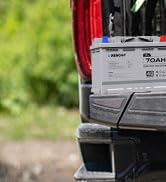
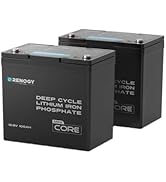
The Renogy 12V 100Ah Deep Cycle AGM Battery combines maintenance-free design with superior discharge performance and exceptional durability. Engineered with advanced valve control and a thick absorbent glass mat separator, it prevents acid leaks and reduces self-discharge to less than 3% monthly. Its unique alloy plates enable discharge currents up to 10 times the rated output, while an improved electrolyte formula guarantees reliable operation even below freezing temperatures. Ideal for RVs, marine, solar, and off-grid applications, this battery supports scalable setups with easy series or parallel connections.



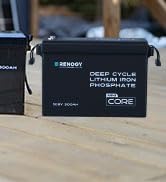



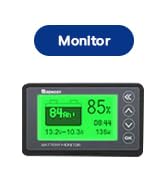
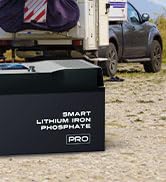
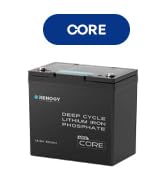
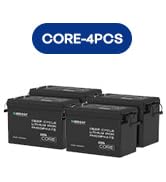
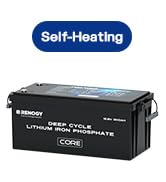
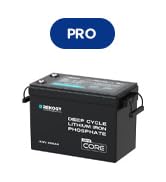

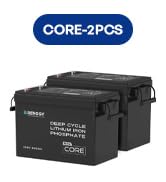
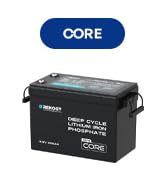








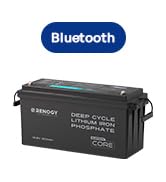

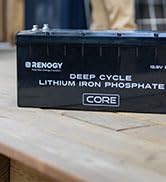


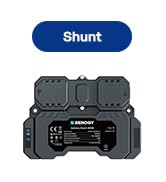
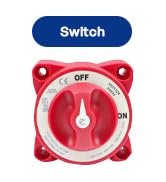
| ASIN | B075RFXHYK |
| Amperage | 50 Amps |
| Batteries | 1 12V batteries required. (included) |
| Brand | RENOGY |
| Color | gray |
| Customer Reviews | 4.4 4.4 out of 5 stars (2,074) |
| Date First Available | November 29, 2017 |
| Is Discontinued By Manufacturer | No |
| Item Dimensions L x W x H | 33.3 x 17.5 x 21.8 cm |
| Item Weight | 29 Kilograms |
| Item model number | RNG-BATT-AGM12-100-US |
| Manufacturer | Renogy |
| Model | for RV, Solar Marine and Off-grid Applications |
| Product Dimensions | 33.27 x 17.53 x 21.84 cm; 28.98 kg |
| Voltage | 12 Volts |
K**N
The battery looks very well made, perfect for my application of powering my greenhouse
K**Y
Got tired of adding water to both of my 5 year old deep discharge flooded lead acid house batteries for my RV. My battery compartment is just large enough for two Group 31 batteries and these are near in size to that so I bought two of them. It also helps that the price on Amazon is very good! They look good and were easy to install. Quality looks very good, though that's just a visual check at this point in time for me. Note that the terminals have M8 screws - if you get battery cables with M8 (5/16) lugs there will be more metal at the end vs the 3/8 holes on my previous cables which rotted away. Nice removable caps on the battery terminals which help when connecting multiple batteries in parallel. See my photo of the final installation. I bought a Victron SmartShunt IP65 along with the batteries so that I would have more confidence in the state of the batteries when boondocking without shore (120VAC) power. There is a good datasheet for this battery on the Renogy website but that does not include two parameters that can help accuracy with the Victron. So I asked Renogy customer service for the information which they quickly provided! Bravo to them for this! The two parameters and their value are : Peukert’s Constant: 1.1 and Charge Efficiency: 90% I felt that the old batteries didn't have sufficient remaining capacity - though they were originally 120Ah each. Whether that was true or not I really don't know. See below for the reasons for this and why I got the Victron monitor - which I really like. I have a Renogy Rover 30A solar charger which shows the battery voltage and some kind of state of charge (SOC) number. But the voltage on a lead acid battery is an accurate measure of SOC only if the battery has sat completely idle (i.e. disconnected) for at least 24 hours which is a non-starter when you are camping. The solar controller doesn't know how much current is being drawn from my battery pack (both the house load and solar are connected directly to the battery) so it can't calculate any kind of reasonable load drop. From what I read the loaded voltage could be 0.5 to 0.7v or more below the resting voltage as related to SOC. Hence the uncertainty with the old batteries. The shunt battery monitor is in series with the negative battery terminals so it knows all the current in/out of the battery, plus voltages and temperature. So it can calculate SOC more accurately. Note, however, that all it can calculate is the percentage of the battery capacity. If you enter 200Ah as the net capacity for the battery pack and you use 100Ah then it will show roughly 50%. But just exactly what the net remaining capacity is for a battery that is a couple of years old is a difficult question to answer. If the actual capacity has degraded to 150Ah, then that 100Ah discharge is bringing SOC down to 33% which is definitely not good. Apparently the correct way to test actual capacity is to discharge it at the spec rate (100Ah divided by 10 hours equals 10A) until the voltage drops to 10.5V. You want the current to be constant even though the voltage is varying and you definitely want to stop when you get to 10.5V and then immediately charge it up again. I don't see myself setting up such a test fixture nor do I know any place that can do this kind of test...
D**.
This battery is just what my camper needed It will run the furnace fan through the night. Holds a charge as advertised and responds to a solar panel charge to reach full capacity easily. It is reasonably heavy, but that's what I have gotten used to in rv batteries. The price is acceptable now.
S**N
Pour chalet et alimenté par panneau solaire et très bon prix 🥇
K**F
Couldn't pass up the sale but now will evaluate "longevity" and "value for money"
Trustpilot
2 weeks ago
2 weeks ago