We remain fully operational. Our teams are working around the clock to ensure your deliveries continue safely.

DOWNLOAD THE APP


Customer Services
Copyright © 2025 Desertcart Holdings Limited
DOWNLOAD THE APP
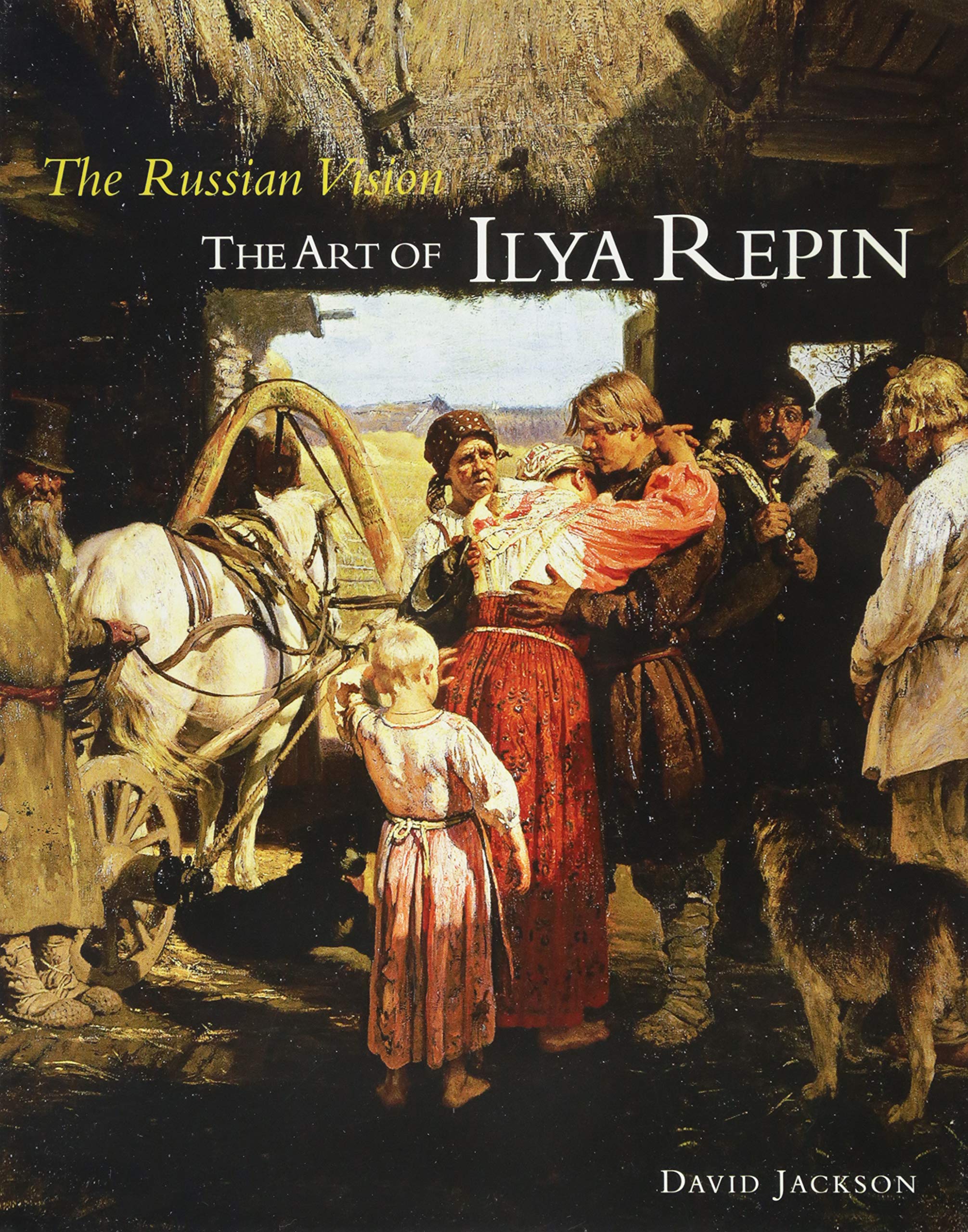
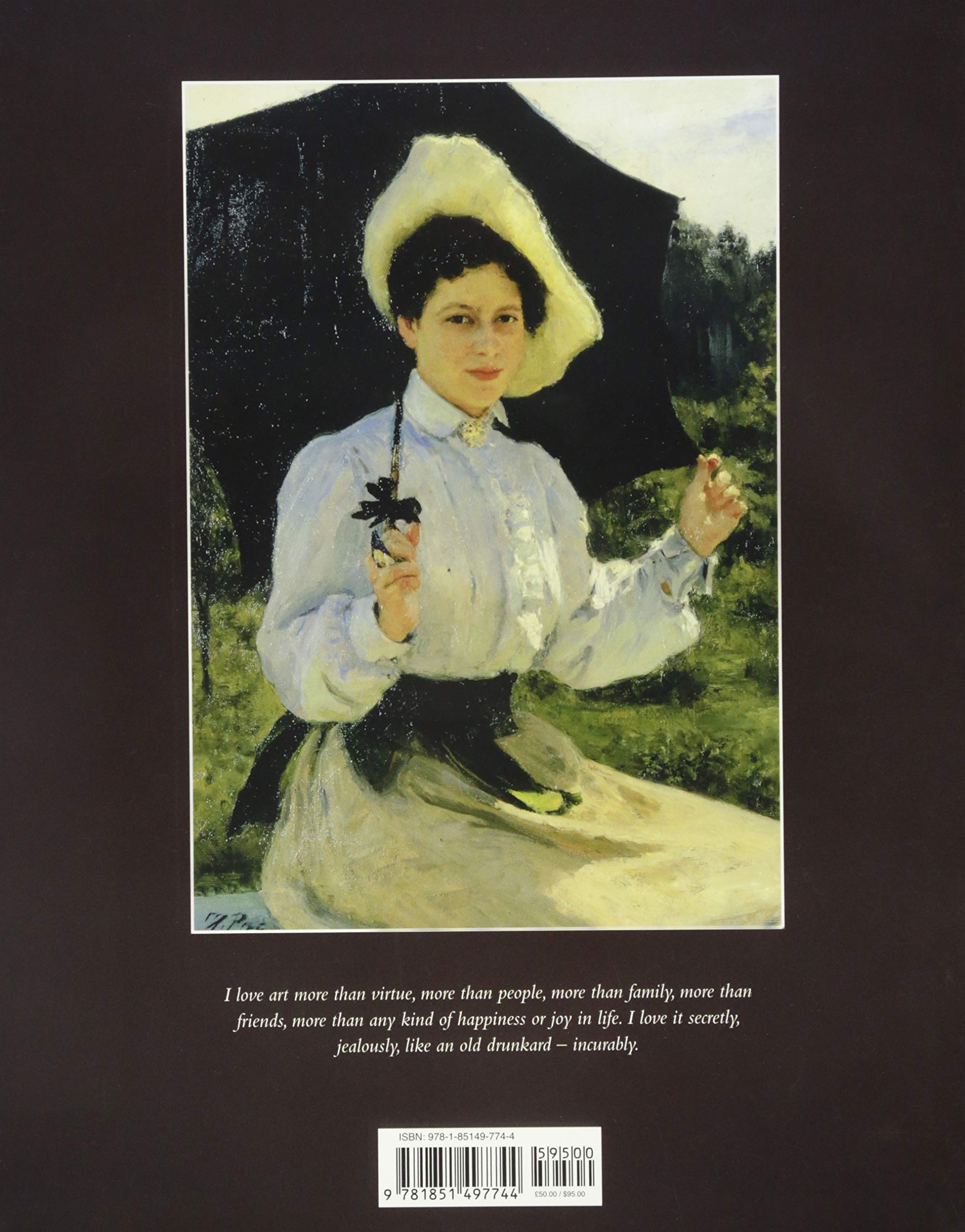
Buy The Russian Vision the Art of Illy Repine Revised by Jackson, David (ISBN: 9781851497744) from desertcart's Book Store. Everyday low prices and free delivery on eligible orders. Review: Simply magnificent - Ilya Efimovich Repin, 1844-1930, born of peasant stock in Tchuguev, Ukraine, and, trained as an icon painter as a boy. He entered the St. Petersburg Academy of Arts in 1863, and was friendly with Ivan Kramskoi and other young artists who reacted against academic art and asserted the high public duty of the artist, principles of realism, and supported the moral substance and nationality of art. Kramskoi went on to become one of the main founders and ideologists of the Company of Itinerant Art Exhibitions (Peredvizhniki). After painting his first great works, “Christ Raising Jairus’ Daughter from the Dead”, 1871, and “Barge Hauling on the Volga”, 1870-73, the artist travelled to Italy and France, remaining in Paris until 1876 [“A Beggar-Girl, Veules”, 1874, “A Parisian Café”, 1875, “A Negro Woman”, 1875-76 and “Sadko in the Underwater Kingdom”, 1876]. The artist, most of whose works are in Russian collections, went on to paint psychologically-insightful portraits of notables, including “Ivan Turgenev”, 1874, the storyteller “Vasily Shchegolenkov”, 1979, the writer “Aleksei Pisemsky”, 1880, composer “Modest Mussorgsky”, 1881, art critic “Vladimir Stasov”, art collector “Pavel Tretyakov”, both 1883, and the student “Lidiya Kuznetsov”, 1901, a detail of which is shown on the front cover. Most famously, he painted a number of portraits of Tolstoy, “Leo Tolstoy” and “Leo Tolstoy Ploughing”, both 1887, “Leo Tolstoy in the Forest” and “Leo Tolstoy Barefoot”, both 1891, and “Tolstoy in the Pink Armchair”, 1909. Repin also painted many ordinary people, “The Archdeacon”, “A Cautious One” and “A Peasant with an Evil Eye”, all 1877, and portraits of his family, “Portrait of Vera Shevtsova”, later the artist’s wife, 1869,“Portrait of Vera Repin”, his daughter, 1874, “Portrait of Vera Repin”, his wife, 1875, “Girl with a Bunch of Flowers, Vera Repin”, 1878, “On a Park Bridge”, 1879, “Portrait of Nadya Repin”, 1881, “Vera Repin Resting” and “Portrait of Yuri Repin”, both 1882, “A Lively Girl, Vera Repin”, 1884, “Self-Portrait”, 1887, “Autumn Bouquet, Portrait of Vera Repin”, 1892, “In the Sunlight, Portrait of Nadya Repin”, 1900, and “A Study, Family Portrait”, 1905. His genre works reflected the religious faith of the Russians [“Religious Procession”, 1877, and “Krestny Khod (Religious Procession) in Kursk Gubernia”, 1880-1883] and the lifestyles and social ills of the country in the last decades of the 19th-century [“He Returned”, 1877, “Going Home, A Hero of the Last War”, 1878, “Arrest of a Propagandist”, 1880-92, “Vechornitsky”, 1881, “A Secret Meeting”, 1883, “Revolutionary Woman Awaiting Execution”, c. 1884, ”They did not Expect Him, 1884, “Refusal of the Confession”, 1879-1885, “Death of a Migrant Peasant”, 1889, and “They did not Expect Her, 1883”, 1898]. He painted only a few historical works, notably “Tsarevna Sofya”, 1879, “The Reply of the Zaporozhian Cossacks to Sultan Mahmoud IV”, 1880-1891, and “Ivan the Terrible and his son Ivan”, 1895. The last quarter of the 19th century was the artist’s most fruitful period, when he regularly visited Abramtsevo, the country estate of Savva Mamontov, one of the most famous contemporary Russian collectors. Although he continued to work well into the 20th-century he did not paint any masterpieces in his later years [“Portrait of Aleksandr Kerensky”, 1917, “Golgotha”, 1922, and “Gopak, Dance of the Zaporozbye Cossacks”, 1927]. From the early 1900s the artist experienced problems with his right, painting, hand and increasingly used his left. He also designed a palette that hung from his shoulder to facilitate long periods of work. In this profusely illustrated book David Jackson explores the artist’s life and work in illustrated chapters that address ‘Rural Beginnings and the Road to St Petersburg’; ‘A Russian in Paris: Foreign Travels and Reactions to Western Art’; ‘History Painting: Interrogating the Past’; ‘Peasant Life: Contemporary Russia’; ‘’Political Paintings: The Art of Dissent’; ‘Portraiture: The Face of Russia’; ‘Modern Times: Artistic Innovations in the 1890s and Beyond’; ‘Repin at Penaty 1907-1930: Recurring Themes and Stylistic Changes’ and ‘Conclusion: Truth to Life’. There is also a Chronology, Select Bibliography, List of Illustrations and an Index. There are 118 colour reproductions, mostly by Repin but including paintings by other contemporary Russian artists [including Perov, Surikov, Perov, Ivanov, Vasnetsov and Kramskoi] together with contemporary photographs. In his Introduction, the author speculates on the reasons for Repin’s declining reputation in the 20th-century both in Russia and the West. Since the break-up of the USSR, Repin’s work is much more accessible, being shown in Russian museums, exhibited widely and included in many art books. In the West, the Groninger Museum hosted a groundbreaking exhibition, ‘Ilya Repin, Russia’s Secret’, in 2001-02, and all these, together with this sumptuous book, have helped to restore the artist to his rightful position. Review: Great book on a truly great Russian artist - Beautifully illustrated with pictures, drawings and photographs, a book of this quality on the historically very important artist Ilya Repin is well overdue. An artist of Repin's calibre deserves to be better known outside of his native Russia. I had never heard of him until I visited the Russian art museum in St Petersburg last year and I just had to learn more. Well done to David Jackson for producing this fabulous book.
| Best Sellers Rank | 6,470 in Individual Artists 12,087 in Art History & Criticism |
| Customer reviews | 4.2 4.2 out of 5 stars (19) |
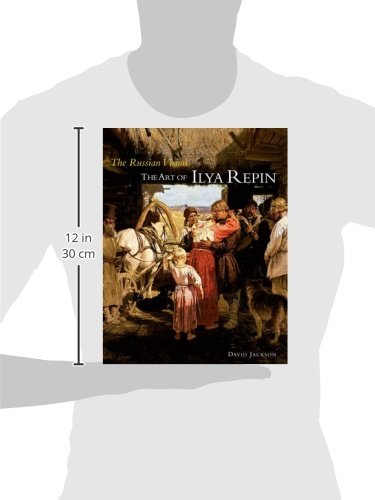
| Dimensions | 24.38 x 2.41 x 30.84 cm |
| Edition | Revised |
| ISBN-10 | 1851497749 |
| ISBN-13 | 978-1851497744 |
| Item weight | 1.61 kg |
| Language | English |
| Print length | 216 pages |
| Publication date | 23 Sept. 2015 |
| Publisher | ACC Art Books |
D**R
Simply magnificent
Ilya Efimovich Repin, 1844-1930, born of peasant stock in Tchuguev, Ukraine, and, trained as an icon painter as a boy. He entered the St. Petersburg Academy of Arts in 1863, and was friendly with Ivan Kramskoi and other young artists who reacted against academic art and asserted the high public duty of the artist, principles of realism, and supported the moral substance and nationality of art. Kramskoi went on to become one of the main founders and ideologists of the Company of Itinerant Art Exhibitions (Peredvizhniki). After painting his first great works, “Christ Raising Jairus’ Daughter from the Dead”, 1871, and “Barge Hauling on the Volga”, 1870-73, the artist travelled to Italy and France, remaining in Paris until 1876 [“A Beggar-Girl, Veules”, 1874, “A Parisian Café”, 1875, “A Negro Woman”, 1875-76 and “Sadko in the Underwater Kingdom”, 1876]. The artist, most of whose works are in Russian collections, went on to paint psychologically-insightful portraits of notables, including “Ivan Turgenev”, 1874, the storyteller “Vasily Shchegolenkov”, 1979, the writer “Aleksei Pisemsky”, 1880, composer “Modest Mussorgsky”, 1881, art critic “Vladimir Stasov”, art collector “Pavel Tretyakov”, both 1883, and the student “Lidiya Kuznetsov”, 1901, a detail of which is shown on the front cover. Most famously, he painted a number of portraits of Tolstoy, “Leo Tolstoy” and “Leo Tolstoy Ploughing”, both 1887, “Leo Tolstoy in the Forest” and “Leo Tolstoy Barefoot”, both 1891, and “Tolstoy in the Pink Armchair”, 1909. Repin also painted many ordinary people, “The Archdeacon”, “A Cautious One” and “A Peasant with an Evil Eye”, all 1877, and portraits of his family, “Portrait of Vera Shevtsova”, later the artist’s wife, 1869,“Portrait of Vera Repin”, his daughter, 1874, “Portrait of Vera Repin”, his wife, 1875, “Girl with a Bunch of Flowers, Vera Repin”, 1878, “On a Park Bridge”, 1879, “Portrait of Nadya Repin”, 1881, “Vera Repin Resting” and “Portrait of Yuri Repin”, both 1882, “A Lively Girl, Vera Repin”, 1884, “Self-Portrait”, 1887, “Autumn Bouquet, Portrait of Vera Repin”, 1892, “In the Sunlight, Portrait of Nadya Repin”, 1900, and “A Study, Family Portrait”, 1905. His genre works reflected the religious faith of the Russians [“Religious Procession”, 1877, and “Krestny Khod (Religious Procession) in Kursk Gubernia”, 1880-1883] and the lifestyles and social ills of the country in the last decades of the 19th-century [“He Returned”, 1877, “Going Home, A Hero of the Last War”, 1878, “Arrest of a Propagandist”, 1880-92, “Vechornitsky”, 1881, “A Secret Meeting”, 1883, “Revolutionary Woman Awaiting Execution”, c. 1884, ”They did not Expect Him, 1884, “Refusal of the Confession”, 1879-1885, “Death of a Migrant Peasant”, 1889, and “They did not Expect Her, 1883”, 1898]. He painted only a few historical works, notably “Tsarevna Sofya”, 1879, “The Reply of the Zaporozhian Cossacks to Sultan Mahmoud IV”, 1880-1891, and “Ivan the Terrible and his son Ivan”, 1895. The last quarter of the 19th century was the artist’s most fruitful period, when he regularly visited Abramtsevo, the country estate of Savva Mamontov, one of the most famous contemporary Russian collectors. Although he continued to work well into the 20th-century he did not paint any masterpieces in his later years [“Portrait of Aleksandr Kerensky”, 1917, “Golgotha”, 1922, and “Gopak, Dance of the Zaporozbye Cossacks”, 1927]. From the early 1900s the artist experienced problems with his right, painting, hand and increasingly used his left. He also designed a palette that hung from his shoulder to facilitate long periods of work. In this profusely illustrated book David Jackson explores the artist’s life and work in illustrated chapters that address ‘Rural Beginnings and the Road to St Petersburg’; ‘A Russian in Paris: Foreign Travels and Reactions to Western Art’; ‘History Painting: Interrogating the Past’; ‘Peasant Life: Contemporary Russia’; ‘’Political Paintings: The Art of Dissent’; ‘Portraiture: The Face of Russia’; ‘Modern Times: Artistic Innovations in the 1890s and Beyond’; ‘Repin at Penaty 1907-1930: Recurring Themes and Stylistic Changes’ and ‘Conclusion: Truth to Life’. There is also a Chronology, Select Bibliography, List of Illustrations and an Index. There are 118 colour reproductions, mostly by Repin but including paintings by other contemporary Russian artists [including Perov, Surikov, Perov, Ivanov, Vasnetsov and Kramskoi] together with contemporary photographs. In his Introduction, the author speculates on the reasons for Repin’s declining reputation in the 20th-century both in Russia and the West. Since the break-up of the USSR, Repin’s work is much more accessible, being shown in Russian museums, exhibited widely and included in many art books. In the West, the Groninger Museum hosted a groundbreaking exhibition, ‘Ilya Repin, Russia’s Secret’, in 2001-02, and all these, together with this sumptuous book, have helped to restore the artist to his rightful position.
E**H
Great book on a truly great Russian artist
Beautifully illustrated with pictures, drawings and photographs, a book of this quality on the historically very important artist Ilya Repin is well overdue. An artist of Repin's calibre deserves to be better known outside of his native Russia. I had never heard of him until I visited the Russian art museum in St Petersburg last year and I just had to learn more. Well done to David Jackson for producing this fabulous book.
M**)
油彩画 約116点 デッサン16点程掲載されている。 初めて見る作品もあり素晴らしい技術に感銘する。 ボルガの船曳のエチュードもあり、作品の制作する為の試行錯誤が見える。 デッサンも素晴らしく、船曳の男の作品は、肌の色を感じさせる。 モデルを前にして制作中の写真があるが、100号ほどの大きさがあると思うが キャンバスにデッサンして、油で制作途中もあり参考になる。アトリエも非常に大きい。 アレクセイ・ピセムスキーの作品がいいと思う。 イワン・クラムスコイやその同時代の画家の作品も掲載されている。
R**M
Excellent text and pictures. Well written and a pleasure to view.
R**N
To those of you (us) artist looking for inspiration away from the shrill squeal of Koons, Hirst, etc., take heart. There is art available to inspire as never before. This book is the perfect example of inspiration. Ten years ago Repin was all but unknown to most of us in the west. Thanks to a groundbreaking show in 2002 at the Groninger Museum in Holland his genius has been exposed to the rest of the world. Now we have this wonderful resource. I count about 100 color reproductions in this books. Of that 100, I would say that about six are below standard. Most are in the good to excellent range. That assessment might change were I to be standing in front of the paintings with the book in hand. But I, like most of the reviewers here, will most likely never be in the presence of the originals. My guess is that we might be very disheartened by most of our art books were we to judge their reproductions by the originals. If you are worried about the quality of the reproductions, do not. Repin is rightly held in the highest esteem for his portrayal of personalities in his portraits and his dramatic compositions in many of his large historical work. His portraits are stunning! The book does an outstanding job of reproducing some of his best. To top it all off, the book is very readable. No deconstruction. No revelations regarding his sexual life. The text follows a thematic approach as opposed to a strait biography. The author quite clearly states his reason for writing the book: "The purpose of this book then is simple if ambitious; to place Repin back in the public arena and to re consolidate a formidable and once familiar talent within the discipline of art history." Well done Dr Jackson! For those of you who like Serov, Kroyer, Zorn, Zuloaga, Sorolla, Degas, Sargent, Mancini, etc., you will really appreciate this book on Repin!
M**E
Très bien illustré et mettant en perspective l'entourage et les influences de Repine, ce bouquin est d'autant plus incontournable qu'il y a peu de choses accessibles hors langue russe sur les peintres de la Russie. Je ne mets pas 5 étoiles car, bien que maîtrisant correctement la langue anglaise, j'ai trouvé que l'auteur était parfois confus dans son propos.
P**T
Text is great, but as this an older print the images of the paintings fail to bring out the richness of Repins brushstrokes
Trustpilot
1 month ago
2 weeks ago