🔋 Power your freedom—wherever life takes you!
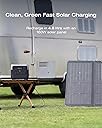
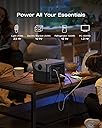
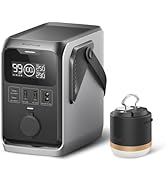
The EF ECOFLOW RIVER 2 Pro is a cutting-edge 768Wh portable power station paired with a 160W foldable solar panel, featuring a durable LiFePO4 battery with 3000+ cycles, rapid 70-minute AC recharge, and 1600W peak output across 11 versatile ports. Designed for professionals and adventurers alike, it offers reliable, clean energy on the go with smart app control and rugged, lightweight portability.












| ASIN | B0BYS84V1P |
| Batteries Required | No |
| Brand | EF ECOFLOW |
| Colour | Black |
| Customer Reviews | 4.5 4.5 out of 5 stars (239) |
| Date First Available | 29 May 2023 |
| Does it contain liquid? | No |
| Engine Displacement | 79 Cubic Centimetres |
| Engine Power Maximum | 1600 Watts |
| Engine Type | 4 Stroke |
| Fuel Type | Solar |
| GSM frequencies | 60 Hz |
| Generic Name | Portable Power Station |
| Included Components | RIVER 2 Pro, 160W Portable Solar Panel, Kickstand Case, AC Charging Cable, Car Charging Cable, DC5521 Cable, User Manual, and a 5-Year Service. |
| Item Weight | 7 kg 800 g |
| Item model number | EFR620 |
| Manufacturer | EF ECOFLOW |
| Model | EFR620 |
| Model Name | EFR620 |
| Number of Ports | 4 |
| Output Wattage | 800 |
| Power Source | Battery Powered ft, Solar Powered |
| Product Dimensions | 25.7L x 21.6W x 26.7H Centimeters |
| Recommended Uses For Product | Camping |
| Running Wattage | 800 Watts |
| Special Feature | Portable |
| Special Features | Portable |
| Starting Wattage | 1600 Watts |
| Total Power Outlets | 11 |
| UPC | 842783126344 |
| Voltage | 120 Volts |
| Wattage | 1600 Watts |
S**R
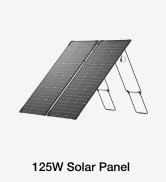
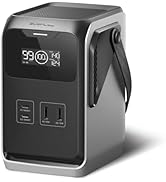
This is a review of the Ecoflow River 2 Pro Portable Power Station and 160 Watt Portable Solar Panel package deal, purchased in 2024 for use in North America Important: The solar panel and Power station are shipped separately from different locations and will probably arrive on different days. I received an email informing me about this after placing my order. In my case the solar panel arrived about a week before the power station. The day the power station was supposed to arrive, I got a message that they were out of stock and it would be delayed by two weeks, and they offered me a link to cancel the order and get a refund if I didn't want to wait. Despite that message, the power station actually arrived the next morning. Two weeks later a third package arrived containing a cable to connect the solar panel to the power station. The solar panel package already included this cable, so now I have two. Solar Panel: When folded up and in the included carrying bag it is about 60cm by 60cm (2ft by 2ft) and weighs about 5kg (11 pounds). Unfolded it is about 60cm tall by 2m wide (2ft tall by 6ft wide). It has two built-in metal kickstands to hold it at the proper angle to the sun. The panel has built-in cables about 1m (3ft) long with standard male/female connectors. Another 2m (6ft) cable was included that has male/female connectors on one end and the plug that fits in the power bank on the other end. Using only the included cables, the power bank has to be within 3m (9ft) of the solar panel. I ordered a generic 6m (20 foot) cable from Amazon to extend that distance. The panel is light and will need to be secured if the weather conditions are windy. The panel has holes in the corners that you could thread some paracord loops through to help tie/stake it down. I tested it at Noon on a sunny day with a bit of haze in mid-December near 45 Degrees North latitude. Temperature was about -12C (10F). The panel is rated at 160 watts. The power bank reported it was charging at 140 watts from the panel, so it was pretty close to the rating, and better than I expected. When the shadow of a tree branch crossed the corner of one panel, the charging power dropped to 100 watts. In perfect conditions, this panel could charge the power bank from empty to full no faster than 4.8 hours (768 watt-hours / 160 watts = 4.8 hours). In real-life conditions a full charge on solar will take longer. I will probably not be using the panel often, but it will be nice to have the option available. Power Bank: The power bank is about 25cm wide by 25cm tall by 10cm thick (10in by 10in by 8in), weighs about 8kg (17 pounds) and has a convenient carrying handle. It has a flat top so you can stack things on top of it. The AC and Solar ports to charge it are on the back. The power outlets are on the front. The unit has three USB-A ports (12W max) and one USB-C (100W max) There are four AC outlets and a button that can turn the AC inverter on or off. It also has a 12-volt automotive socket, two 12 volt barrel sockets, and a button that can turn the 12 volt power on or off. A small LED screen shows info about the amount of charge, power in, power out, hours remaining, and other useful stuff. You need to install an app on your phone to configure all of the features of the power bank, and to load any firmware updates. The app connected to my device without any problems, and is pretty easy to use. When it arrived the charge was at 30 percent. I plugged it into an outlet (110volt mains power), and was it fully charged in less than an hour. Use: My primary intended use is to keep my internet access running during power outages. My neighborhood gets a couple of outages per year, usually less than a day long. I work from home and I need internet access for this. I set the power unit up as a UPS for my internet cable modem and Wi-Fi router. The unit is plugged in to an AC outlet and is providing AC power to my devices while keeping the battery charged. When I simulated a power outage by unplugging the power unit, it quickly switched to battery power and the internet and all my devices stayed connected. The unit reported that it could keep them running on battery power for about 28 hours. This device appears to have more than enough power to keep my internet running, and me employed, through a one-day power outage. I also tested a CPAP machine with a built-in humidifier running on one of the power unit's AC outlets. This CPAP drained it from 100% charge to 45% in one night. Overall I am pleased with the quality and usefulness of the device for my intended purpose.
I**Z
Todo estuvo bien muchas gracias
M**Z
El mejor generador eléctrico que le pifiado comprar a mi mamá, sin duda el mejor y con sus paneles solares, el combo perfecto
A**.
The ECOFLOW River 2 Pro is amazing. It's perfect for camping. It has a small fan that makes a little bit of noise but over it's quite. It's small but mighty and ran a car refrigerator for 36 hours before it got to 10%. It recharged in a little over an hour in the house. The weight surprised me a bit, heavier than I expected but still portable. So far I've had no trouble powering whatever I want to with it. The River 2 Pro is great for home backup and will definitely accompany me on any camping trips for the foreseeable future.
J**S
The River 2 Pro Power Station packs a lot of 'juice' in such a small box. It looks great and feels solid with very good quality. This is my first time using a battery device and generator like this. It was purchased to power a portable CPAP machine for 8 days on a Utah river rafting trip. Based on the specs of the CPAP machine, the plan is 3 days for 10 hours per night at 20 watts/ hr. with a 20% margin for heat loss using the machine's 120 volt power brick. So, to recharge and power the remaining time, the 160 watt EcoFlow solar panel/generator should be sufficient to extend usage on river for 2 hours per day. Rig is working at home under ideal circumstances and actually achieved 4 nights of usage at 8 hours per night at 19 watts per hour with 20% remaining on the power station. So far, I'm very happy! I haven't tried the solar generator yet, but plan to test it soon. I'll update later. ******* UPDATE: River Pro 2 performed much better than expected! 1) the Trip changed. I used CPAP powered by River Pro 2 for 7 nights 8 hours per night. 2) I upgraded to an oem,12 volt DC power supply for the CPAP machine which reduced the actual wattage consumption to less than 8 watts/hr rather than 20 watts using standard 120 volt power plug/adaptor supplied by the manufacturer. 3) The 12v plug/power brick offered by the oem drew 60% less energy than the standard 120 volt power supply. 4) Because of weight/space limitations, I chose to not carry the 160 Watt solar panel on the river. 5) I tested the solar panel recharging the River Pro 2 upon my return home for 1 hour on a bright sunny day. I layed the panel flat on the ground (not aimed at the sun). It produced 137 watts of energy over the hour. 6) To ensure the battery did not get wet or exposed to physical abuse, I sealed it in a plastic garbage bag and carried it in a 24 can soft cooler for protective padding. In summary, the River Pro 2 performed flawlessly! Invest in protection for the device. Take care of your equipment, and it will take care of you!
Trustpilot
2 months ago
1 month ago