Some deliveries may take a little longer than usual due to regional shipping conditions.

DOWNLOAD THE APP


Customer Services
Copyright © 2025 Desertcart Holdings Limited
DOWNLOAD THE APP
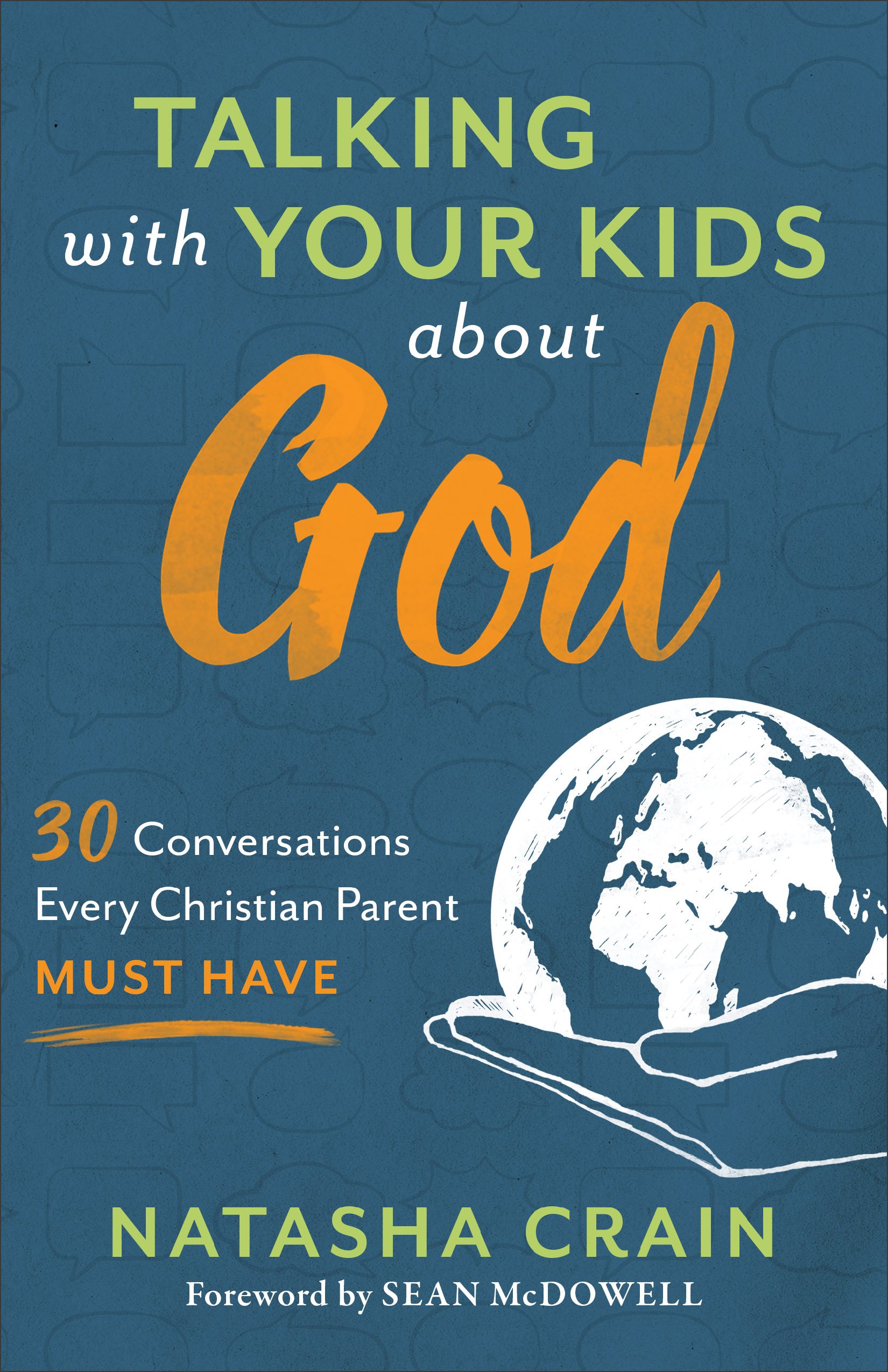
Talking with Your Kids about God: 30 Conversations Every Christian Parent Must Have (A Helpful Resource for Youth Group, Sunday School, and Christian Homeschool) [Natasha Crain, McDowell, Sean] on desertcart.com. *FREE* shipping on qualifying offers. Talking with Your Kids about God: 30 Conversations Every Christian Parent Must Have (A Helpful Resource for Youth Group, Sunday School, and Christian Homeschool) Review: I have gotten to know Natasha over the last few years and I am so happy to see the publication of her second book Talking ... - Several years ago, I discovered the work on Natasha Crain online. She has a very successful blog called Christian Mom Thoughts. I have gotten to know Natasha over the last few years and I am so happy to see the publication of her second book Talking with Your Kids about God: 30 Conversations Every Christian Parent Must Have. As someone who leads campus apologetic ministries on two college campuses (The Ohio State University (64,000 students) and Columbus State Community College (30,000) students, I am always interested to see people who provide apologetic resources for families. After all, I have had the opportunity to speak to hundreds of students about the existence of God and I can tell when someone didn’t get their questions answered before they got to college. So I am happy to say Natasha’s book does an excellent job of asking the right discussion topics/questions for parents and their kids. I can say without hesitation that nearly all of the topics in this book are the same questions students wrestle with on a college campuses. The chapters are short and concise. But because of the length of the chapters and accessibility, it makes them easy for parents to utilize. She also includes questions at the end of each chapter that can be used for discussion points. Natasha also includes many personal antidotes as well as quotes from atheist/skeptical bloggers and writers. Natasha is in touch with contemporary objections and she also knows the culture. Granted, she has heard plenty of objections on her blog as well. One thing I really appreciated about the book is that not only did Natasha deal with many common objections to God’s existence (both scientific and existential), she also provided some chapters on theology. Yes, theology! Issues such as God’s nature and character were addressed. If there’s anything that makes people reject God, it’s a complete misunderstanding about who God is. Trust me, I see it happen all the time. Okay, so now I will ahead and obviously admit that there is one chapter that stands out above all the rest. And here it is: Her chapters called “How Much Evidence Do We Need to Be Confident God Exists? In it she says the following: “Ratio Christi is an organization that is making a major impact for Christ on college campuses—one of the most challenging environments for young Christians today. Their mission is to “equip university students and faculty to give historical, philosophical, and scientific reasons for following Jesus Christ.” Ratio Christi does so by planting collegiate chapters that facilitate conversations on these subjects. Eric Chabot is the founder and director of the Ratio Christi chapter at Ohio State University, where he’s been engaging with students on the truth of Christianity since 2004. Chabot says that in all the years he’s been involved in campus outreach, he’s heard one objection to God’s existence more than any other: Why won’t God show me a direct sign that he exists? In other words, students feel that despite whatever evidence there is that theoretically points to God’s existence, it’s not enough. Having read the last few chapters, you may think these students aren’t aware of the compelling evidence for God’s existence in nature. And that’s undoubtedly true for many. But for others, the key problem is the amount and type of evidence. They want more in order to believe. An example of this is an agnostic student Chabot video interviewed for his blog. Chabot asked the student, “What would be compelling reasons to believe that the God of the Bible exists?” The student replied: ” I would have to say unambiguous, direct evidence. . . . Some people will use their explanation for God existing as things we don’t know . . . [like] the arguments [that] everything is so fine-tuned, but that doesn’t do much for me. I would very much prefer to have actual, direct evidence of somebody saying, “This directly points to God Himself coming down and speaking.” And at that point I’d have to verify with someone that I’m not hallucinating. . . . It has to be some direct evidence of God, not an extrapolation of evidence from something else.” Yes, I am honored Natasha mentioned us in her book. The blog post she is referring to that we did is our post here. Natasha is a very gifted communicator. I hope you will get this book and use it with your family and congregation. It is much needed! Share this Review: An exceptional resource that provides guidance for parents navigating big questions about God with their children - I was asked in a book study forum what my three favorite chapters were in this book, and I had to say, I have a very difficult time narrowing it down to just three :). For me, each chapter offers a clear, concise, substantive response to questions that I’ve had to grapple with as they’ve been lobbed in my direction by people very close to me. In many ways, it’s as though Natasha had taken the threads of thoughts that had been dangling in my mind and wove them into a cohesive whole, creating the fabric for conversations I’ve needed to have with my loved ones. I’ve appreciated every opportunity to think through my responses to the skeptic questions posed at the end of each chapter as I’ve been forced to process and synthesize all the things I’ve been learning and reading and attempt to articulate it with clarity and purpose. That exercise has truly been a gift and has been an answer to an urgent need in this season of life. Some of the biggest takeaways for me…. -we may not have all the answers we want, but we do have all the answers we need to make a decision about the existence of God -both believers and unbelievers are looking at the same body of evidence, but are interpreting it differently; it isn’t that there is no evidence for the existence of God, it is that other reasons/explanations are being accepted for the evidence that exists -the atheistic worldview is not one that can be lived out with consistency, there will always be a point of tension at which reality and what the atheist believes to be true about the world will be in conflict -often times those who walk away from the faith are more preoccupied with what they are walking away from, but may not have truly examined what they are walking towards -the relationship between science and faith is often presented as a false dichotomy in both religious & non-religious circles; understanding the substance of the arguments from science for the existence of God are key to providing evidence that is tethered to more than experience or what has been revealed in God’s word as the evidence from nature is more objective. What a gift that God has revealed Himself in the world He has made--He knew our skeptical natures would need more than experience and the written word. -often times the substance of our relationship with God, who is physically invisible, is taken for granted, and needs to be explored and talked about with our children; the nature of prayer; the work of the Holy Spirit; the reality of doubt and how to balance what we want to know with what God has revealed, and articulating all the ways we know God can be trusted; a large part of that is getting to know God as He has revealed Himself, through the intentional study of His Word -Exploring these skeptic objections with our children are more than just an academic exercise (though it may begin that way); but rather preparation for real world interaction with real people who think this way; we are enabling them to see that there are good reasons for belief in God, and equipping them with the information and tools they need to navigate the world in which they are living with hearts & minds that are critically aware and spiritually grounded. Natasha Crain offers parents an exceptional resource!


| Best Sellers Rank | #25,051 in Books ( See Top 100 in Books ) #45 in Christian Home Schooling #117 in Christian Apologetics (Books) #144 in Christian Family & Relationships |
| Customer Reviews | 4.8 out of 5 stars 619 Reviews |
E**T
I have gotten to know Natasha over the last few years and I am so happy to see the publication of her second book Talking ...
Several years ago, I discovered the work on Natasha Crain online. She has a very successful blog called Christian Mom Thoughts. I have gotten to know Natasha over the last few years and I am so happy to see the publication of her second book Talking with Your Kids about God: 30 Conversations Every Christian Parent Must Have. As someone who leads campus apologetic ministries on two college campuses (The Ohio State University (64,000 students) and Columbus State Community College (30,000) students, I am always interested to see people who provide apologetic resources for families. After all, I have had the opportunity to speak to hundreds of students about the existence of God and I can tell when someone didn’t get their questions answered before they got to college. So I am happy to say Natasha’s book does an excellent job of asking the right discussion topics/questions for parents and their kids. I can say without hesitation that nearly all of the topics in this book are the same questions students wrestle with on a college campuses. The chapters are short and concise. But because of the length of the chapters and accessibility, it makes them easy for parents to utilize. She also includes questions at the end of each chapter that can be used for discussion points. Natasha also includes many personal antidotes as well as quotes from atheist/skeptical bloggers and writers. Natasha is in touch with contemporary objections and she also knows the culture. Granted, she has heard plenty of objections on her blog as well. One thing I really appreciated about the book is that not only did Natasha deal with many common objections to God’s existence (both scientific and existential), she also provided some chapters on theology. Yes, theology! Issues such as God’s nature and character were addressed. If there’s anything that makes people reject God, it’s a complete misunderstanding about who God is. Trust me, I see it happen all the time. Okay, so now I will ahead and obviously admit that there is one chapter that stands out above all the rest. And here it is: Her chapters called “How Much Evidence Do We Need to Be Confident God Exists? In it she says the following: “Ratio Christi is an organization that is making a major impact for Christ on college campuses—one of the most challenging environments for young Christians today. Their mission is to “equip university students and faculty to give historical, philosophical, and scientific reasons for following Jesus Christ.” Ratio Christi does so by planting collegiate chapters that facilitate conversations on these subjects. Eric Chabot is the founder and director of the Ratio Christi chapter at Ohio State University, where he’s been engaging with students on the truth of Christianity since 2004. Chabot says that in all the years he’s been involved in campus outreach, he’s heard one objection to God’s existence more than any other: Why won’t God show me a direct sign that he exists? In other words, students feel that despite whatever evidence there is that theoretically points to God’s existence, it’s not enough. Having read the last few chapters, you may think these students aren’t aware of the compelling evidence for God’s existence in nature. And that’s undoubtedly true for many. But for others, the key problem is the amount and type of evidence. They want more in order to believe. An example of this is an agnostic student Chabot video interviewed for his blog. Chabot asked the student, “What would be compelling reasons to believe that the God of the Bible exists?” The student replied: ” I would have to say unambiguous, direct evidence. . . . Some people will use their explanation for God existing as things we don’t know . . . [like] the arguments [that] everything is so fine-tuned, but that doesn’t do much for me. I would very much prefer to have actual, direct evidence of somebody saying, “This directly points to God Himself coming down and speaking.” And at that point I’d have to verify with someone that I’m not hallucinating. . . . It has to be some direct evidence of God, not an extrapolation of evidence from something else.” Yes, I am honored Natasha mentioned us in her book. The blog post she is referring to that we did is our post here. Natasha is a very gifted communicator. I hope you will get this book and use it with your family and congregation. It is much needed! Share this
F**E
An exceptional resource that provides guidance for parents navigating big questions about God with their children
I was asked in a book study forum what my three favorite chapters were in this book, and I had to say, I have a very difficult time narrowing it down to just three :). For me, each chapter offers a clear, concise, substantive response to questions that I’ve had to grapple with as they’ve been lobbed in my direction by people very close to me. In many ways, it’s as though Natasha had taken the threads of thoughts that had been dangling in my mind and wove them into a cohesive whole, creating the fabric for conversations I’ve needed to have with my loved ones. I’ve appreciated every opportunity to think through my responses to the skeptic questions posed at the end of each chapter as I’ve been forced to process and synthesize all the things I’ve been learning and reading and attempt to articulate it with clarity and purpose. That exercise has truly been a gift and has been an answer to an urgent need in this season of life. Some of the biggest takeaways for me…. -we may not have all the answers we want, but we do have all the answers we need to make a decision about the existence of God -both believers and unbelievers are looking at the same body of evidence, but are interpreting it differently; it isn’t that there is no evidence for the existence of God, it is that other reasons/explanations are being accepted for the evidence that exists -the atheistic worldview is not one that can be lived out with consistency, there will always be a point of tension at which reality and what the atheist believes to be true about the world will be in conflict -often times those who walk away from the faith are more preoccupied with what they are walking away from, but may not have truly examined what they are walking towards -the relationship between science and faith is often presented as a false dichotomy in both religious & non-religious circles; understanding the substance of the arguments from science for the existence of God are key to providing evidence that is tethered to more than experience or what has been revealed in God’s word as the evidence from nature is more objective. What a gift that God has revealed Himself in the world He has made--He knew our skeptical natures would need more than experience and the written word. -often times the substance of our relationship with God, who is physically invisible, is taken for granted, and needs to be explored and talked about with our children; the nature of prayer; the work of the Holy Spirit; the reality of doubt and how to balance what we want to know with what God has revealed, and articulating all the ways we know God can be trusted; a large part of that is getting to know God as He has revealed Himself, through the intentional study of His Word -Exploring these skeptic objections with our children are more than just an academic exercise (though it may begin that way); but rather preparation for real world interaction with real people who think this way; we are enabling them to see that there are good reasons for belief in God, and equipping them with the information and tools they need to navigate the world in which they are living with hearts & minds that are critically aware and spiritually grounded. Natasha Crain offers parents an exceptional resource!
R**S
The book was very easy to read and went pretty quick after I picked ...
Natasha Crain’s book, “Talking with Your Kids About God,” is a vital resource for all Christian parents. As a Director of Children’s Ministry at a church (infant – 5th grade), I will be using this resource myself and encouraging parents to do the same. I believe every parent with kids of any age should read this book to equip their children well in the present or future. The book was very easy to read and went pretty quick after I picked it up. Interesting stories and examples coupled with strong, clear, and logical explanations supported by sound evidence made the book informative yet entertaining and enjoyable. She is very thoughtful and knowledgeable about explaining how nature, the universe, life on earth, and morality reveal the existence of God with validity. She also tackles the tough and often misunderstood subjects of religion vs. science, the trinity, the attributes of God, if God is loving and just and what that really means, differing religions, free will, and evil. I really liked that when Natasha Crain discussed a topic, she made information clear (especially regarding any scientific evidence) and that you didn’t have to have a background in biology to understand what she was talking about. I was also very happy that she encouraged readers to present these subjects to their children as young as elementary-age in language and ways they can understand since most apologetic material is usually geared at students and adults. I also loved that each chapter gave specific conversation points that parents could discuss with their children. It encouraged parents challenge children to apply what they’ve learned to their life. With so many teens and college students (as well adults) leaving the church and their faith behind, it’s important for parents to intentionally discuss topics that are covered in her book with their children before they are fed the lies of this world. Equipping children with tools to be able to defend what they believe will only strengthen their faith and help them stand strong when school, teachers, professors, and peers try to attack it. I received a free copy of this book from the publisher in exchange for my honest review.
M**E
Parenting Essential
Talking with your kids about God in a way that encourages them to think more deeply about what they believe and why is so important in today's cultural climate. Parents cannot leave this teaching to the church. But we parents must first equip ourselves in order to do this more naturally when opportunities arise to teach our children about Christianity and its difficulties. Natasha Crain's timely and relevant new book, Talking with Your Kids About God, tackles the difficult questions that skeptics and others put forth regarding Christianity and the beliefs that Christians hold. Some of the most challenging questions are addressed in the most accessible way. The book is well organized and includes 5 parts covering the existence of God, science and God, the nature of God, belief in God, and the difference God makes. Each part includes 6 chapters addressing different questions concerning the topic of that particular section. I mention this because the format was so helpful in that I was able to later return to information that I wanted to reference quite easily. Even though the content is apologetics (which is a subject that often gets very heady), the chapters are written in nice bite size chunks - not too much information at one time. And Crain’s writing style is a pleasure to read. You can tell she’s a brain, but also very personable and it comes through in her words. One of the things (among many) that make this book unique and sets it apart from other books on apologetics are the conversation guides at the end of each chapter. These are useful in reflecting upon what you just read, in actually talking with your kids about God, and even talking with others about God. These guides could certainly be used in a small group situation, or even a Sunday school setting; and are hugely instructive in the art of asking the right questions to provoke thoughtful discussions. I have learned so much having read this and am recommending it to all parents. Equip your children (at any age) with knowledge and truth so that they stand (and know they stand) on solid ground. I was provided with a copy of the book by the publisher in exchange for an honest review.
J**I
Amazing resource for parents!
I honestly feel like I can’t say enough about this book. I enjoyed Natasha’s last book and follow her blog. When she decided to create a launch team to pre-read this new book before it’s official release I jumped at the chance. And this book surpassed my expectations! Talking With Your Kids About God is broken down into 5 sections: The Existence of God, Science and God, The Nature of God, Believing in God, and The Difference God Makes. Each of these sections is broken down into short, manageable chapters, that cover one specific idea. At the end of the chapter, key points are summarized, and conversation points are listed. These concise chapters really give parents the key information needed to enable them to have meaningful conversations with their children. Natasha has a gift for breaking down complex topics into simple and easily understood ideas. The conversation points really help give direction on tackling each idea. This is one of the most approachable books on apologetics I’ve read. I also think that while geared towards parents, this book has a wide range of applications... Sunday school teachers, grandparents, teachers, and the like. But I see this being beneficial for anyone interested in defending their faith! Don’t let the focus on parenting keep you from getting this book. Lastly, as a homeschooling parent, I just want to say that this easily fits into any curriculum. The chapters average 5-7 pages, so it would not be difficult to read a chapter a week and have discussion. I found that I was able to fit in the conversations naturally throughout our weekly work. I’m always looking for ways to bring in a Biblical worldview into our school days, and this really helps! I enjoyed this book so much I bought another copy. This will be one that I give away on a regular basis!!
E**S
Invaluable Resource for Your Kids and their Future (and for YOU!)
Talking with Your Kids About God was a wake-up call for me. Packed with insight, statistics and conversation guides, TWYKAG walks you through the common arguments and questions from skeptics and seekers in bite-size, digestible chapters. Does the term apologetics seem mysterious and intimidating? Crain's book makes defending our faith reachable and reasonable. Do yourself a favor and read the table of contents. Crain addresses many issues that skeptics have with Christianity, including topics related to science and suffering, moral law and meaning of life, hope, and the Holy Spirit. One particularly compelling to me is that many will choose to believe or not believe in God based on false information. Walking these challenging topics out with my kids (11, 9, and 7) is doable and engaging with this book. I not only want my kids to know what they believe and it to be personal for them (not just my faith handed down), but I want them to have the ability to THINK for themselves. This book is not a "take this pill and swallow it"- it's got the tough questions from real skeptics as conversation points. Not only do my kids need to be equipped for this, but I need to be equipped and "prepared to give an answer for the hope I have" and with gentleness and respect. Kudos to Natasha Crain for the the sacrifices she made with her family to get this book into the hands of hundreds (hopefully thousands) of other families. Seriously, it's $10 or $11 bucks that's worth skipping coffee or the drive-thru this week. With a 10-min/day or week commitment, this book could truly be life-changing for your family. It really has the potential for that in my own life, as now I am convinced I need to be better equipped to engage myself.
W**N
Good Info But High Reading Level
I think this book has a LOT of great information that is very thought-provoking. Actually I bought it for myself, to what I (a long-time Christian) could glean out of it. It has some really valuable information for EVERYONE. I do have 6 years of college and spent 35 years in education, and I am a little concerned that the actual reading level of this book is FAR ABOVE the average person.
R**N
Amazing resource!
I cannot recommend a better resource as you nurture your children to know about God and His deep character. When your children get older and spend time with non-Christians in sports, at school, in college, etc., they will hear common arguments against the faith they grew up knowing. Soon, they'll start asking themselves if what you're saying about God is true. What will happen to all the hard work you put in? Will they have a firm foundation? "The Bible says so," they might respond. Well, what if their friends laugh and say "the Bible isn't true and science is settled; nothing else is."? Will they be ready for that? Or will they start questioning all they knew? Talking With Your Kids About God is full of common arguments against Christianity. Natasha has made the chapters very easy to understand for parents who may not have a sciencey mind, too! If your children hear the arguments ahead of time, and know how to answer them, they are *drastically* less likely to walk away from what you've taught them. There ARE answers! And they are in this incredible book. At the end of each chapter (which is for the parents to read), there are questions for your children. You get to summarize the chapter to them and then ask the questions, essentially ready-ing them for battle with the opposing world. These are tough questions. But that's GOOD! We want them equipped to handle smart, clever, challenging people who are ready to battle Christianity. Not ONLY for the sake of keeping our kids on God's side, but also for bringing the truth of Christ to a lost world. BUY THIS BOOK!! It's truly invaluable!!
Trustpilot
4 days ago
1 month ago