
DOWNLOAD THE APP


Customer Support

Desert Online General Trading LLC
Warehouse # 7, 4th Street, Umm Ramool, Dubai, 30183, Dubai
DOWNLOAD THE APP
Customer Support
Desert Online General Trading LLC
Warehouse # 7, 4th Street, Umm Ramool, Dubai, 30183, Dubai


🎶 Elevate your sound, protect your ears!
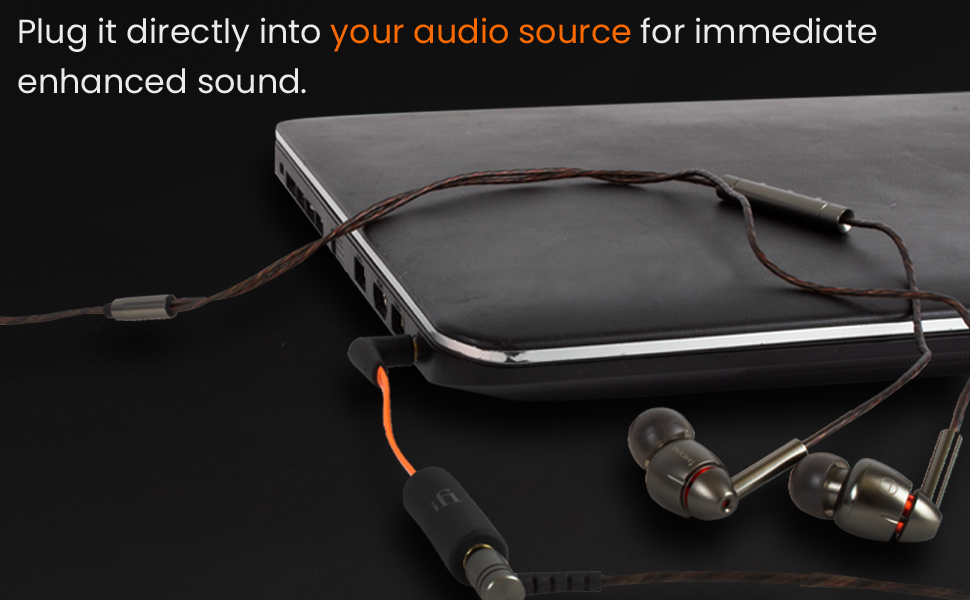
The iFi Ear Buddy Audio Attenuator Cable is a must-have accessory for music lovers seeking to enhance their listening experience. Compatible with 3.5mm headphone jacks, this travel kit includes a gold-plated airplane adapter and memory foam earplugs, ensuring you enjoy optimized sound quality while on the go. With its ability to reduce background noise and restore lost audio details, the Ear Buddy is perfect for both casual listeners and audiophiles alike.





M**N
Best Value Audio Tweak Not Mentioned In Audio Magazines
Why did I purchase this product, you may ask? My Panasonic SP-NP12 portable CD player with one resistor-to-resistor ladder DAC per channel coupled with my Audio Technica ATH-T200 headphones(see my review) was good enough for me to distinguish the Steve Hoffman mastered MCA CD of Aja by Steely Dan from my other CD pressings I previously wasted money on that weren’t, but I found this setup vaguely unsatisfying. All upper midrange & high frequency notes seemed to be bathed in a hazy glare, & I often found myself increasing the volume for more detail, mostly on Jazz CDs, at grave risk to my hearing, a problem described by ifi in its refreshingly honest sales pitch for its Ear Buddy Audio Optimizer. The crackling, static noise when turning my volume knob also discussed in the Ear Buddy’s sales blurb was effectively resolved by cleaning the headphone input with Red DeoxIT, so one less reason for me to buy the Ear Buddy. I then remembered I missed out on the opportunity to purchase a similar more expensive product(Dakiom’s still active patent used a different approach than ifi to improve sound quality, if I recall correctly, with a small plastic box in the cable's middle), with the exact same connections on both ends, from Dakiom before Dakiom went out of business. Not wanting to repeat this Minor(pun intended-sorry if my humor is off-key) mistake again, I decided spending $20 on the Ear Buddy was a minuscule amount to protect my hearing, uncover 2 bits of resolution claimed by ifi, & avoid purchasing a more expensive pair of headphones and/or rig(a separate CD player transport feeding a DAC with a separate headphone amplifier, even bought used, would cost exponentially more).Here’s a breakdown of the positives & negatives of this high value tweak based on my many hours of listening pleasure:Positives:Exhibit A, UNA MAS by Kenny Dorham: Herbie Hancock’s exquisite piano work on the 1980s Ron McMastered(love his mastering) CD issue of UNA MAS had more realistic tone with the Ear Buddy while subtracting the late, great Rudy Van Gelder’s piano recording signature, both resulting in an improved rendering in my humble opinion. I thought the second largest improvement was Joe Henderson’s saxophone. The very close 3rd largest enhancement tonally was the drums, cowbell, & cymbals; in particular, the Ear Buddy revealed the ride cymbal to have rivets or some similar modification, so Tony Williams(R.I.P. I had the immense privilege of seeing him give my favorite drum clinic of many in Kansas City several months before his premature death & I experienced the thrill of meeting him afterwards as well!), one of the greatest drummers of all time who was taken from this world in the middle of his prime way too soon due to medical malpractice, was done much greater musical justice with the Ear Buddy than without. Kenny Dorham’s trumpet was more natural with less grain. I could hear more notes from virtuoso bassist Butch Warren, providing a more solid low frequency foundation to the music & thus verifying one of ifi’s claims. This specific CD issue is somewhat bass shy on several systems in my experience, so the revelation of more bass by the Ear Buddy was really important to me. The Master Tape issues(relatively minor compared to Hot Streets by Chicago) were equally present but easier to ignore because the Ear Buddy’s musical presentation was so much more engaging. The imaging was more precise in all three dimensions, particularly along the vertical plane.Exhibit B: Digital Audio Disc Corporation(inscribed in the center ring) CD pressing of Hot Streets by Chicago with unmitigated source tape warble: Most striking is the Ear Buddy’s more driving Pace, Rhythm, Attack, & Timing, which helped me gain a renewed appreciation for Peter Cetera’s bass work & Danny Seraphine’s drumming. Almost as important, the Ear Buddy’s presentation rendered greater separation between instruments, like on UNA MAS. The Ear Buddy actually made me forget about the fairly severe tape warble plaguing the last half of “Little Miss Lovin” & the first half of “Hot Streets”. Additionally, the glare surrounding the horns disappeared. The Ear Buddy exuded all of the same positives as UNO MAS.Exhibit C, Rhino CD of Soul Finger by Bar-Kays: I probably should have included this one first, because Ear Buddy’s positive transformation was most radical on this recording; it was almost as though I was listening to Soul Finger again for the first time or experiencing a different recording all together. Most noticeable were different snare drum sounds & different snare drum tuning, muffling, & hand techniques(possibly different snare drums?) on different tracks previously concealed by my headphone rig’s monochromatic presentation without Ear Buddy. Ear Buddy unearthed a minority number of songs having 2+4 backbeats played as rim shots, naturally uncovering detail in a completely different manner than a CD Mastering Engineer ruining my favorite music by unnecessarily adding either or both digital or analog compression. The soundstage was drastically expanded in all 3 dimensions, & Ear Buddy’s greater separation of instruments was stunning on this album, with the organ & vocals more realistically reproduced. This CD for me supports ifi’s claim that Ear Buddy reproduces 2 bits of increased resolution than without.Exhibit D, West German 1980s CD pressing of In-A-Gadda-Da-Vida by Iron Butterfly: To the uninitiated, this CD pressing exclusively contains a unique, more spontaneous take of the song “In-A-Gadda-Da-Vida” featuring a scorching hot lead guitar solo by Erik Brann. Ear Buddy’s rendering of the Zickos(R.I.P. William Zickos, original inventor & patent holder of the acrylic clear drum & accomplished drumming virtuoso who kindly gave me a tour of the Zickos Drums factory in the Kansas City Coca-Cola building in 2002) bass drum in Ron Bushy’s drum solo sounds very similar to a Ludwig Vistalite drum set a friend kindly allowed me to play during a rehearsal, with Ron’s Zickos bass drum(hopefully he still owns it) reproduced with correct tonal accuracy pleasingly close to my right ear.Negatives: With Ear Buddy, I think I noticed reduced transient attack on Butch Warren’s bass strings & was hearing less of the wood body of his stand-up bass than without, both resulting in his stand-up bass subtly sounding more like a guitar bass. But, overall, Ear Buddy’s bass presentation was better because I could hear more bass notes as promised by ifi, revealing more of Mr. Warren's superb bass work. The Ear Buddy also produced a similar softening effect on Lee Dorman’s very good guitar bass work on Iron Butterfly’s In-A-Gadda-Da-Vida album. I also sensed less dynamic contrast on “Alive Again” & “Little Miss Lovin’ “ on Hot Streets by Chicago, but the dramatic increases in volume without Ear Buddy may or may not have been caused by the CD player warming up shortly after being turned on. Ear Buddy's largest negative is the substantial partial loss of "breath of life," a hard to describe attribute discussed on audiophile forums most people nevertheless hear when present, yet crave when removed.In final summary, the Ear Buddy Audio Optimizer is the cheapest, most high value audio tweak I’ve encountered since discovering green-dot hospital cords around 5 years ago with the positives, such as eliminating my left channel being weaker than the right because of Ear Buddy’s unconditionally complete balanced channels, vastly outweighing the negatives in both number & weight. I forgot to mention the Ear Buddy performs the neat trick of reducing(maybe eliminating?) headphone amplifier hiss while leaving the CD source tape hiss completely intact. Indeed, Audio Science Review’s conclusion from its technical testing that Ear Buddy is neutrally transparent seems true. The second Ear Buddy I purchased for my 1999 PC Audio JBL desktop stereo speakers completely eliminated all hiss while also proving durable from only home use, again without any of the negative compromises of conventional noise reduction, & has improved streamed low resolution YouTube audio to be much more enjoyable. I highly recommend EarBuddy with the caveat it won't get you all of the way there in completely unearthing all 16 bits of resolution from a CD, as vertically & horizontally isolating my portable CD player with an IKEA 6 x 9 1/2" bamboo board on top of a rubber mat, setting the player on a trio of 3/8" steel ball bearings(to be or not to BB is the question!) each set in wood Easter Egg holders, cleaning the player's laser lens with Red DeOxit, & plugging the CD player directly into the wall without the firmer grip of a 3 to 2 prong adapter & also without any outlet strip, surge protected or not, produced equally profound, yet different enhancements in sound quality resolution. I definitely consider Ear Buddy to be an essential part of both my CD player to headphones & PC Audio setups.
B**N
Works well with my system, but on some songs the attenuation is a little too much.
The ear buddy eliminated a low level, high pitched (upper mid-range to lower treble range) buzz in my system which has a Musical Paradise MP-301 Mk3 preamplifier/headphone amplifier and Sennheiser PXC 450 headphones.The only changes to the sound quality that I could discern other than the elimination of the buzz, is an overall lowering of the broadband noise floor resulting in "blacker" backgrounds, a slight increase in smoothness of the sound, and a slight blunting of fast transient attacks. So three improvements and one slight degradation ain't bad for a $20 audio accessory.However, the ear buddy's 16 dB of attenuation is too much for a few high resolution classical and jazz recordings that I have since they are recorded at a very low volume to preserve the peak dynamic range. If I try to turn up the volume of the amp or the source volume control to get the desirable volume for these low level recordings, there is very harsh distortion at the sound peaks.Note that the attenuation of the ear buddy listed on the Amazon page was 15 dB when I bought the ear buddy, but I received an email from iFi stating that the ear buddy has 16 dB of attenuation, which is also the listed attenuation for the ear buddy on the iFi web site. iFi's iematch has a selection for 12 dB attenuation, so I may try it, but it costs more than double the cost of the ear buddy.Therefore, for the slight blunting of fast transient attacks and the slightly too high attenuation for some of my recordings, I deducted one star.That being said, I am very happy with the performance of the ear buddy overall.At only $20, the ear buddy is a remarkably transparent accessory. As in medicine, the first rule of high fidelity audio should be "Do No Harm." I have had more expensive connectors, adapters, cables, and attenuators that did much more harm to audio fidelity than does the ear buddy. I would recommend giving it a try if you have noise issues with your headphone system.
Trustpilot
2 months ago
2 months ago