
DOWNLOAD THE APP


Customer Services
Copyright © 2025 Desertcart Holdings Limited
DOWNLOAD THE APP
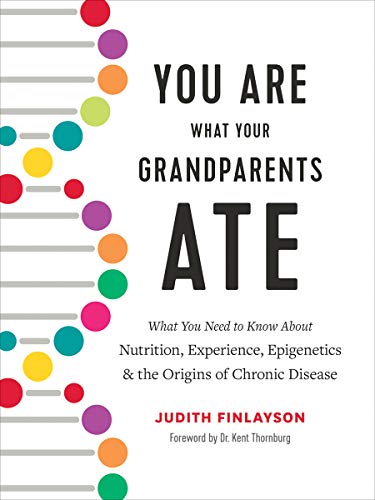

You Are What Your Grandparents Ate: What You Need to Know about Nutrition, Experience, Epigenetics and the Origins of Chronic Disease
M**E
Jacket cover soiled and wrinkled
The jacket cover on this book was soiled and wrinkled. This isn't a big deal, but because this book will be used in college classroom discussions, I wanted it to present better than this. The actual book itself is undamaged, but the jacket condition detracts from the vital message it contains. A little more respect for the book would have been appreciated.
M**E
Mishandled book !
My book cover is wrinkled. That is how it was in the box.
C**L
Not just our genetic blueprint, but what our parents ate and what they did matter to our grandkids
"You are what you eat" is a truism I managed to ignore for years, along with "Everything is the mother's fault." Then I became a mother, then a grandma, and I've been searching ever since for evidence to the contrary. Thank you, Judith Finlayson. David Barker is the doctor whose epidemiological work provides most of the substance of "You Are What Your Grandparents Ate," but Finlayson culls a multitude of studies and offers a crash-course (or review) of Darwin's legacy and Mendel's peas, organizing a large body of textbook material into a manageable whole.I'd like to report that she also got me to understand the field of epigenetics, which has fascinated and tormented me ever since I found E.E. Giorgi's science fiction novels "Gene Card" and "Chimeras" via Kindle Daily Deals. Giorgi has a PhD in genetics and an enviable grasp of epigenetics, and her novels bring that to life in ways no textbook ever could. But, but, this book is one of the best I've seen, as far as putting things in layman's terms.Our risk of cancer, chronic disease, obesity, and all that is not just coded in our DNA. What Grandma ate while Mom was in the womb can change the way our genes express themselves. Did Grandpa smoke at an early age? That might be why his grandchildren were born small and underweight. "Nutritional epigenetics" is a thing. Indeed, it's a science. The food we eat (or fail to eat) strongly influences the way our genes behave. "Nutri-epigenomics" is how food affects gene expression.Again, I want to say I came away from this book *understanding* this stuff. On page eleven, I can read that our DNA does not change, but how our genes express themselves lead to changes in utero that have the potential to be passed on to future generations.A really startling (you might say "scary") part of the book is about our microbiome. The gut has been called our "second brain." The bacteria in your gut has been in constant communication with your brain pretty much since conception. Things like a C-section can significantly affect our inner microbiome, which is like an entire separate command center or brain. Once again, I'd like to be able to read books, internalize the information and paraphrase accurately, but I'm not sure even this book, coherent and readable as it is, can help me do that.This is a book I need to re-read and revisit before I feel I can safely talk about it. And, sorry to say, I do talk about things like this at social gatherings. While everyone else is talking football or the latest movie, I'm thinking those hot dogs are full of nitrates that might lead to leukemia in your children or grandchildren, but the last thing pregnant women want to hear is more un-sought advice. But, here goes: if you are planning to conceive and bear children, this is a book you definitely ought to read.I'm sorry I didn't eat more spinach and broccoli, kids, and less of the processed food most Americans consume daily. I hope the Amana white potato bread with chunky Jif and non-organic cow's milk did you no harm.But our three-year old grandson has something going on with his eyes, and I keep thinking it's all my fault; everything is the mother's fault; something I ate, or failed to eat, while his mother was developing in the womb, has led to this.But his father's father might have smoked at an early age. War and hunger, stress and trauma, could have flipped that epigenetic switch in someone else's DNA, not just mine.Hey. I can't come away quoting the science like I get it, so I take what I can from a book and run with it.Epigenetics. The origins of chronic disease. Blame the mother if you will, blame her diet, blame her circumstances (famine, war: not Mom's fault!), but above all, take what we have learned and put it to good use.Off to choke down some broccoli and salmon, even though it's too late for my grandhildren. :)
O**D
Part way there
I'm not sure what I was expecting when I ordered this, but the title is intriguing and I wanted to find out what it meant. I read the book in one sitting, and it's a fun read. I found myself part frustrated and part fascinated--a strange mix. On the one hand, the topic is interesting, and the book covers it well. It reads a lot like a textbook on genetics (specifically epidemiology), and sometimes like a popular diet book along the lines of The South Beach Diet or Keto Diet for Beginners, etc. But it straddles the two genres, and in my view never commits effectively to either. Specifically, it reads like a textbook, but doesn't go deep enough to really teach the genetics in detail, and it reads like a diet book at times, but doesn't give any kind of plan or "how to". The closest book I can think of to this format is The China Study--mosty imformational, with a few applicable ideas for personal use, but you have to pull them out as you read. If you liked The China Study, you'll probably enjoy this book. In a nutshell, it outlines a scientific (without depth) footing for generational impact on genetics, without much direct help to the reader right now. If you want to benefit the health of your great grandchildren, this is the book. If you want to benefit your own health, this book basically outlines things your great grandparents could have done better. That said, the information is really interesting. But when it gets down to specifics, they are frequently quite general. Goes a bit deeper into diabetes than other health issues.
R**6
Multiple topics smooshed into one book
While this was an engaging and interesting book, I really wish the author had let this be the first in a series. Genetics, diets, how diets affect health, how diets affect health affect genetics, how health affects genetics, how outside influences (stress, drugs, smoking, exposure to chemicals) can affect genetics...you the picture. It's a simple enough premise - the lifestyle of our grandparents affected the genetic makeup of our parents. Our parents lifestyle affected our genetics. If one of your grandparents was a chain smoking, six-pack-a-day beer drinker with a penchant for only eating deep fried foods and who worked in a factory where he inhaled seriously bad fumes all day, that in turn affected which genes have been turned on or off in your body and how your DNA was written in the womb. This book would have been better Finlayson had written this to introduce the reader to how outside factors can influence genetics, with the next book going deeper into how what we put into our bodies via food, drink, and air affects us, then a book about how this cascades into future generations and takes into account how the genes from one parent with a healthier family history impact the genes of the other parent with a poor family history, etc. "You Are What Your Grandparents Ate..." is a little too general for my tastes. She makes the case, but never really delves into the whys and hows and what to do's. Maybe this was to keep the book from going too far into material that she felt readers wouldn't understand, or would be put off by if they didn't have a medical or scientific background. I do appreciate how approachable she makes the subject, and I suspect it will spur more than a few readers to go down their own rabbit holes to learn more and take personal action. I just wish the book was either much longer to include more information, or part of a series. Even a followup book from Finlayson on nutrition and genetics would be appreciated.
Trustpilot
1 day ago
1 month ago