

Desert Online General Trading LLC
Warehouse # 7, 4th Street, Umm Ramool, Dubai, 30183, Dubai
Desert Online General Trading LLC
Warehouse # 7, 4th Street, Umm Ramool, Dubai, 30183, Dubai
Full description not available
M**Z
Wonderful book for anyone interested in healthcare!
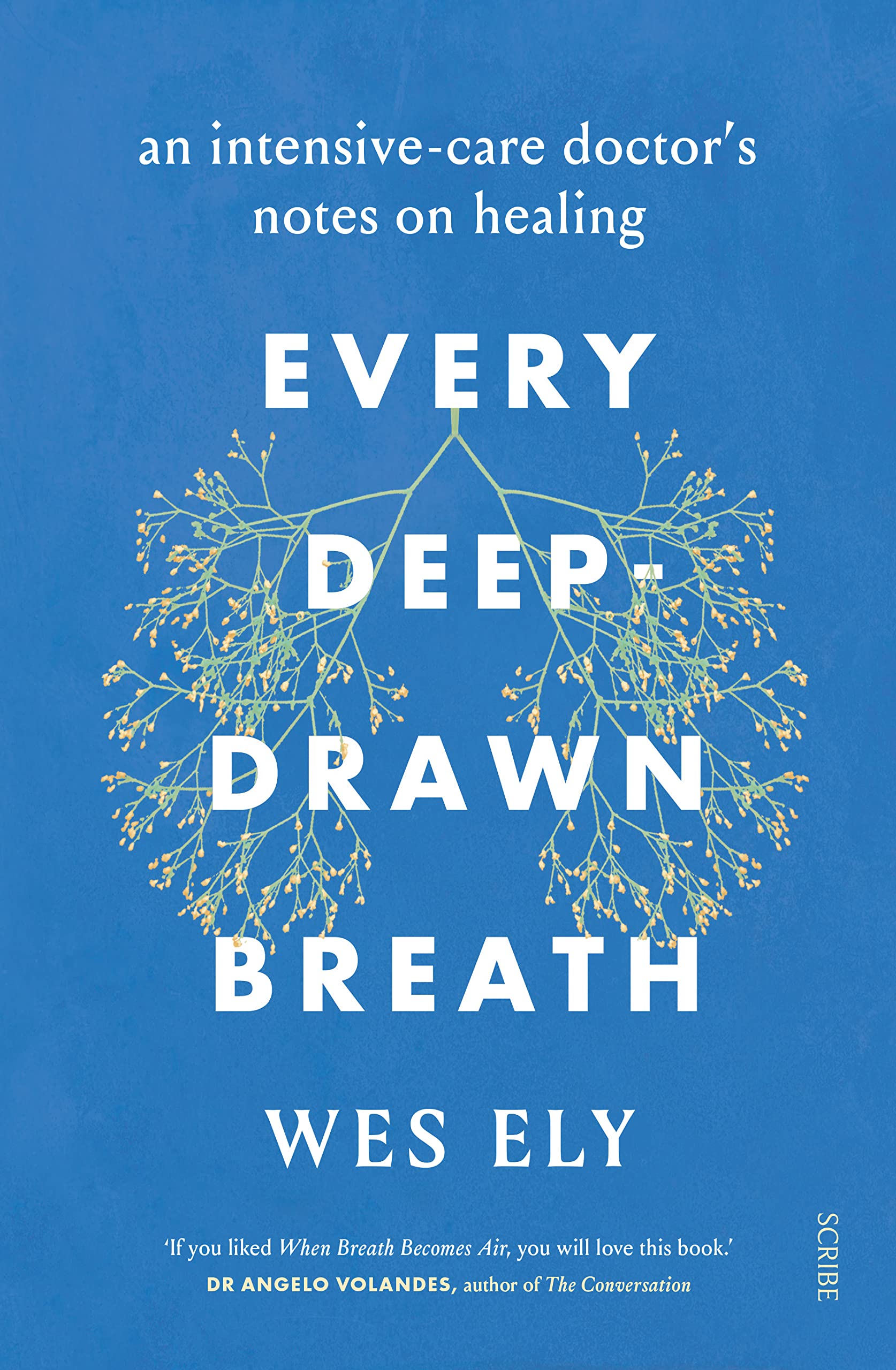
“Within ICUs, patients on the brink of death are cared for in well over one hundred thousand intensive care beds each day, in around three thousand hospitals around the country.” This is one of the many harrowing statistics that Dr. Wes Ely provides his readers with in his abundantly intriguing book, Every Deep Drawn Breath. From real patient cases to the history of present-day medical practices, and more, Dr. Ely covers an wide variety of topics regarding critical care and what it means to be an excellent caregiver to patients in the hospital.A very large portion of this book revolves around the PICS phenomenon. PICS is an acronym for Post Intensive Care Syndrome, something that I, as a clinician, along with many of my colleagues, hadn’t heard about before reading this book. Ely describes PICS as “a debilitating condition composed of ‘neck-up’ brain problems and ‘neck down’ body problems that survivors of critical illness often experience after a stay in the ICU.” Dr. Ely believes that PICS is the result of heavy sedation given to patients in the ICU. Throughout his research, Ely proved that sedation causes what he refers to as “ICU delirium.” He and his colleagues pioneered several commonly used practices in the ICU used by clinicians regularly. One of these assessments was the Confusion Assessment Method for the ICU, also known as CAM-ICU. He used this assessment to monitor the risk of brain injury and delirium for his patients. He describes his mission to decrease the number of PICS cases and the trials and tribulations he has experienced throughout the book. His headstrong beliefs were frowned upon by many, but his arguments and thought processes won me over instantly.Dr. Ely also expresses how to be a better caregiver to patients throughout this text. He believes that many clinicians have lost their sense of humanity in the chaos of critical care. He expresses how many healthcare workers refer to patients as “bed numbers” or by their diagnosis, rather than actual human beings with names and lives. His way of arguing his point that this is a common practice of complacency that needs to end, really hit home for me. I realized that I was guilty of this very thing. Since reading this book, I have regularly used Dr. Ely’s words and examples as a basis for my care for my patients. His way of persuasion through facts, statistics, and research is incredibly hard to argue against. He is an example of a remarkable physician who cares deeply for his patients. His words will make anyone want to be a better clinician after reading this book.Ely writes in a way that anyone can understand, while keeping his text relevant and interesting. He describes many clinical terminologies so that all readers can understand by not only providing the medical terms for practices but breaks them down into simpler terms such as referring to mechanical ventilation as what is commonly known as life-support. He gives a concise history on the early stages of mechanical ventilation during the Polio epidemic, along with the how ICU units came to be common practice in hospitals, globally. He describes how older practices don’t always equate to best practices, and how medical personnel must be open to change in order to provide the best care to their patients. His breakdown of facts, statistics, and personal stories of his career and personal life, help put into perspective the intensity of the medical field on clinicians and patients alike.I would highly recommend this book to anyone working in medicine, though it is written in a manner that would interest anyone who has been, or has visited someone, in a hospital. Dr. Ely represents what medicine should be and is an excellent role model, for physicians, nurses, respiratory therapists, and caregivers of all kinds. His expertise and bedside manner shine through the pages of this book. I felt as though I knew him personally after reading it. His mission is what healthcare is about: humanity and caring for each other. I plan to use this book as a basis for my entire career and to take his wisdom with me to provide outstanding care to my patients. I hope to be able to change medicine in a positive way throughout my career, as Dr. Ely has. I hope that anyone who reads this book would be as inspired as I am.
D**E
The journey of a caring physician
Every Deep Drawn BreathAlong with Verghese, Gawandi, and Kalanithi, Wes Ely has given yet another glimpse into the humility and courage of a contemporary physician seeking truth. There are two themes to this story. One of a dedicated physician coming to grips with his own understanding of healing, the other, the cold realities of surviving life threatening illness.Dr. Ely reviews interesting historical facts of how ICU care evolved. He takes us through his personal journey as a trainee then attending physician. Then we go with him to the other side of the bed, the side of a father whose daughter experiences a life threatening fall and traumatic brain injury. That, and his caring enough about the patients he treats, brings him to a new place of reflection. This place is a sobering reality check that alters his professional goals and that puts him in the position of a maverick.From there Dr. Ely relies on science to make his point. It all boils down to the patient as a person, not a set of lungs, an overwhelming infection, or a metastatic cancer. From his, and many collaborating colleagues’ investigations, evolves a new way critically ill patients are cared for. Such changes as turning off sedation every day, to walking patients while on life support, to having family at the bedside for comfort and input to the professional team in the ICU. Care in the ICU has changed and patient outcomes improved based on new paradigms and protocols.The author is clearly a gifted physician and scientist but he is more than that. He is a Christian who understands “do justly, love mercy, and walk humbly.” His spiritual beliefs of the value of life and an individuals’s uniqueness undergird the relentless search of what is right and true for people suffering through and after critical illness.The book is a must read for all those in health care. It will also inform the lay public about the realities of full treatment, life support, and critical care medicine. It offers a comprehensive appendix of resources. For me, it was a pleasure to read as I reflected on my rotation with Dr. Ely while a Family Medicine Resident at North Carolina Baptist Hospital. It has also changed my personal goals of care and the manner in which I discuss goals of care with my patients.Daphne Bicket, MD BGSM 1987, NCBH-Family Medicine 1990
Trustpilot
3 weeks ago
2 days ago