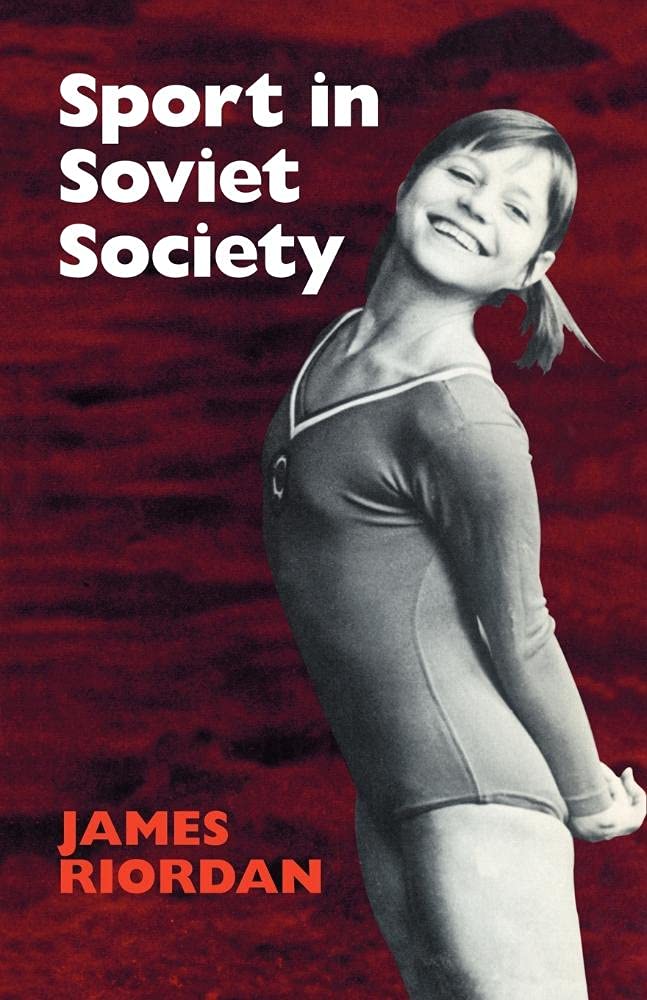
Sport in Soviet Society: Development of Sport and Physical Education in Russia and the USSR: 22 (Cambridge Russian, Soviet and Post-Soviet Studies, Series Number 22)
S**Z
Sport in Soviet Society - Development of Sport and Physical Education in Russia and the USSR
New to Soviet sports? This book will educate and inform you. I bought a 1980 copy of the book, so it does not cover Gorbachev, perestroika, and the re-evaluation of the Soviet sports model, however, the historical and policy analysis contained within this book is good. Riordan writes in a straightforward style and uses primary sources. He explains the history of sports in the Soviet Union (beginning with the Czarist Russian era) and traces its development from the 1920s onwards. Much detail is given to the 1930s and post-world war two periods. The role of sport (as part of physical culture) to integrate society, produce healthy workers, create energised soldiers and winning Olympians are investigated. Social themes discussed in chapter ten cover sport and the military, peasants, nationalities, women and schoolchildren. My critique would be the inadequate connection between sport, ideology and civic values - and particularly the multi-ethnic nature of Soviet society. Riordan in many ways established the study of Soviet sport for many of us in the West, and his time spent in the country has enabled him to have a unique and considered view of Soviet physical culture and sport. Recommended for historians and researchers. Overall a good starting point for any study about the USSR and sport, indeed, perhaps the best starting point!
S**D
a good examination of sport in the former USSR
This book represents a thorough overview of the role of sport in the USSR. The author draws on a great many source materials, and offers a well researched discussion and analysis. It is explained that 'sport' was, during the initial decades of the Soviet Union, seen as something intrinsically connected to health and hygiene - and sport was encouraged so as to promote more productive workers and soldiers. Then, following the Second World War - and with the onset of the Cold War - sport became entangled within the battle of ideologies between the West and the East, with the USSR viewing sport as a way of showing off the prowess of 'Communism'. As such, just as the 'space race' was part of the ideological struggle, so too was sport. It became a battleground - and the USSR was determined to excel. And, indeed, it succeeded - winning, for instance, more Olympics during the postwar years that it competed (1952-88) than any other nation-state, i.e. six of its nine appearances.This book focusses on the individuals who excelled at sport in Soviet society, looking at how they made such achievements and the impact such successes had. Author James Riordan explores the societal dynamics of Soviet sport, comparing and contrasting what went on in the USSR with other countries. This is an interesting read ... although the book seeks to cover 'sport' in a much too general way, looking at the topic broadly over a 70 year period. As such, often the narrative lacks detail and depth. Moreover, the nature of 'Soviet society' is insufficiently examined - and, in consequence, the book tends to offer a superficial discussion on the political economy of the USSR. In my view, a one volume text such as this could only ever introduce the subject matter - but this book aims to cover everything thoroughly. Unfortunately this objective is not fulfilled.Notwithstanding its limitations, this is a fascinating read - and I recommend it.
Trustpilot
5 days ago
1 week ago