Some deliveries may take a little longer than usual due to regional shipping conditions.

DOWNLOAD THE APP


Customer Services
Copyright © 2025 Desertcart Holdings Limited
DOWNLOAD THE APP
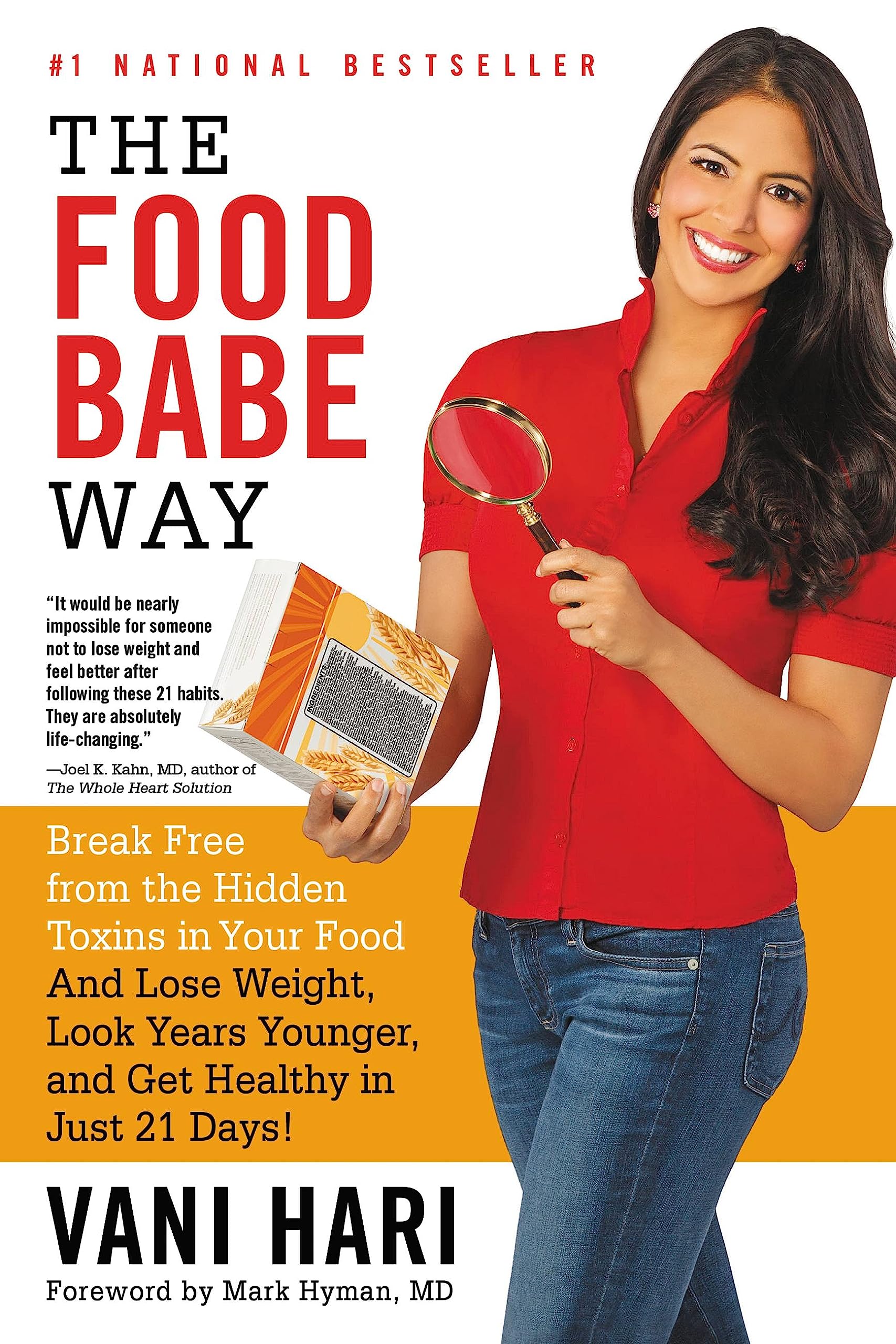
The Food Babe Way: Break Free from the Hidden Toxins in Your Food and Lose Weight, Look Years Younger, and Get Healthy in Just 21 Days! [Hyman MD, Dr. Mark, Hari, Vani] on desertcart.com. *FREE* shipping on qualifying offers. The Food Babe Way: Break Free from the Hidden Toxins in Your Food and Lose Weight, Look Years Younger, and Get Healthy in Just 21 Days! Review: Wonderful, informative book based on sound science. The food industry doesn't want you to read this! - Simply put, this book is simply wonderful - I went to the book store today just to buy a copy of this and am amazed by what I've read so far (quite a bit of it). The book is meticulously researched and is based on sound scientific principles. There is a preponderance of 1 star reviewers who have either only reviewed this one book, or who haven't been verified purchasers, or both. Should anybody trust such "reviewers"? My understanding is that some anti Food Babe blogs have been encouraging readers to submit BAD book reviews. This is different than Vani asking her blog subscribers to write "honest" book reviews. I would posit that most of the bogus bad reviews are from food industry insiders, scientists, and other shills who feel they must write terrible and fake reviews to prevent the average Joe from waking up and realizing that our food supply has been tainted by non-natural chemicals and non-natural engineering techniques. But why would these insiders be so scared, you may ask? I believe it is largely because they know the anti-GMO backlash is reaching a fever pitch, and it will only be a short matter of time before big food and big agra will have to concede and take these out of the food supply. It logically follows that many of these people will lose their consulting, lobbying and research jobs when the GMO market collapses - a collapse which is well on its way to coming to fruition. But doesn't Vani need to be a scientist, and should she scientifically prove that GMOs are harmful to humans? Absolutely not. Nor do I have to scientifically prove that bathing in gasoline is probably going to harm your health; it is sound common sense to say that you should not subject yourself to new foods which haven't been proven safe in LONG term studies. It is also reasonable to not eat petroleum derived preservatives like BHT, which, by the way, has been banned in many European countries. Furthermore, the burden should be on big food and big agra to scientifically PROVE that these foods are safe for long term consumption - not for consumers to PROVE that they DON'T CAUSE HARM (what an asinine concept). And by long term, I'm talking about volunteer human studies that last 20-30 years - not 3 month rat studies (perhaps 12 or 15 month Rat studies though). What good would a 3 month tobacco safety study prove? Not much - a person could smoke cigarettes for 30-40 years and sometimes not get cancer. Thalidamide, leaded-gasoline, leaded paint, asbestos, Agent Orange, PCBs, Tobacco, and NSAIDs were all "proven" to be safe by the scientific community for many years, despite much anecdotal evidence against that notion. It was only after countless people were damaged by these substances that the government finally did the right thing and either banned or made companies put labels on them. These same scientists that are criticizing Vani for her non-scientific background say that NOTHING is fundamentally different between GMO food production and traditional cross breeding, or that Vani doesn't understand scientific principles. Of course, this is spurious logic (and they know it), as genetic engineering has resulted in NON-PLANT genes being introduced into plants via genetic modification. This is unprecedented in all of human history, and it doesn't take a research scientist to understand that sometimes subtle changes can mean the difference between safety and disaster - which is why we need long term testing to make sure these products are safe. And when you take worm genes and splice those into corn, and the new plant generates BT to the point that the corn itself is registered as a pesticide, that is totally new territory. Does it REALLY take a science degree to question whether or not food that is registered as a PESTICIDE might not be safe for long term consumption? Are we really unreasonable in asking that these companies label foods which they spliced worm genes into? And if GMOs are so great, then why don't these companies flaunt it. Can't you just imagine "Corn Flakes - Powered by BT CORN. Now you can feed your children and kill insects with our new breakfast cereal!!". Come and get some... But I digress... Do you know who has decided that these foods are safe in the short term? The FDA relies on the "honor" system for these companies to test the safety of their own products, but what "honor" can we expect from companies like Kraft which were owned by Philip Morris (Altria) for 20 years (yes, they've been spun off now). Are these 1 star reviewers really so stupid to think that ANY company has morals? Do you really want to trust your long term health to PHILIP MORRIS? But no, see, we don't have science degrees, so we just can't understand how complex these processes are. And if we did have science degrees, then we could understand how 3 month safety studies by companies like Philip Morris should assure us that products are safe to eat. My advice is to read this book, ignore the haters, and train for a new career if you are a GMO research scientist. Review: Excellent Read.. - This was an excellent read. As has been previously stated, I've also read various unflattering comments about Mrs. Hari with regard to this book and her activism in general. Some say she's not a medical doctor, nutritional expert or scientist; so she's unqualified to write about food. I wholeheartedly disagree. After reading this cover to cover, I feel the book is very well written and presented in an understandable format. Mrs. Hari did a great job explaining how some corporate food giants routinely add antibiotics to livestock such as chicken and cattle, usually on company owned or company sponsored farms. This makes the livestock bulk up quicker so that it can be slaughtered sooner and shipped to market. Some in the restaurant industry adds MSG and other nasty chemicals to our food in order to preserve it, stabilize it, change its color, texture or consistency, add color or whatever other goal they have in mind to get the average Joe Schmo to eat their toxic concoctions. Monsanto manufactures and markets Roundup, a weed killer that's been around since 1970 (according to Wikipedia), and it's used on many farms around the world. With bulk supplies and different variations of pesticides being used on crops (no matter who manufactures them), you don't have to be a rocket scientist to understand the possibility these chemicals can leech into and contaminate the very food we're eating or you're feeding your family. We now have genetically modified plants grown from seeds which have the unnatural ability to resist certain pests. Once crops are harvested and processed into commercially available food, it can have any number of additives contained within that ultimately entices us to eat whatever is placed in front of us, because it looks, smells or tastes good. Unfortunately the only way to rid ourselves of many of these contaminates is to grow our own food or purchase it from a local farmer, farmers market or a grocer such as Whole Foods, Trader Joe's, Thrive Market or Sprouts to name a few. Many people don't have access to these specialty grocers because they're usually located in the more densely populated areas. Purchasing food that's grown naturally or raised to a higher standard usually means paying more for it, so many people choose not to buy it or can't afford it. The book gives excellent insight into what types of food to eat and what to avoid. There's a list of suggested places to shop in person or online to purchase meat, produce or even protein products. The book is footnoted and gives sources and references for the information contained within. The forward was written by Dr. Mark Hyman, MD. I don't mean to imply that this or any other book is perfect when it pertains to what I or anyone else chooses to eat, but this particular book interested me enough to read it and make my own decisions based on the information presented. For anyone who believes that science is infallible, medical professionals have all the answers or corporations and governments won't lie to us to achieve a particular goal, I feel they're doing themselves and possibly their loved ones a disservice. Like many politicians, science can be, and often is motivated by money. Medical practitioners tell us this year that a food product is good for us, but next year they tell us a different story. Medical professionals and scientists can ultimately be bought. All science is not necessarily bad, but it's impossible to tell the good from the not so good when the majority of us are not scientists; especially when we're just trying to pay the bills and raise our families. Thank goodness there are people like Vani Hari and many others like her, that do the legwork, blog and publicize the information to identify the jokers that would sell us anything as a means of enriching themselves. I know there are those who would argue that Mrs. Hari is also motivated by money because she promotes various products on her website. I would respond by saying we all need to earn a living. She has identified a niche that allows her to do just that, while also providing for her own family. Keep up the good work Vani.


| Best Sellers Rank | #46,853 in Books ( See Top 100 in Books ) #129 in Weight Loss Diets (Books) #142 in Nutrition (Books) |
| Customer Reviews | 4.7 4.7 out of 5 stars (3,247) |
| Dimensions | 5.55 x 1.3 x 8.25 inches |
| Edition | Reprint |
| ISBN-10 | 0316376485 |
| ISBN-13 | 978-0316376488 |
| Item Weight | 11.2 ounces |
| Language | English |
| Print length | 384 pages |
| Publication date | March 8, 2016 |
| Publisher | Little, Brown Spark |
M**H
Wonderful, informative book based on sound science. The food industry doesn't want you to read this!
Simply put, this book is simply wonderful - I went to the book store today just to buy a copy of this and am amazed by what I've read so far (quite a bit of it). The book is meticulously researched and is based on sound scientific principles. There is a preponderance of 1 star reviewers who have either only reviewed this one book, or who haven't been verified purchasers, or both. Should anybody trust such "reviewers"? My understanding is that some anti Food Babe blogs have been encouraging readers to submit BAD book reviews. This is different than Vani asking her blog subscribers to write "honest" book reviews. I would posit that most of the bogus bad reviews are from food industry insiders, scientists, and other shills who feel they must write terrible and fake reviews to prevent the average Joe from waking up and realizing that our food supply has been tainted by non-natural chemicals and non-natural engineering techniques. But why would these insiders be so scared, you may ask? I believe it is largely because they know the anti-GMO backlash is reaching a fever pitch, and it will only be a short matter of time before big food and big agra will have to concede and take these out of the food supply. It logically follows that many of these people will lose their consulting, lobbying and research jobs when the GMO market collapses - a collapse which is well on its way to coming to fruition. But doesn't Vani need to be a scientist, and should she scientifically prove that GMOs are harmful to humans? Absolutely not. Nor do I have to scientifically prove that bathing in gasoline is probably going to harm your health; it is sound common sense to say that you should not subject yourself to new foods which haven't been proven safe in LONG term studies. It is also reasonable to not eat petroleum derived preservatives like BHT, which, by the way, has been banned in many European countries. Furthermore, the burden should be on big food and big agra to scientifically PROVE that these foods are safe for long term consumption - not for consumers to PROVE that they DON'T CAUSE HARM (what an asinine concept). And by long term, I'm talking about volunteer human studies that last 20-30 years - not 3 month rat studies (perhaps 12 or 15 month Rat studies though). What good would a 3 month tobacco safety study prove? Not much - a person could smoke cigarettes for 30-40 years and sometimes not get cancer. Thalidamide, leaded-gasoline, leaded paint, asbestos, Agent Orange, PCBs, Tobacco, and NSAIDs were all "proven" to be safe by the scientific community for many years, despite much anecdotal evidence against that notion. It was only after countless people were damaged by these substances that the government finally did the right thing and either banned or made companies put labels on them. These same scientists that are criticizing Vani for her non-scientific background say that NOTHING is fundamentally different between GMO food production and traditional cross breeding, or that Vani doesn't understand scientific principles. Of course, this is spurious logic (and they know it), as genetic engineering has resulted in NON-PLANT genes being introduced into plants via genetic modification. This is unprecedented in all of human history, and it doesn't take a research scientist to understand that sometimes subtle changes can mean the difference between safety and disaster - which is why we need long term testing to make sure these products are safe. And when you take worm genes and splice those into corn, and the new plant generates BT to the point that the corn itself is registered as a pesticide, that is totally new territory. Does it REALLY take a science degree to question whether or not food that is registered as a PESTICIDE might not be safe for long term consumption? Are we really unreasonable in asking that these companies label foods which they spliced worm genes into? And if GMOs are so great, then why don't these companies flaunt it. Can't you just imagine "Corn Flakes - Powered by BT CORN. Now you can feed your children and kill insects with our new breakfast cereal!!". Come and get some... But I digress... Do you know who has decided that these foods are safe in the short term? The FDA relies on the "honor" system for these companies to test the safety of their own products, but what "honor" can we expect from companies like Kraft which were owned by Philip Morris (Altria) for 20 years (yes, they've been spun off now). Are these 1 star reviewers really so stupid to think that ANY company has morals? Do you really want to trust your long term health to PHILIP MORRIS? But no, see, we don't have science degrees, so we just can't understand how complex these processes are. And if we did have science degrees, then we could understand how 3 month safety studies by companies like Philip Morris should assure us that products are safe to eat. My advice is to read this book, ignore the haters, and train for a new career if you are a GMO research scientist.
W**D
Excellent Read..
This was an excellent read. As has been previously stated, I've also read various unflattering comments about Mrs. Hari with regard to this book and her activism in general. Some say she's not a medical doctor, nutritional expert or scientist; so she's unqualified to write about food. I wholeheartedly disagree. After reading this cover to cover, I feel the book is very well written and presented in an understandable format. Mrs. Hari did a great job explaining how some corporate food giants routinely add antibiotics to livestock such as chicken and cattle, usually on company owned or company sponsored farms. This makes the livestock bulk up quicker so that it can be slaughtered sooner and shipped to market. Some in the restaurant industry adds MSG and other nasty chemicals to our food in order to preserve it, stabilize it, change its color, texture or consistency, add color or whatever other goal they have in mind to get the average Joe Schmo to eat their toxic concoctions. Monsanto manufactures and markets Roundup, a weed killer that's been around since 1970 (according to Wikipedia), and it's used on many farms around the world. With bulk supplies and different variations of pesticides being used on crops (no matter who manufactures them), you don't have to be a rocket scientist to understand the possibility these chemicals can leech into and contaminate the very food we're eating or you're feeding your family. We now have genetically modified plants grown from seeds which have the unnatural ability to resist certain pests. Once crops are harvested and processed into commercially available food, it can have any number of additives contained within that ultimately entices us to eat whatever is placed in front of us, because it looks, smells or tastes good. Unfortunately the only way to rid ourselves of many of these contaminates is to grow our own food or purchase it from a local farmer, farmers market or a grocer such as Whole Foods, Trader Joe's, Thrive Market or Sprouts to name a few. Many people don't have access to these specialty grocers because they're usually located in the more densely populated areas. Purchasing food that's grown naturally or raised to a higher standard usually means paying more for it, so many people choose not to buy it or can't afford it. The book gives excellent insight into what types of food to eat and what to avoid. There's a list of suggested places to shop in person or online to purchase meat, produce or even protein products. The book is footnoted and gives sources and references for the information contained within. The forward was written by Dr. Mark Hyman, MD. I don't mean to imply that this or any other book is perfect when it pertains to what I or anyone else chooses to eat, but this particular book interested me enough to read it and make my own decisions based on the information presented. For anyone who believes that science is infallible, medical professionals have all the answers or corporations and governments won't lie to us to achieve a particular goal, I feel they're doing themselves and possibly their loved ones a disservice. Like many politicians, science can be, and often is motivated by money. Medical practitioners tell us this year that a food product is good for us, but next year they tell us a different story. Medical professionals and scientists can ultimately be bought. All science is not necessarily bad, but it's impossible to tell the good from the not so good when the majority of us are not scientists; especially when we're just trying to pay the bills and raise our families. Thank goodness there are people like Vani Hari and many others like her, that do the legwork, blog and publicize the information to identify the jokers that would sell us anything as a means of enriching themselves. I know there are those who would argue that Mrs. Hari is also motivated by money because she promotes various products on her website. I would respond by saying we all need to earn a living. She has identified a niche that allows her to do just that, while also providing for her own family. Keep up the good work Vani.
L**A
Vani is clearly getting to people, one way or another. More 1 star ratings than 5 star.... hmmmm, something seems amiss. Are those 1 star raters from the big food corporations and chemical companies? I can't help but wonder. Do we really need to be scientists to understand how to eat well and to know whether or not to believe Vani? I don't think so. She is just trying to open our eyes and to help us use our common sense. It doesn't make sense to have more than 15 ingredients in a food that we are unable to pronounce. We've been fed so much nonsense by the FDA and other so called experts, that many of us are ready to listen to "the little guy" who has good old plain reason that comes with knowledge from an educated background. Vani doesn't have to be a scientist to have knowledge. How many courses in nutrition have scientists taken in their schooling? The same goes for doctors. Where exactly does their expertise in nutrition come from? Wasn't it the "experts" that told us to eat low-fat in the nineties, which only meant that we ended up consuming more sugar than ever before. The scientific experts are the ones who have led us into this unhealthy mess of obesity, increased levels of diabetes and cancer, etc. in the first place. How much more sickness is there since chemicals have been added to our foods? Our grandparents weren't sick like we are today. This is what makes us stop and think and ask: what is going on and what can we do about it? I loved the book and am thankful for Vani sharing what she has learned and for not being afraid to stand up to the corporate bullies. Vani is a naturally beautiful woman, but most of her glow comes from what she feeds her body. There are a lot of pretty people out there, but they don't all have that healthy glow. All I want for me and my family is to eat well, and therefore feel well. We have noticed such a difference since following Vani's advice. Since eating wholesome, chemical free foods, my twice a day migraines have disappeared without the use of medication! How can I ignore evidence like that! I respect the big corporations who have been called out by Vani, but who are trying to make positive change rather than choosing to attack her. There is no reason to bully someone who has a different point of view on a topic. Don't buy the book if you think she is crazy, but don't make fun of those of us who after doing our own research, choose to respect and follow Vani's advice. We are not blindly following her, but we are also not blindly following the "experts" anymore either. I am thankful that I did spend the money on the book and we will use it as a reference tool on our path to good health. Thank you Vani!
A**R
Very good book open my eyes how we foolish eat poison food thank God
S**R
This is a book which achieves its aim of exposing the hidden ingredients in what we eat. The author does not profess to be a scientist BUT she is a brave and motivated campaigner to improve not only eating habits, but persuade the big brands to ensure at the very least ingredients are transparent, if not improved. Interesting and motivating.
A**R
This is a fantastic book. So much information in a very accessible and casual tone. I've learned so much about the toxins that are added to our food. I'm both shocked and empowered. Thank you, Food Babe!
T**Y
Van's bravery and determination will change lives of many who would be otherwise sick and uninformed...a great read!
Trustpilot
2 weeks ago
4 days ago