Full description not available
T**N
Interesting account of a fascinating and doomed people
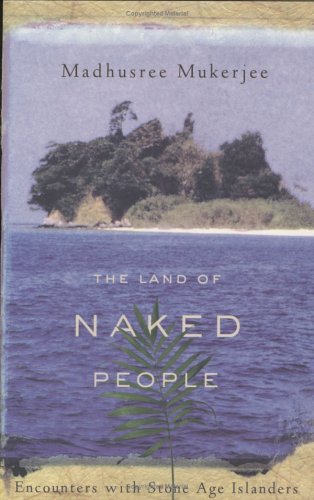
_The Land of Naked People_ by Madhusree Mukerjee is an interesting and informative account of one of the last stone age peoples in the world (or what is left of them), native peoples of the Andaman Islands, a archipelago located north of the Nicobar Islands in the Bay of Bengal in the Indian Ocean, a people that according to archaeologists, linguists, and geneticists have been isolated from the rest of the world for tens of thousands of years. Mukerjee interwove personal accounts of travels to the islands and interviews with government officials, researchers, activists, local residents, and the tribesmen themselves with vivid historical narratives of early contact situations, warfare with, and research on these aboriginal peoples. The people of the Andamans, long known to Asian and European travelers, were feared for centuries as cannibals and headhunters. They were often referred to as "dog-people," as sub-human; in the nineteenth century some were displayed in the Calcutta zoo, where Bengali visitors took them to be descendents of the monkey god Hanuman, and as late as 1925 a paper published in _Man_, a journal of the Royal Anthropological Institute, defined the Andaman as a new species of human, _Homo mincopoeus_. Simultaneously intriguing and repulsing Arab, Chinese, and British travelers by their casual nudity (the natives wore virtually no clothing), ferocity towards outsiders (many of the historical accounts are of hostile first encounters and "punitive expeditions" against islanders), and their physical features that were more African than Asian, the islanders were little bothered for centuries, the islands mostly unsettled despite being located on major trade routes between India and China. Though outside civilization has become increasingly dominant in the last 200 years or so, there are still remote areas in the archipelago; the one hundred or so individuals who make the island of North Sentinel their home are still very much a stone age people (though many technically no longer use stone but rather work metal from nuts and bolts that wash up on their shores into arrowheads) who may be among the most isolated humans on earth (though how long they will stay isolated is a matter of some concern). Mukerjee divided the Andaman islanders into four groups. About ten tribes (at one time during colonial times comprised of as many as 5,000-8,000 people) made up a group called the Great Andamanese, occupying most of the Great Andamans (the South, Middle, and North Andaman Islands) and several adjacent smaller islands. They were at war with the elusive Jarawa, a small group that numbered at one time as many as 600, a group that lived in the dense western forest of South Andaman. Seven hundred or so Onge tribal members lived on Little Andaman, a sizable island farther south, and a hundred Sentinelese lived on the eighteen square miles of North Sentinel off to the west. The author painted a vivid picture of an interesting group of people. Though only distantly related to the Congo Pygmies, they were originally similar in many respects; they lived in dense, moist tropical forests in small bands, had peppercorn hair, painted their naked bodies with clay (a practice which the author discussed at length), used bows, arrows, and nets to obtain food, and had extraordinary botanical knowledge. Hunter-gatherers, they subsisted on a variety of plant products, fish, sea turtles (a favorite), dugongs (now virtually extinct in the islands), and a number of forest animals, the most favored of which was the wild boar, believed by some to have descended from the southern Chinese pig. The natives cared greatly for children; among the Great Andamanese it was considered a compliment and a mark of friendship if a married man, after paying a visit, asked his hosts to adopt one of their children; these parents would in turn not only visit frequently their own but adopt others. Several of the groups had taboos against killing certain creatures. The Great Andamanese for instance ruled that it was taboo to kill a certain spider, a type of beetle, two bird species, two fish species, a certain mollusk, and two types of trees. Cicada grubs were much coveted in several of the islands as food, but many were fearful of upsetting Biliku, the northeastern monsoon wind, whom the cicada was the child of; the islanders would be "silent as a mouse" during early morning and late evening singing of the cicadas, not doing any work or making any noise. Unfortunately much of the book is about the very sad state of the Andaman Islanders. Massive, often illegal, deforestation, even in the protected tribal reserves, has resulted in huge erosion problems, silt runoff that has killed nearshore corals and local fisheries, and deprived the islanders of much food and shelter on every island but North Sentinel. Only 42 Great Andamanese remain, most of them alcoholics (a dependency on alcohol and other substances in the past deliberately encouraged by the authorities), suffering from malnutrition thanks to a diet largely of oil and starch, and many of the children fathered by the welfare staff who are supposed to care for them, Mukerjee documenting how the social workers sometimes took cruel advantage of them. The remaining 100 or so Onge are only a little better off. Disease in the past devastated the islanders and still thins their numbers to this day as they are a people without previous exposure to such illnesses as pneumonia, mumps, and even the common cold. The Jarawa are famous for their resistance, having fiercely fought logging and road construction in their forests, killing laborers and travelers as recently as 1998. Much feared, laborers required guards, police had to escort travelers on the road through their forest; one person told the author, if asked if he ever saw a Jarawa, replied, no, "To see is to die." Though there have been some reverses in favor of the Jarawa in the end it seems that they are doomed to be assimilated into Indian culture if they don't perish from disease and deforestation first.
R**L
Too SUBJECTIVE... not much inffo about the TOPIC...
This book was a total disappointment; instead of learning about these fascinating people.. their heritage, culture, origins, etc. the author selfaggrandizes "her" identity... which is ... perhaps ...questionable... Her writing is often confusing, her sentence sructures often are grammatically and syntactically incorrect; her diatribes and personal 'evenings' filled the pages... I read it... it was VERY boring, NOT very inormative and I wonder, if her sponsor, READ the final draft... revisions were desperately needed. Read it... and at the end... threw it in the recycle...
C**N
Super interesting story about native living.
Super interesting story about native living.
D**8
Lyrical and compelling
Two aspects of this book stand out: the writing and the subject matter. Mukerjee's writing is compelling: lyrical and poetic, while at the same time stark with imagery and a clear penetrating insight. She brings out the humanity of her subjects, and her writing evokes genuine compassion. Mukerjee has an original voice, and deftly avoids the cliches of anthropological writing. I was transported to the Andamans on the wings of her words! And then there is the story and its subjects, offering a glimpse into a hidden world. Very few accessible accounts have likely been written about the Andamans. Absolutely fascinating subject matter - one feels as though one is peeking through a curtain into a magical, antediluvian world.Put together, they make for a book that cannot easily be put down. Kudos to them author on a job very well done. Madhusree Mukherjee is the kind of person who should be writing books - she has certainly found her calling.
W**U
Excellent Book About an Endangered People
Discussions of endangered peoples often invokes stories about Amazonian natives, Kalahari Bushmen, and Australian aborigines to name a few. The people of the Andaman and Nicobar islands are seldom mentioned however. Mukerjee does a great service to the indigenous people of these islands by exposing the destruction wrought upon them by modern intrusions.The Andamanese and Nicobarese have lived in isolation from the modern world in the Bay of Bengal for thousands of years. They were portrayed in travelogues, including Marco Polo's, as ferocious, cannabilistic, and uncivilized to the highest degree. These impressions were often based not upon direct interaction but rather on distant observation of a unabashedly naked people with a hunter-gatherer culture. When actual interaction did occur primarily by the British, the Andamanese and Nicobarese were often ferociously defensive as can be expected when confronted by an imperialist power intent on conquering and also gathering human specimens to study and display on the mainland. Even in the face of these dangers, they attempted to maintain some peaceable interaction with their conquerors and displayed the great attributes of their cultures.Mukerjee spent some time in the islands in an attempt to interact with the Great Andamanese, Onge, Jarawa, Nicobarese, and Sentinelese and in the process, has exposed the Indian government's wrongheaded and destructive policies toward these indigenous peoples. It is apparent that most Indian bureacrats in the islands are there to live the easy life and make a quick buck, and the few who desire to make change often are faced with insurmountable obstacles in their attempt to improve policy toward the natives. Mukerjee describes her subjects in affectionate detail, and her love for them and her sorrow for their plight are evident throughout the book. Her feelings for them culminates as she approaches the Sentinel Islands, home to possibly the most undisturbed culture on earth. As her boat nears the islands, she begins to regret her intrusion and thinks to herself "Please please please, let us not destroy this last haven."Unfortunately, disease and war has wiped out most of the islands' population. Construction and deforestation is wiping out native habitats. The islanders are impotent to change the situation, and the Indian government will ultimately be responsible for protecting these vulnerable and beautiful people.I highly recommend this book to anyone concerned with the disappearance of a people who have not been able to fight back and are quickly disappearing from our earth.
T**A
Stone age, naked and delightful !
As an Old Andaman Hand ( I visited a few days after the earthquake + tsunami in early January 2005 and every winter since then) I fell in love with the place & the people and we now have a kids home there so I'm naturally interested in the history of the islands and not perhaps so naturally, in the anthropology of the various tribes and people who inhabit the islands. This book is very thorough but also manages to be a thoroughly enjoyable read and is very informative. The po-litically correct will probably throw a wobbler when I mention that there are Negritos there, some are between 1m60 and 2m tall whilst some are pygmies, there are Mongoloid tribes and even islands that have never received visitors without sending showers of 2m long arrows at them as they approach ( the Indian Government chooses to leave them alone; can't blame them ! ) The title of the book speaks of the older books I have read about Andaman. Just as many of the isolated tribes today, they didn't wear clothes and what they did wear was minimal. An excellent book and if you don't want to spend time tracking down accounts from mariners and the former British Indian Government ... This will give you the information th@ you need. Highly recommended
G**S
andaman islands
This excellent book comes from an author who is a remarkable reporter and investigator with a fine literary talent.The book deals with the four tribes of the Andaman islands namely the Great Andamanese, the Onge,the Jarawa and the Sentinelese.The history of the tribes istraced through the cruel excesses of British,Japanese andIndian administrations which were finally halted by court action.The book also deals with customs and the daily life of the tribes.Abook to be highly recommended. The only failing of the book are the very poor pictures and map.
R**O
I found this a refreshingly new study of an old ...
I found this a refreshingly new study of an old but yet little known people. Their way of life mores and customs are a challenge to all modern so called civilized people We owe a dbt of gratitude to Ms. Mukherjee for her courageous research and study. Bishop Kenneth Fernando
Trustpilot
2 weeks ago
1 month ago