We remain fully operational. Our teams are working around the clock to ensure your deliveries continue safely.

DOWNLOAD THE APP


Customer Services
Copyright © 2025 Desertcart Holdings Limited
DOWNLOAD THE APP
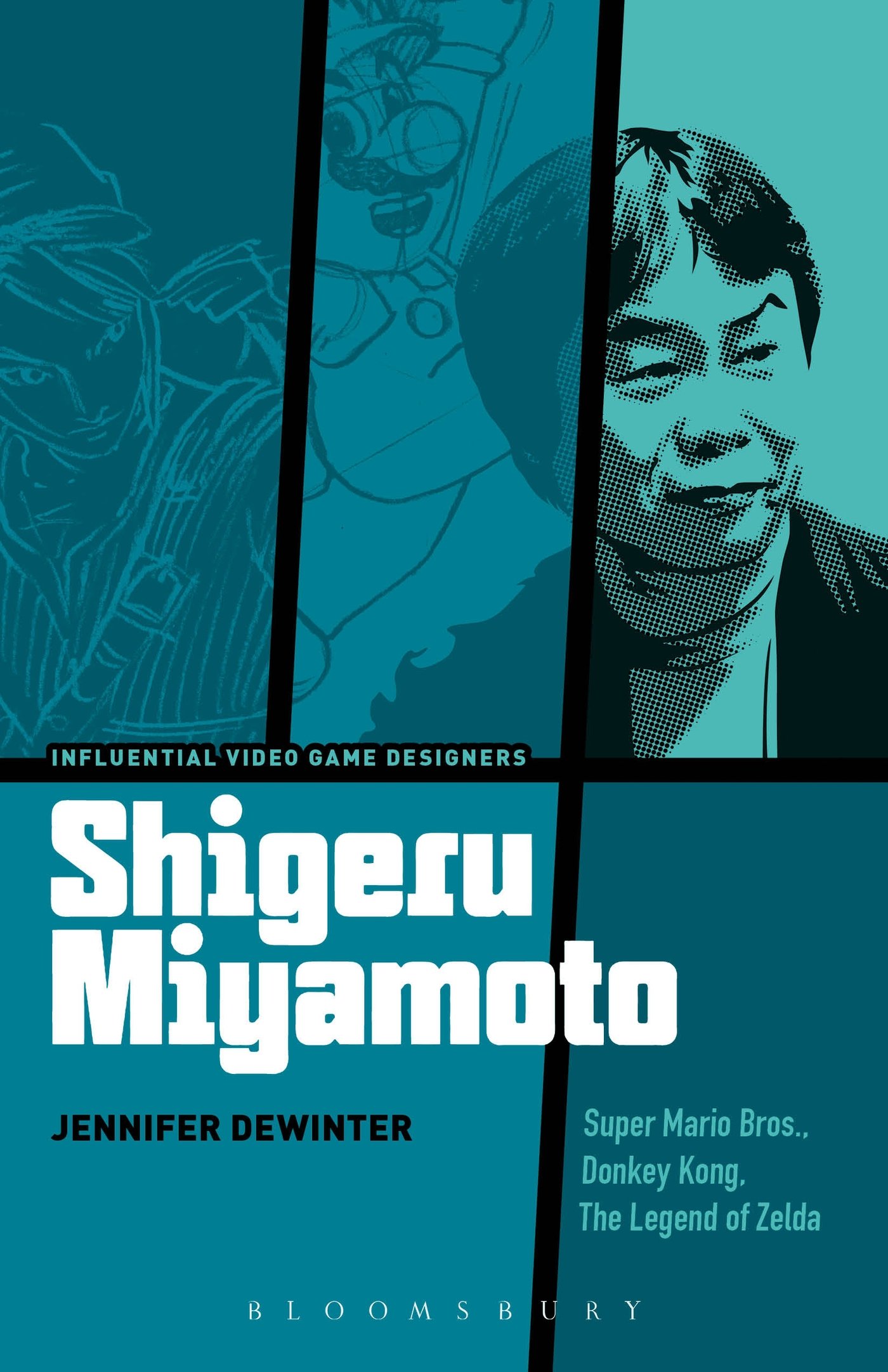
Full description not available
N**S
A fun read.
A mature and acacdemic text of one of the most influential creators of our time. A fun read.
G**N
The book does a good job of introducing Miyamoto and then explaining his motivations ...
A very interesting walk through Miyamoto's life and design philosophy. The book does a good job of introducing Miyamoto and then explaining his motivations for each of the games he created. The organization of the book is also very nice.
C**M
Important contribution to an emerging medium
Unlike the other reviewer I have A) read the book in its entirety and B) don't judge an entire book over a single typographical error (seriously dude maybe sit the next play or two out).This is the first book to take the videogame designer seriously as a profession that contributes to our culture, and in this sense I think it's much overdue!deWinter's scholarship is on point, summarising Miyamoto's career in detail, avoiding the pitfalls of a dry recounting or superficial gloss. Instead deWinter strikes a balance between content and style, factual accuracy and insight.This is not an abstract philosophical pondering of auteurship, but an on the ground, practical discussion of Miyamoto's enormous contribution to the games industry. I'd recommend it not only to people studying games or aspiring designers, but also to journalists who need an accessible history lesson, or videogame fans looking to brush up on their favourite medium.
A**R
Used book was sent!
A used book was sent! Unacceptable!
K**S
Drought and Flood of Analysis
This book is an analysis of Shigeru Miyamoto's design philosophy, starting from his college experiences in industrial design and ending with his involvement in the Wii controller and the Wii Sports software package.This book will be very interesting if you enjoy analysis of game design, engineering, or the technology of video games. It may also provide deep insights into the way humans and machines work together if you enjoy discussions of technological progress, or any kind of futurism. Miyamoto's design brilliance is very inspiring, and his desire to improve people's lives through play reveals a deep level of compassion that informs his design ideas.This is not a biography, but there is a narrative to be found here of Miyamoto's ideas and the way he was influenced by rapid technological advancements. The story is told through examples, highlighting the way Miyamoto adapted to changing conditions in his professional position and his personal sources of inspiration.The book lacks detail in some areas. There is a lot of excellent research, but I feel that the GameCube era was overlooked, and this may be due to the fact the DeWinter was rushing to get to the Wii era, when many of Miyamoto's aspirations came to light. There are other moments when I feel the topics presented were not thoroughly explored, revealed by the great depth of analysis provided by DeWinter concerning Miyamoto's business relationships and his design philosophy during the coin-open era.This is an exciting and inspiring book. I look forward to future books in this series, perhaps they will connect to previous analyses, that would be amazing.
L**A
Excellent!
deWinter provides an invaluable addition to game studies scholarship. Compellingly written, deWinter tackles a range of topics surrounding the great Miyamoto, from his personal inspirations and perspectives, to technical issues surrounding gameplay, to spatial narratives (which are so fascinating), to industry, so on and so forth. I highly recommend this book to scholars/academics and laypersons interested in Miyamoto or games broadly. Superb.
M**S
Many pictures were mislabeled (Mario Kart 64 is not Super Mario Kart)
Probably need a genuine editor from inside Game Industry. Many pictures were mislabeled (Ex. Mario Kart 64 is not Super Mario Kart). The way it was written suggested that Smash Bros was Shigeru Miyamoto's creation (Though he had a hand in it, it was mostly Sakurai and Iwata from Hal Laboratory's project, a separate independent developer from Nintendo). Constant reference to VGChartz for sales information instead of using the more reputable NPD. A lot of minor errors really bothered me.
T**.
A Strong First Entry in a New and Exciting Series
Shigeru Miyamoto is the first in a series of books about influential video game designers. The mastermind behind many of Nintendo's most beloved and successful franchises, Miyamoto's importance to the world of gaming cannot be understated. It is with this mindset that author Jennifer deWinter explores his contributions, with a keen eye on the socio-cultural impact of his work.Instead of providing a play-by-play of his time spent developing and producing games, she targets specific innovation in the areas of narrative, experience, expression and control. The book also includes a transcript of an influential speech he gave along with a gameography of sorts. By forgoing the traditional framework of a biography, deWinter is able to tell us something more about the man, lending credibility to the idea he is 'the father of modern video games'.Personally, I found the information presented to be both interesting and insightful. Written in an academic style and tone, it may come off to some as a little dry. There are no overarching narratives or themes other than Miyamoto's commitment to play as a design axiom. It's still a fast read, however, one that I would recommend to fans of his work. I look forward to future entries in the series.
Trustpilot
3 days ago
2 weeks ago