We remain fully operational. Our teams are working around the clock to ensure your deliveries continue safely.

DOWNLOAD THE APP


Customer Services
Copyright © 2025 Desertcart Holdings Limited
DOWNLOAD THE APP


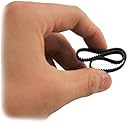
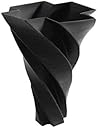
Polymaker PolyFlex is a highly flexible, yet easy to print 3D printing material. Featuring good elasticity and a large strain-to-failure, Polymaker PolyFlex opens up a completely new realm of applications. Flexible: Polymaker PolyFlex features a “Shore A” hardness of 90-95A and a large strain-to-failure of over 400%. These aren’t just figures on a page, but are tested values obtained from actual printed parts. What this means is, Polymaker PolyFlex gives you cool flexible parts with no worry about the part breaking. Polymaker PolyFlex is truly your best tool for creating fun flexible parts. Printer Compatibility: One of our main goals when developing Polymaker PolyFlex was to make it easy for everyone to use. Flexible filaments are known to be difficult to work with. Well, not any more. Polymaker PolyFlex is designed to be compatible with almost all desktop FDM/FFF printers and requires no hardware modifications. Not only does it print smoothly, but also adheres well to a large variety of surfaces with no need for a heated build plate, leaving you to think about nothing other than what model your going to print. Flex-up Your Imagination: The soft and flexible nature of Polymaker PolyFlex opens up a new dimension of what one can do with desktop 3D printers: clothing, shoes, wearables, prosthetics…you name it. The possibilities are endless. Review: No se enredA compre el filamento 2.85 mm de poliflex tpu impreso en en anet Et4 pro con extrusor directo de e3d la titan aero y todo perfecto Review: As a generalization, TPU has a reputation for being a bit more difficult to print. I was expecting to have to do a lot of work to get a clean print out of this. To my surprise... I really didn't have any issues. My first test prints were coming out clean. I did print a temperature tower to find the best temp for this and tweak settings to minimize stringing (TPU is usually fairly stringy). Then straight away I was getting good parts with this stuff. The material is very flexible. It's not particularly 'stretchy'. The filament itself does exhibit stretchy/elastic property (in addition to flexibility) but once you have a handful of layers built up, it really doesn't 'stretch' and is mostly just flexible. It is VERY strong and layer adhesion is outstanding (you will find that you cannot pull the layers apart.) I should mention that I use this on a direct-drive printer. Bowden-drive printers are probably more common. Bowden drives have to "push" the filament through the Bowden tube and the rubbery nature of the filament can make this difficult for some printers. Direct-drive printers have the filament feed hob gear directly on the print head (no Bowden-tube) so they have better control of the filament. I've never tried to print this on a Bowden-drive machine so I can't speak to how well it works.
| ASIN | B00YXBO1VQ |
| Brand Name | BuildTak |
| Colour | True Black |
| Customer Reviews | 4.6 4.6 out of 5 stars (20) |
| Global Trade Identification Number | 06938936701118 |
| Item Diameter | 3 Centimetres |
| Item Weight | 750 Grams |
| Manufacturer | Polymaker |
| Manufacturer Part Number | PM70111 |
| Material Type | Thermoplastic Polyurethane |
| Model Number | PM70111 |
| Number of Items | 1 |
| Unit Count | 1.0 count |
E**L
No se enredA compre el filamento 2.85 mm de poliflex tpu impreso en en anet Et4 pro con extrusor directo de e3d la titan aero y todo perfecto
T**L
As a generalization, TPU has a reputation for being a bit more difficult to print. I was expecting to have to do a lot of work to get a clean print out of this. To my surprise... I really didn't have any issues. My first test prints were coming out clean. I did print a temperature tower to find the best temp for this and tweak settings to minimize stringing (TPU is usually fairly stringy). Then straight away I was getting good parts with this stuff. The material is very flexible. It's not particularly 'stretchy'. The filament itself does exhibit stretchy/elastic property (in addition to flexibility) but once you have a handful of layers built up, it really doesn't 'stretch' and is mostly just flexible. It is VERY strong and layer adhesion is outstanding (you will find that you cannot pull the layers apart.) I should mention that I use this on a direct-drive printer. Bowden-drive printers are probably more common. Bowden drives have to "push" the filament through the Bowden tube and the rubbery nature of the filament can make this difficult for some printers. Direct-drive printers have the filament feed hob gear directly on the print head (no Bowden-tube) so they have better control of the filament. I've never tried to print this on a Bowden-drive machine so I can't speak to how well it works.
B**T
They say it works in most printers, but when talking to support on the phone they had not hear of the Robo 3D printer and did not know if it would work.
H**O
Polyflex was a joy from the very start. I took a guess at the print settings, and my first print turned out perfectly. I made some small adjustments, and then printed 20 hours worth of parts with only a single failure. My nozzle did clog at one point, but I believe the was some old ABS in there. After a few cold pulls, printing continued without error. Every part stuck to the bed. The were no voids, and NEVER any layer separation. I can hardly believe how good the layer adhesion is in this stuff. I pulled with all my might and the lays did not separate. PLA and ABS gave way almost immediately. It feels slightly greasy, but that's just the low friction surface finish. I did find the color a little darker than shown, but consistent. I wish they would make a wider range of colors in this material.
Trustpilot
3 weeks ago
2 months ago