The Tiger
Product ID: 64664190
Desertcart purchases this item on your behalf and handles shipping, customs, and support to Cyprus.
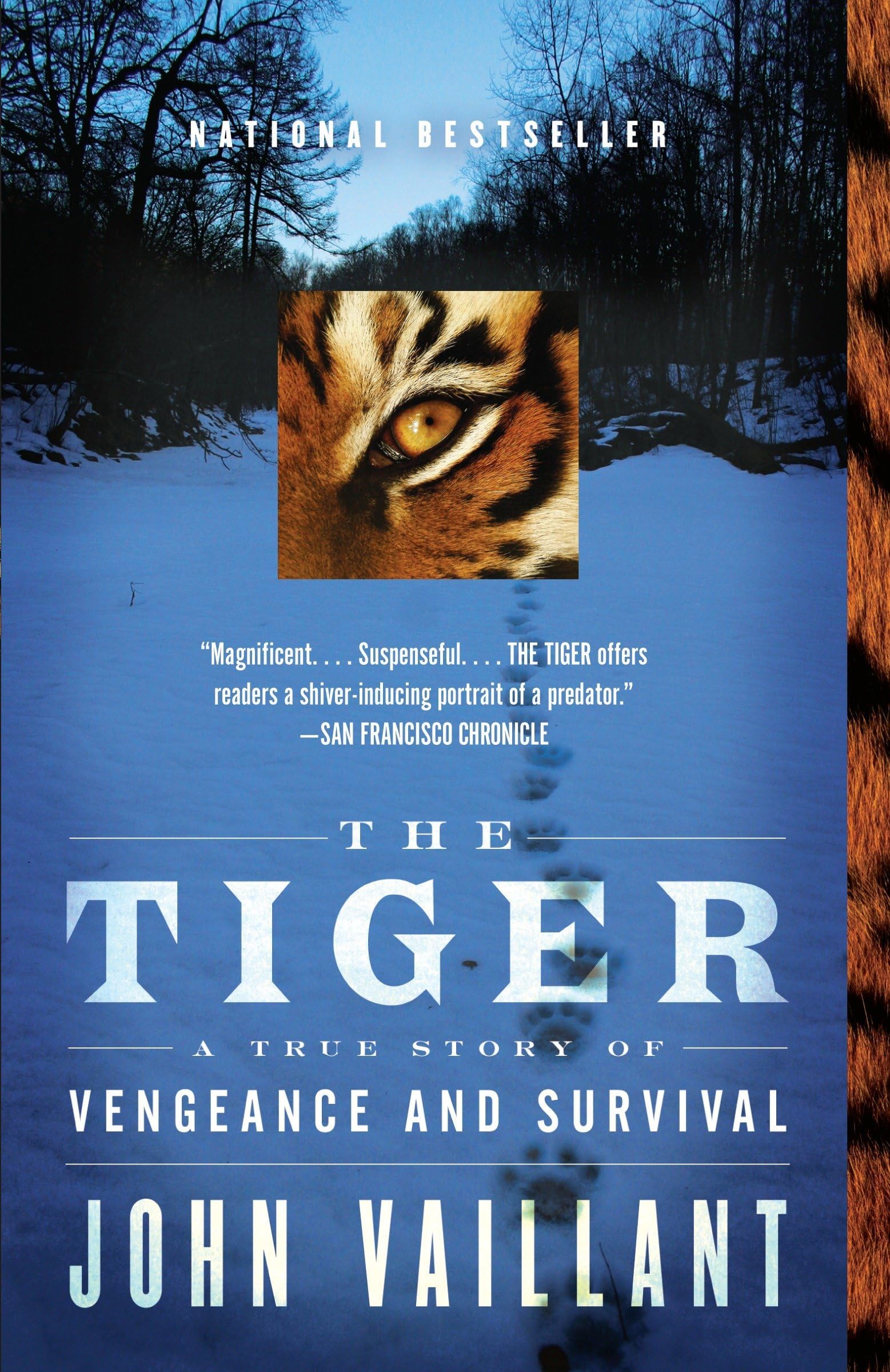
A gripping story of man pitted against nature’s most fearsome and efficient predator. Outside a remote village in Russia’s Far East a man-eating tiger is on the prowl. The tiger isn’t just killing people, it’s murdering them, almost as if it has a vendetta. A team of trackers is dispatched to hunt down the tiger before it strikes again. They know the creature is cunning, injured, and starving, making it even more dangerous. As John Vaillant re-creates these extraordinary events, he gives us an unforgettable and masterful work of narrative nonfiction that combines a riveting portrait of a stark and mysterious region of the world and its people, with the natural history of nature’s most deadly predator. Review: From umgebung to umwelten of man and tiger – A classic of non fiction. - In this book, John Valliant mentions of ethnologist Jacob Von Uexkull’s concept of umwelt ( an imaginary soap bubble around each creature to represent its own world and when we then step into one of the bubbles our reality is transformed…” Umgebung is the objective relative we live in; but each of us experiences it differently from our own umwelt (subjective reality). This reference in the story is poignant – did the tiger step into the umwelt of its victim to kill it? The gruesome site where Andrei Markov a tayozhnik (forest dweller) was killed rather annihilated by the tiger in a remote taiga (forest) in Russia left the investigators and Markov’s friends or for that matter everyone around shocked and bewildered. Such ferocious brutality against man was unknown. The Inspection Tiger (the team charged to address tiger related issues in the taiga) saw in the evidence an intentional and calculated act; as if the tiger had marked out Markov, dictated the narrative and executed its plan to perfection. But why was the tiger angry with Markov? John Valliant recounts this fascinating story of man and tiger encounters that took place in December 1997 in one of the remotest part of Russia, Primorye near Sea of Japan. The encounter itself is riveting, but Valliant is in no hurry to tell the story. His narrative fills in rich details of the Primorye region, the taiga, its indigenous people, the townspeople – the displaced Russians, life post perestroika in this bleak region and the insatiable Chinese appetite for tiger organs. The discussions of each of these elements are engrossing in themselves and they also have a significant bearing on this story. Siberia evokes a sense of remoteness, Primorye or Maritime Territory, is farther south of Siberia; its biggest city Vladivostok is closer to Australia than Moscow! The taiga in this region is as remote a place on earth as can be. In its vastness and desolation there are no witnesses. The closest material evidence was Markov’s friend who could only hear the threatening growls from the site . The evidence of what happened was in the white book - snow- the meticulous record keeper. It is fascinating to see how much the investigating team reconstructed from the tell tale signs in the snow at the attack sites. In this region, between the epochal changes in Russia the plight of the common people became pathetic. During the communist regime many western Russians were displaced or shunted to the taiga, an area alien to them. That is how both Markov the victim ( a suspected poacher) and Trush the Inspection Tiger leader ended in this remote part. Post perestroika the townships in Primorye were stripped off their economic activity and became desolate islands of habitation. Very few could get jobs and the rest of the townsfolk were reduced to primitive living - hunting gathering in the taiga in the 20th century. Markov turned to fur trapping, bee keeping and in that bare existence poaching with lucrative returns was too difficult to resist. Many times Trush took a lenient view of illegal activities dismayed by the poverty of the tayozhniks. The indigenous people Udege, Nanai and Orichi have lived off the taiga for centuries. Their myths and legends have led them to believe the tiger is just and fair and their collective memory has groomed them to live in mutual respect with the tiger. The Dunkai family, of Nanai lineage, whom Markov met before his final encounter recalled that they had come face to face with a tiger and were not hurt. (They did not indulge in poaching) It was the city dwellers, the displaced Russians, the whites, who were attacked, as they lacked the understanding of the unwritten code of the taiga. The leap of faith required for this was beyond them. The taiga is not only remote but also unique; its diverse ecosystem defies classification. The Taiga Matushka (mother) provides for all and has its own nuances, unwritten rules, discerning sounds and many immanent features of which the author helpfully apprises the reader. Some are intriguing, how animal or humans making tracks serve ‘unintended courtesy’ for those who will use the same route (be it animal or beast); it saves energy something in short supply; how the entire ecosystem could collapse if the humble Korean pine nut were to disappear. The tiger by design nature’s majestic, lonely, nomadic yet the most efficient killing machine. The myths and legends surrounding it add to its potent and mystical presence. The tiger in question literally wields a psychic leash on Markov- Why did Markov refuse requests from friends to stay back and return to his cabin when he knew that there was something amiss between him and the tiger? Tiger’s gaze can mesmerize and its roar can be soul shattering and its power brute and lethal, yet it can catch a fly in its paw and release it unharmed. The locals aver that if a tiger does not want to be seen you will not be able to see it. The investigators on the Markov site become aware of the tiger’s presence by the barking of the dogs, they can’t see but can feel its potent presence and its intent in informing the of his presence. The loggers mention how the tiger is known to keep a count of those living in its area, it can wait for even a month to avenge those he feels abrogated on him. It almost seems that tigers are believed to be capable of abstract thinking. In this loci and with the given set of characters something had changed, Markov had done something which had disturbed the delicate balance between man and the top predator. Valliant’s portrayal of the events in December of 1997, of the encounters with the tiger in the taiga and the response by Inspection Tiger read like a thriller, the final showdown breathtaking. His analysis of the forces at play is scholarly yet accessible. The various research stories are informative, delightful as also they help in explaining our atavistic tendencies once we humans are thrown in primal settings. One aspect of the book which stood out was Valliant’s mastery of the language and his eye for detail. His power of expression and his vivid description create a multidimensional experience for the reader to visualize in slow motion the tiger bursting and landing on its victim, hear the snap of a twig, sharpened sounds of funeral bells in snow laden ground, the unmistakable yet unseen presence of the tiger, the amba the powerful one and the messages in the snow. It is sad that this majestic creature is under severe threat now due to indiscriminate killing and lack of serious attention it deserves. As Valliant rightly brings out in the epilogue that Taiga matushka is for men and the tiger. A multipronged approach is needed to address the complexities that exist if this beautiful being is to be protected. I enjoyed reading this book and which gave me many insights these will help whenever I read a similar story. The book shed light on many other aspects such as the efforts of many Russians who were willing to stick their neck out during the Communist regime to protect this rare species as well as other conservationists who led to the formation of Inspection Tiger. Review: A well researched and powerful book on tiger - A must read for anyone interested in tigers and tiger conservation. A well told story of human impact on tigers and nature.


| Best Sellers Rank | #122,008 in Books ( See Top 100 in Books ) #21 in Hunting (Books) #365 in Environment & Nature #432 in Earth Sciences Books |
| Customer Reviews | 4.4 out of 5 stars 3,913 Reviews |
A**A
From umgebung to umwelten of man and tiger – A classic of non fiction.
In this book, John Valliant mentions of ethnologist Jacob Von Uexkull’s concept of umwelt ( an imaginary soap bubble around each creature to represent its own world and when we then step into one of the bubbles our reality is transformed…” Umgebung is the objective relative we live in; but each of us experiences it differently from our own umwelt (subjective reality). This reference in the story is poignant – did the tiger step into the umwelt of its victim to kill it? The gruesome site where Andrei Markov a tayozhnik (forest dweller) was killed rather annihilated by the tiger in a remote taiga (forest) in Russia left the investigators and Markov’s friends or for that matter everyone around shocked and bewildered. Such ferocious brutality against man was unknown. The Inspection Tiger (the team charged to address tiger related issues in the taiga) saw in the evidence an intentional and calculated act; as if the tiger had marked out Markov, dictated the narrative and executed its plan to perfection. But why was the tiger angry with Markov? John Valliant recounts this fascinating story of man and tiger encounters that took place in December 1997 in one of the remotest part of Russia, Primorye near Sea of Japan. The encounter itself is riveting, but Valliant is in no hurry to tell the story. His narrative fills in rich details of the Primorye region, the taiga, its indigenous people, the townspeople – the displaced Russians, life post perestroika in this bleak region and the insatiable Chinese appetite for tiger organs. The discussions of each of these elements are engrossing in themselves and they also have a significant bearing on this story. Siberia evokes a sense of remoteness, Primorye or Maritime Territory, is farther south of Siberia; its biggest city Vladivostok is closer to Australia than Moscow! The taiga in this region is as remote a place on earth as can be. In its vastness and desolation there are no witnesses. The closest material evidence was Markov’s friend who could only hear the threatening growls from the site . The evidence of what happened was in the white book - snow- the meticulous record keeper. It is fascinating to see how much the investigating team reconstructed from the tell tale signs in the snow at the attack sites. In this region, between the epochal changes in Russia the plight of the common people became pathetic. During the communist regime many western Russians were displaced or shunted to the taiga, an area alien to them. That is how both Markov the victim ( a suspected poacher) and Trush the Inspection Tiger leader ended in this remote part. Post perestroika the townships in Primorye were stripped off their economic activity and became desolate islands of habitation. Very few could get jobs and the rest of the townsfolk were reduced to primitive living - hunting gathering in the taiga in the 20th century. Markov turned to fur trapping, bee keeping and in that bare existence poaching with lucrative returns was too difficult to resist. Many times Trush took a lenient view of illegal activities dismayed by the poverty of the tayozhniks. The indigenous people Udege, Nanai and Orichi have lived off the taiga for centuries. Their myths and legends have led them to believe the tiger is just and fair and their collective memory has groomed them to live in mutual respect with the tiger. The Dunkai family, of Nanai lineage, whom Markov met before his final encounter recalled that they had come face to face with a tiger and were not hurt. (They did not indulge in poaching) It was the city dwellers, the displaced Russians, the whites, who were attacked, as they lacked the understanding of the unwritten code of the taiga. The leap of faith required for this was beyond them. The taiga is not only remote but also unique; its diverse ecosystem defies classification. The Taiga Matushka (mother) provides for all and has its own nuances, unwritten rules, discerning sounds and many immanent features of which the author helpfully apprises the reader. Some are intriguing, how animal or humans making tracks serve ‘unintended courtesy’ for those who will use the same route (be it animal or beast); it saves energy something in short supply; how the entire ecosystem could collapse if the humble Korean pine nut were to disappear. The tiger by design nature’s majestic, lonely, nomadic yet the most efficient killing machine. The myths and legends surrounding it add to its potent and mystical presence. The tiger in question literally wields a psychic leash on Markov- Why did Markov refuse requests from friends to stay back and return to his cabin when he knew that there was something amiss between him and the tiger? Tiger’s gaze can mesmerize and its roar can be soul shattering and its power brute and lethal, yet it can catch a fly in its paw and release it unharmed. The locals aver that if a tiger does not want to be seen you will not be able to see it. The investigators on the Markov site become aware of the tiger’s presence by the barking of the dogs, they can’t see but can feel its potent presence and its intent in informing the of his presence. The loggers mention how the tiger is known to keep a count of those living in its area, it can wait for even a month to avenge those he feels abrogated on him. It almost seems that tigers are believed to be capable of abstract thinking. In this loci and with the given set of characters something had changed, Markov had done something which had disturbed the delicate balance between man and the top predator. Valliant’s portrayal of the events in December of 1997, of the encounters with the tiger in the taiga and the response by Inspection Tiger read like a thriller, the final showdown breathtaking. His analysis of the forces at play is scholarly yet accessible. The various research stories are informative, delightful as also they help in explaining our atavistic tendencies once we humans are thrown in primal settings. One aspect of the book which stood out was Valliant’s mastery of the language and his eye for detail. His power of expression and his vivid description create a multidimensional experience for the reader to visualize in slow motion the tiger bursting and landing on its victim, hear the snap of a twig, sharpened sounds of funeral bells in snow laden ground, the unmistakable yet unseen presence of the tiger, the amba the powerful one and the messages in the snow. It is sad that this majestic creature is under severe threat now due to indiscriminate killing and lack of serious attention it deserves. As Valliant rightly brings out in the epilogue that Taiga matushka is for men and the tiger. A multipronged approach is needed to address the complexities that exist if this beautiful being is to be protected. I enjoyed reading this book and which gave me many insights these will help whenever I read a similar story. The book shed light on many other aspects such as the efforts of many Russians who were willing to stick their neck out during the Communist regime to protect this rare species as well as other conservationists who led to the formation of Inspection Tiger.
T**R
A well researched and powerful book on tiger
A must read for anyone interested in tigers and tiger conservation. A well told story of human impact on tigers and nature.
K**N
Can't put it down once you start reading it
One of the best tiger books I have read, and I have read a lot of them so I know. A compelling read for anyone who is looking for superb writing, deep insights and a peek into the life of the Amur Tiger, by a master storyteller.
S**I
A gripping book
I love how it kept me interested and hooked for the entire duration. I’m a slow reader and can lose interest in the middle but I kept coming back to it.
A**A
Living legends stalk....
Gripping storyline, provides an excellent window into rural Russ, esp. the far east in the days following perestroika.... Based on true events, it highlights the impact on humans and animals alike...the saga of an ongoing clash between two apex predators...Man and Tiger.... A must read in the Year of The Tiger....
M**M
An extraordinary case.!
Being a True Story, It will squeeze the hell out of you. Horrifying incident revealing the Raw Occult through unbelievable evidence. This occurrence will completely change your view of our Evolution, our part in nature, our standard in the order. In-depth research, solid proof, exceptional narration. A Catastrophic happening. Not just a man-eater tale.
A**L
The book
Nice and fascinating
S**U
Not for everyone
If you love documentaries or real life accounts of incidents then go for it. This book talks about the geo location, it's flora & fauna, history, people's way of life, demography, how they share the place with animals etc. This takes the bulk of the story and actual incident is woven into this. So, if you like fast paced action-filled books then better skip this.
B**R
一国の行方に左右される自然と人間を人喰いトラに凝縮した
このものがたりは、決して猛獣狩りの本ではありません。もしもあなたが、ハンターと野獣の息詰まる知恵比べのストーリーを期待して買うなら失望するでしょう。そういう人は、吉村昭の羆嵐や、Peter Capstick の Death in The Long Grass の方がお気に召す事と思います。しかし、共産主義からペレストロイカを経て、余りにも目まぐるしく変わるロシアの国全体の一部として翻弄されるシベリアの自然と、そこに住む人々までを視野に入れて、地球規模の自然環境の緩慢な衰弱から死を残念に思う気持ちがあるなら、買って損はないでしょう。(猛獣狩りやアニマルトラッキングが大きく関わってくるのは、後半部分から後です。あなたは、それまで辛抱出来ますか?)
V**R
A fascinating story that looks into all of the nooks and crannies of a complex situation.
From page one I was totally engrossed by Valliant's thorough treatment of his characters, their circumstances, and the history that brought them all to this place and time.
S**D
A well researched book on a subject that merits public attention
Although the story is about a man eating Siberian, or more appropriately, Amur tiger in the far east region of Russia, it is actually about creating awareness about this beautiful, but endangered species of cat. The author keeps the true story intense, but departs from the main story a number of times for developing characters involved in it and in the process explains in detail the history, geography, economy, ecology, ethnicities and culture, predators and prey in the region, and of course the relationship between men and the beast. In fact, the authors goes into further details and educates the readers on different political eras of Russia, Sino-Soviet relations of the past and Sino-Russian relations as of now, animal behaviour, even predator ' prey relationships studied in Africa, anthropology, palaeontology, etc. and he does all of this so very beautifully never losing track of the original story of the man eating tiger. It is amazing to note how learned the author and how well researched this book is. The author brings the knowledge out from diversified subjects as they apply to this confrontation between men and tiger. The book has many tragic events described graphically, but in the end it leaves hope in that the awareness is growing all over the world and that Amur Tigers may survive living in the wild. I grew up reading very lively and graphic stories of man eating tigers of India written by Jim Corbett and many local Indian hunters. I remember many of those stories and am still able to recall hunters describing the man eating tiger's behaviour. This book either endorsed those viewpoints or expanded my knowledge on tiger behaviour especially after it becomes a man eater. When I received my book from Amazon.ca, its thickness and page appearances discouraged me for I am a slow reader. How am I ever going to finish this voluminous book I said to myself. But lo and behold, I completed in two days. This shows how interesting and intense this book is.
M**R
The Tigre
I found the history very intersting and learnt a lot from reading it!! Can recommend it to all readers looking for a more profound history;
A**P
this was a good reading book except for indepth information regarding hunters etc-I ...
this was a good reading book except for indepth information regarding hunters etc-I would recommend it for reading at times kept you on the egde of your seat
Trustpilot
2 weeks ago
4 days ago