
Buy anything from 5,000+ international stores. One checkout price. No surprise fees. Join 2M+ shoppers on Desertcart.
Desertcart purchases this item on your behalf and handles shipping, customs, and support to Cyprus.
📖 Unlock the mind of a genius—don’t miss this literary cornerstone!
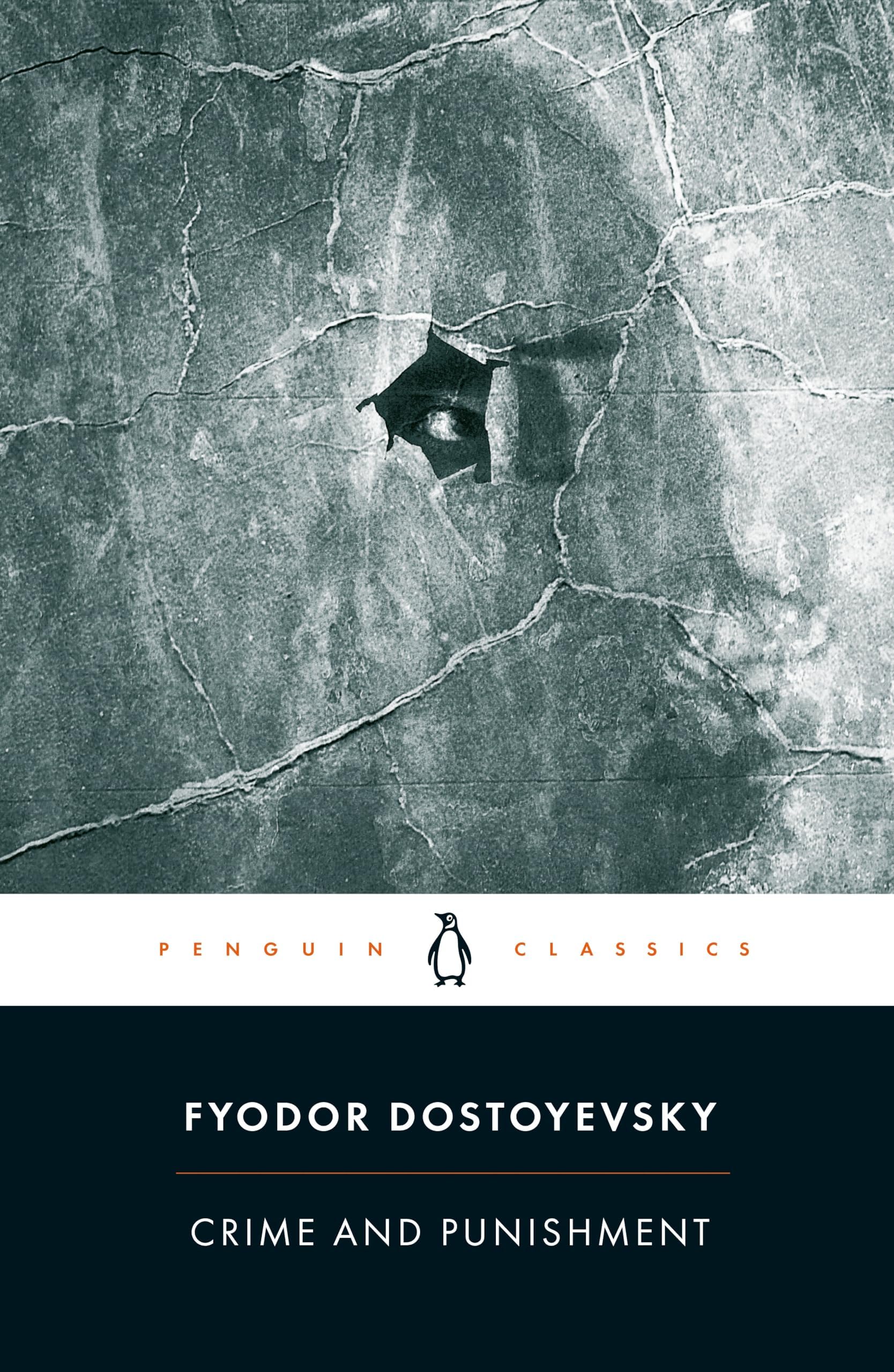
Crime and Punishment (Penguin Classics) is a top-ranked psychological fiction bestseller, acclaimed for its deep exploration of morality, vivid dialogue, and cultural relevance. With a 4.5-star rating from over 5,000 readers, this classic novel remains essential reading for anyone seeking a profound and thought-provoking literary experience.


| Best Sellers Rank | 1,840 in Books ( See Top 100 in Books ) 88 in Fiction Classics (Books) 238 in Psychological Fiction (Books) 424 in Psychological Thrillers (Books) |
| Customer reviews | 4.6 4.6 out of 5 stars (5,324) |
| Dimensions | 12.9 x 3.1 x 19.7 cm |
| Edition | Revised ed. |
| ISBN-10 | 0140449132 |
| ISBN-13 | 978-0140449136 |
| Item weight | 494 g |
| Language | English |
| Print length | 720 pages |
| Publication date | 30 Jan. 2003 |
| Publisher | Penguin Classics |
S**Y
A classic worthy of the name
The current Ukrainian conflict has brought into focus how differently many Russians seem to view the world, so it felt timely to read this classic novel and compare it to works by contemporary British novelists such as Dickens and Elizabeth Gaskell. In the same way that Putin, although constantly dealing in falsehoods, appears disinterested in Soviet-style depictions of utopian Russian society, so Dostoyevsky seems content to portray a dysfunctional and bleak St. Petersburg whilst evidently still convinced of the perceived evils of Western liberalism. I suppose the point is that, like Dickens, he was predominantly writing to entertain a domestic audience. The book does refer to topical philosophical and political debates but the author only subtly alludes to his own views (most notably concerning morality and the merits of religious faith). I don't think I've ever read a novel before that's so heavily comprised of dialogue; indeed many chapters are essentially a conversation between two (and sometimes a larger group) of characters. The scenes Dostoyevsky creates are consistently vivid and the exchanges credible: this is due to the skill not only of the author but also the translator. Occasionally you come across words, such as drinking-den, which you suspect sound much more evocative in Russian, but generally the English text flows well. Although there is a fair degree of plot overall, there are stretches in the book where not much is actually happening, providing an interesting contrast to Dickens. The fact that the latter tended to publish in weekly instalments, whereas Dostoyevsky apparently published each of 6 parts in one go, may go some way towards explaining this clear difference in styles. The book is not difficult to read, but I confess that the complexity of the names (and interchangeability of familiar and formal forms) drove me to the internet a few times to check I wasn't confusing different characters. The most unsatisfying part of the novel is its short epilogue ending, when the main protagonist undergoes a sudden shift in attitude that's hard to find entirely plausible. But I won't say any more about the plot, except to say that the main concept suggested by the title is masterful and wonderfully sustained. Finally a plea to publishing houses. Why they persist in putting pretentious essays that give away the entire plot as the introduction to classic literature is beyond me. Hopefully, like me, you will enjoy the book first and, if you can be bothered, scan through the scholarly opinions afterwards.
M**L
Can the end justify the means?
I feel inadequate as I try to review this classic novel. In essence the story is a simple one and there are relatively few characters for a book of considerable length. The problem for any reviewer relates to the depth and breadth of Dostoevsky's analysis of the human mind and human emotions. The central character - Raskolnikov - is the blue eyed boy of a Russian family. He is in St Petersburg studying law but his life has fallen apart. He is as poor as a church mouse, lives in a tiny, filthy room and cannot even afford to eat properly. He contrives an extraordinary plan to escape from his horror, and the plan involves killing and robbing an elderly lady who is a moneylender. The money will allow him to start afresh, and the long term good he will do will more than atone for the murder. There are long sections of dialogue which examine this concept in detail, with Raskolnikov dividing people into the achievers -the Napoleons of this world - and the others. In many ways, I felt the book was presented more in the style of a play than a novel. Long and detailed conversations take place between Raskalinikov, his friend Razumikhin, the persistent detective Purfiry, the rescued prostitute Sonya and the villain and "hero" Svidrigailov. Religion and faith pervade the book with full quotations of the biblical account of the raising of Lazarus from the dead and detailed references to the book of Revelation. The plot is simple yet tortuous and death pervades the pages. The complexity of Dostoevsky's own life and thinking makes one think there are elements of autobiography in the narrative. The overall tone is gloomy but I am glad to have read it and will not forget the central characters.
G**4
Perfect BUT…
Amazing author, perfect representation of mental punishment. Would recommend. The book quality is very nice but it’s just too sturdy and the pages are quite thick so they always try to close unless you are keeping them from closing
M**A
Good price.
Brought for my granddaughter, at her request. She was very happy with it.
M**W
Its made by penguins
Best book ever bruh🥹
.**.
A great work of art
Crime and Punishment is a book which contains a huge amount of humanity. The story of a sordid and violent crime, the mental breakdown of an impoverished, excitable student drop-out, all set against a backdrop of a colourful and crime-riddled city teeming with shady characters, warm-hearted women, violent drunks, destitution, suffering, depravity, humanity. The story follows the different phases of mental anguish suffered by Raskolnikov, the young Russian ex-student at the centre of the novel. With his dreams of greatness dashed by poverty and destitution, Raskolnikov dreams up a terrible crime which would allow him access to the funds he craves in order to, as he sees it, fully realise his potential. The novel follows him as he struggles to come to terms with the consequences of the crime and his grappling with the idea that his justification for it may not be as solid as he thought. All the while he is trying to protect himself from the long arm of the law in a game of cat-and-mouse with the police investigator. There are lots of different themes to the novel, which makes it an immensely rewarding read for anyone who likes food for thought in their books. It is highly readable as a story and as absorbing and rewarding as a great work of art.
A**I
Good
C**S
Me gustó el guión de la novela. Es un clásico que merece ser leído.
S**I
Love it!
F**F
Zeer interessant boek
J**N
Liked
Trustpilot
1 week ago
2 weeks ago