Desertcart purchases this item on your behalf and handles shipping, customs, and support to Cyprus.
๐๏ธ Keep your DSLR sensor spotlessโbecause every shot deserves perfection!
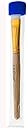
The Dust Patrol D-SLR Sensor Cleaning Brush is a premium German-made tool featuring 16mm ultra-fine bristles designed for gentle yet effective dry cleaning of DSLR sensors. Compatible with major camera brands like Canon, Nikon, Sony, and Leica, it reduces the need for wet cleaning, saving you time and money. Packaged in a resealable, hangable pouch with clear instructions, itโs the essential accessory for professional-grade sensor maintenance.
| ASIN | B000LQQQZQ |
| Best Sellers Rank | #41 in Camera & Photo Cleaning Brushes |
| Brand | The Dust Patrol |
| Brush Length | 16 millimeters |
| Color | yellow, Gamma |
| Compatible Devices | Canon, Nikon, Kodak, Leica, Sony DSLR Cameras |
| Customer Reviews | 4.4 out of 5 stars 312 Reviews |
| Enclosure Material | High quality bristles (bristles of high quality) |
| Global Trade Identification Number | 00827912052572 |
| Item Weight | 0.02 kg |
| Manufacturer | The Dust Patrol |
| Manufacturer Part Number | EJU0023 |
| Material | High quality bristles (bristles of high quality) |
| Media Type | ProductImage |
| Model Number | EJU0023 |
| Number of Items | 1 |
| Screen Size | 16 millimeters |
| UPC | 827912052572 |
| Viewfinder Type | Optical viewfinder |
| Water Resistance Level | Not Water Resistant |
R**N
Solid results with cleaning brush and air blower combo
Used this in combination with Giottos Rocket Air Blaster Air Blower, Large and had fine results, though it was a bit of a nervous situation. The end result is the test picture you see below, shot at F32 and straight into a bright light source. The camera before was a dusty mess. The end result is better but not perfect. As I tend to shoot a lot of outdoor and macro shots I'm not necessarily keen to fiddle endlessly to get to perfect when I'm just going to dust it up again. General Steps: * Blew off the sensor with the blower. This accomplished little on the sensor though it did clear up the lens nicely. * Charged the brush with the blower profusely and took one swipe at the sensor. This seemed to collect all the dust on one side. * Charged the brush again and took three more swipes at the sensor, trying to push the dust towards the bottom of the sensor where it's less noticeable * Closed it up and took another picture and ended up with the one attached. Good enough for now. This will be less of a nervous mess once I've done it a dozen times. For now though, the camera is officially not ruined! -- I paid full price for this item and I found it absolutely acceptable.
M**R
Works great
The time had finally come for me to attempt to clean my sensor. I have tried having it professionally done before, but with very poor results. You know what they say... If you want something done right, do it yourself. The only problem here is that it was my camera sensor. Look on the web and there are warnings all over about the risk of damaging the sensor. But, an unusable camera (due to dust) is unusable - so I decided it was time to actually try it. And it wasn't so bad. It was pretty nerve racking, but it was fairly easy. I used a staged approach and I bought all the stuff - the blower, the brush, and the swabs. I went through each method and it was just like you read in the other reviews. The blower took off some, the brush took off more, and the swab got all the rest. The brush worked out pretty well, but I still had to resort to the wet method to get the more stubborn specs. As long as the dust is not stuck on, it does a pretty good job. Just make sure to read the instructions and follow them. Overall, I'm giving five stars because the brush did exactly what I expected it to do. No complaints here.
D**H
Worked like a charm....
I had some dust on my brand new D7000. I purchased the Giottos rocket to deal with it. That worked great! Took the dust right off. Then I changed lenses again, and I am very funny about how I change lenses taking care to not introduce dust by pointing the camera at the ground, not doing it in a dusty environment, etc, and picked up more dust. The rocket couldn't get it all off. Did lots of reading and decided on this brush to remove the dust. One pass removed all the dust. This is in my bag wherever I go from now on. Comes in a nice tube to keep it clean and straight too. I used the chamber swabs to further keep things squeaky clean - we'll see if they help. If you are scared to touch your sensor, relax and just be really careful. Don't touch the sides of the chamber with the brush and take your time. One important tip - be sure you use a air duster that doesn't contain a bitterant. That chemical can leave residue on your brush which you could transfer to your sensor and require a wet cleaning. Search Amazon for bitterant free air duster and you will find one.
I**N
hard to uncase, works great
A very high quality brush, which worked perfectly for cleaning the sensor on my Rebel T3. It's a bit hard to avoid touching the bristles when taking it in or out of its bag and case, but it's imperative that you take your time and avoid it.
R**Y
High Quality Brush for Dry Sensor Cleaning
This German-manufactured brush may look like a typical paint brush, but in actuality is specially made to serve as a dust removal system for digital camera sensors. It's not cheap: at nearly thirty dollars, you're not going to purchase this on a whim. However, an unfortunate reality for DSLR's and mirrorless camera systems is the tendency for dust to collect on the sensor, creating those "blobs" of darkness on photos at certain focal lengths (dust specs don't always show at every focal length, even though the dust is on the sensor, not the lens; they may not show at all if you not shooting blue sky or consistent white backgrounds), and this means that, eventually, odds are you are going to need to remove the dust off the sensor. You can send your camera in to have this professionally done (and, truthfully, some circumstances may require this), but if you want to do it yourself, there are two routes: the so-called "wet" method, and the so-called "dry" method. The "wet" method makes use of a special liquid and a special type of pad (or sponge) where you wet the pad, then lightly drag it over the sensor to remove dust particles. It's a technique that requires practice, and, although you can do it yourself, it's not cheap, due to the cost of the pads (which are not reusable) and the liquid. Before going done the "wet" path, however, there are a few "dry" techniques that you can try. And this is where this special brush comes in. However, this brush--as contradictory as this will sound--is not made to "brush" dust off the sensor. To understand why this is not the case, you first have to understand why dust often appears on your sensor in the first place. Beyond the normal amount of dust swirling around most any setting, there is a small amount of electricity on the sensor (obviously, it is an electronic device), and any electric current can cause an electrostatic charge. Modern sensors are coated with anti-electrostatic compounds, and the self-clean function on modern cameras employ a high-frequency vibration with an anti-static electrical process to help dislodge dust. But it doesn't always work, and it doesn't always work completely. And that's where this "brush" comes in. Rather than using this brush to "brush" the dust off a sensor, you run air (optimally from a Giottos AA1910 Medium Rocket Air Blaster (6.6) or equivalent) through the bristles to build up a static charge on the bristles. After you have done this a few times sufficient to build up the charge, you very lightly draw the bristles over the camera's sensor so that the static charge on the bristles attracts the dust from off the sensor. You repeat this process as many times as you need to. In some cases, this may be all you need to remove dust from the sensor. If it isn't, you can move to a "wet" cleaning method. But if you are on a trip and not wishing to carry around wet cleaners, this dry method can be a great tool to have. So, in the end, it's actually not as expensive as it first seems. Particularly when you consider it is a German-made tool. Five stars. Note: A good compromise wet cleaning method for travel is Sensor Swab Plus Type 2 w/Eclipse (Pkg of 4) . Make sure you order the correct size for your type of camera (1, 2, 3, or 4; the size "2" is good for many crop-sized sensors).
E**S
Removed stubborn dust spots!
This brush works great! A couple of family vacation photos were ruined by dark spots on them. I tried the tradition cloth wipe and rocket blower technique to clean the lens and mirror but no luck. I realized the problem was with the sensor. I had heard a ton of warnings about the sensor and how delicate it is, but after having no other options(or pay $100 do get it professionally done) I decided to buy this brush and clean it myself. I have a Nikon D7000 and the sensor is exactly the width of the brush so be careful when cleaning, you don't want to touch any other compartments as some of them might have lubricant on them. I barely touched the sensor and whisked across twice only. Put the lens back on and BAM! No more dark spots! I'm so happy to take outdoor pictures again!
H**T
Worked better than I thought and easy to use
My useless self cleaning sensor was driving me crazy because I could see a ton of dust spots in all my shots now. The blower made no difference and I was considering sending it in to Nikon to be professionally cleaned but decided to research some DIY methods first. I ordered a bunch of kits that claimed to be easy and effective. They were all worthless. I ordered this brush as an after thought and had no intention of using it. Since the other kits did not do anything I figured this wouldn't hurt. My first use of the brush cleaned up almost the entire sensor. The only thing left is this stubborn spot that I can't get rid of no matter how hard I try. All of the kits and methods I used were dry cleaning only. I'm assuming I'll have to resort to a wet method for that last stubborn spot but it doesn't really matter since this brush worked better than I thought and was very easy and quick to use. I cleaned 99% of the dust with just a few passes of the brush following the instructions provided. And there was no damage as long as I followed the simple to follow instructions.
J**F
Nice to Have, But Get a Cleaning Kit with a Blower
I tried using this and it really didn't do much at all. After trying this, I bought the Movo Deluxe Essentials DSLR Camera Cleaning Kit PRO with LED Loupe. The loupe allows you to view the sensor under magnification to see what's on it. I used the wet cleaning swabs and my Nikon is back in business. This brush may work in some instances where the dust has not had time to settle on the sensor too long. In the past, a bulb blower would get most of the dust off, but not so much this time. The particles may have been on there too long, humidity may have made them stick or they may have been sticky in the first place. I had the camera open quite a bit for a few band shoots at clubs. Here nor there, I have been through this a lot over the last 15 years of owning DSLR's and the main thing I would suggest is a high powered bulb blower before buying this brush. It's safer and probably just as effective. You will need a blower to use this brush anyways, so might as well get one and try it first. Tip: If you actually see dust when looking through the viewfinder, its more than likely dust on the mirror. So, definitely clean your mirror and eyepiece. It doesn't effect the images but is annoying to see particles when you go to shoot. If you decide that you want to try a sensor brush, this one seemed to be affordable and high quality.
Trustpilot
2 months ago
1 month ago