
Buy anything from 5,000+ international stores. One checkout price. No surprise fees. Join 2M+ shoppers on Desertcart.
Desertcart purchases this item on your behalf and handles shipping, customs, and support to Cyprus.
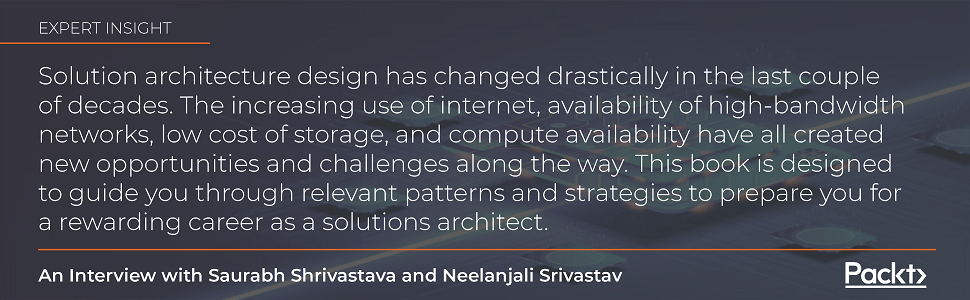
Third edition out now with coverage on Generative AI, clean architecture, edge computing, and more Key Features Turn business needs into end-to-end technical architectures with this practical guide Assess and overcome various challenges while updating or modernizing legacy applications Future-proof your architecture with IoT, machine learning, and quantum computing Book Description Becoming a solutions architect requires a hands-on approach, and this edition of the Solutions Architect's Handbook brings exactly that. This handbook will teach you how to create robust, scalable, and fault-tolerant solutions and next-generation architecture designs in a cloud environment. It will also help you build effective product strategies for your business and implement them from start to finish. This new edition features additional chapters on disruptive technologies, such as Internet of Things (IoT), quantum computing, data engineering, and machine learning. It also includes updated discussions on cloud-native architecture, blockchain data storage, and mainframe modernization with public cloud. The Solutions Architect's Handbook provides an understanding of solution architecture and how it fits into an agile enterprise environment. It will take you through the journey of solution architecture design by providing detailed knowledge of design pillars, advanced design patterns, anti-patterns, and the cloud-native aspects of modern software design. By the end of this handbook, you'll have learned the techniques needed to create efficient architecture designs that meet your business requirements. What you will learn Explore the various roles of a solutions architect in the enterprise landscape Implement key design principles and patterns to build high-performance cost-effective solutions Choose the best strategies to secure your architectures and increase their availability Modernize legacy applications with the help of cloud integration Understand how big data processing, machine learning, and IoT fit into modern architecture Integrate a DevOps mindset to promote collaboration, increase operational efficiency, and streamline production Who this book is for This book is for software developers, system engineers, DevOps engineers, architects, and team leaders who already work in the IT industry and aspire to become solutions architect professionals. Existing solutions architects who want to expand their skillset or get a better understanding of new technologies will also learn valuable new skills. To get started, you'll need a good understanding of the real-world software development process and general programming experience in any language. Table of Contents The Meaning of Solution Architecture Solution Architects in an Organization Attributes of the Solution Architecture Principles of Solution Architecture Design Cloud Migration and Hybrid Cloud Architecture Design Solution Architecture Design Patterns Performance Considerations Security Considerations Architectural Reliability Considerations Operational Excellence Considerations Cost Considerations DevOps and Solution Architecture Framework Data Engineering for Solution Architecture Machine Learning Architecture The Internet of Things Architecture Quantum Computing Rearchitecting Legacy Systems Solution Architecture Document Learning Soft Skills to Become a Better Solution Architect Review: This is the only book you'll need to be a better AWS Solutions Architect - AWS Solutions Architects (SA) are deeply technical. They know how to use technology to help businesses solve complex business problems ranging from legacy systems modernization, data engineering to turn data into actionable insights, and adopting cutting-edge technologies like machine learning and quantum computing. This book allows that zoomed-out view to see the big picture through a set of intelligently curated chapters and sections. And in each chapter zooms in to uncover the nitty-gritty details of the craft of solution architecture. The book really scores if you are an aspiring architect - the authors have dedicated the first four chapters to lay a solid foundation of solution architecture. The chapter on soft skills is the absolute icing on the cake - only an insider can provide such insights on how to succeed as an AWS SA. Just follow along, and over a weekend, if you are a fast reader, you'll become a better SA. The chapters on designing high-performance, reliable, cost-efficient, secure, and efficient operating systems for today's businesses are like gold dust. Any SA worth its salt should know these like the back of their hand. I liked the chapter on quantum computing, but it left me asking for more because it's such an engaging topic. As the technology and its mainstream adoption evolve, we'll get a deeper understanding hopefully in the next edition. This is a great book, and I would like to congratulate both the authors for writing what could be a timeless classic. I am not a fast reader, but I could read cover-to-cover in a couple of weekends. I sincerely hope this adds value to anyone who wants to learn the ropes and be a better SA. Review: Excellent coverage of a very broad topic - This book attempts to cover what is a very broad topic, that of solutions architecture, in a way that is concise enough to cover the basics - but in enough depth to still be useful. Realistically some of the areas will be of less value over time (e.g. any specifics around AWS), but there are many areas of this book that are extremely valuable regardless of anything in technology as time passes. In fact, some of the most useful parts are those that are technology agnostic, or not related to technology at all. The section relating to soft skills may be one of those most high value sections, yet overlooked by many at the end - but in reality, the hardest skill to develop. If you are looking for a cookbook to resolve some issue, this is not it - and that is good. This book, if read carefully, is hugely valuable and speaks to methodologies that should prove useful as the industry evolves - as long as this type of role continues to exist. It explains approaches and ways of thinking that are the long term value prospect here.


| Best Sellers Rank | #1,238,011 in Books ( See Top 100 in Books ) #147 in Computer Hardware Design & Architecture #331 in Computer Systems Analysis & Design (Books) #750 in Cloud Computing (Books) |
| Customer Reviews | 4.7 out of 5 stars 317 Reviews |
C**S
This is the only book you'll need to be a better AWS Solutions Architect
AWS Solutions Architects (SA) are deeply technical. They know how to use technology to help businesses solve complex business problems ranging from legacy systems modernization, data engineering to turn data into actionable insights, and adopting cutting-edge technologies like machine learning and quantum computing. This book allows that zoomed-out view to see the big picture through a set of intelligently curated chapters and sections. And in each chapter zooms in to uncover the nitty-gritty details of the craft of solution architecture. The book really scores if you are an aspiring architect - the authors have dedicated the first four chapters to lay a solid foundation of solution architecture. The chapter on soft skills is the absolute icing on the cake - only an insider can provide such insights on how to succeed as an AWS SA. Just follow along, and over a weekend, if you are a fast reader, you'll become a better SA. The chapters on designing high-performance, reliable, cost-efficient, secure, and efficient operating systems for today's businesses are like gold dust. Any SA worth its salt should know these like the back of their hand. I liked the chapter on quantum computing, but it left me asking for more because it's such an engaging topic. As the technology and its mainstream adoption evolve, we'll get a deeper understanding hopefully in the next edition. This is a great book, and I would like to congratulate both the authors for writing what could be a timeless classic. I am not a fast reader, but I could read cover-to-cover in a couple of weekends. I sincerely hope this adds value to anyone who wants to learn the ropes and be a better SA.
E**H
Excellent coverage of a very broad topic
This book attempts to cover what is a very broad topic, that of solutions architecture, in a way that is concise enough to cover the basics - but in enough depth to still be useful. Realistically some of the areas will be of less value over time (e.g. any specifics around AWS), but there are many areas of this book that are extremely valuable regardless of anything in technology as time passes. In fact, some of the most useful parts are those that are technology agnostic, or not related to technology at all. The section relating to soft skills may be one of those most high value sections, yet overlooked by many at the end - but in reality, the hardest skill to develop. If you are looking for a cookbook to resolve some issue, this is not it - and that is good. This book, if read carefully, is hugely valuable and speaks to methodologies that should prove useful as the industry evolves - as long as this type of role continues to exist. It explains approaches and ways of thinking that are the long term value prospect here.
L**N
A book to embark on a journey of the solution architect role
The book walks you through the patterns and strategies that will help you prepare for a role as a Solutions Architect. The 2nd edition of Solutions architect’s handbook added new chapters on emerging technology such as AI, Machine Learning, IoT, Quantum computing while expanding on new topics like blockchain and various big data design patterns including data mesh, lake house, data lake, streaming data with the reference architecture. Each chapter refreshed, keeping the latest industry trend such as the cloud in mind with new topics like defining multi-cloud strategy approach, cloud-native architecture, Cloud DevOps and mainframe modernization, etc. The key takeaway for me, to grow as a solution architect, you need to have the breadth and depth of technology and soft skills to work at all levels of the organization, from engineer to C-level. You also need to have the strong business acumen to drive ROI while defining overall enterprise IT strategy. Solution architect has a critical role in accelerating enterprise digital journey by helping them upgrade to a more efficient tech stack and introducing emerging technology to help them stay ahead of the competition. I will recommend this book to anyone looking to embark on a solution architect role.
S**R
Excellent Encyclopedia of Solutions Architecture
Disclaimer: The publisher of the book, Packt Publishing, invited me to review this book and provided an early draft. The book is a comprehensive, as well as, extensive reference manual for beginning and experienced solution architects. With good detail it explains what solution architecture is, how it leverages cloud infrastructure and other technologies to fulfill business requirements. If you are new to solution architecture, chapter 2 offers a great overview of the various solution architect roles and how they fit within an organization. This chapter is also useful for managers and group leads who are seeking to organize their teams and looking to deploy agile processes. Chapters 3, 4, 5 and 6 take a deeper dive into the more technical aspects of designing robust cloud infrastructures. The chapter explain in detail key elements such as scalability, elasticity, availability, resiliency, fault tolerance and redundancy etc. and how they relate to each other and how they support the business model. Chapters 7, 8, 9 and 10 then comprehensively address operational aspects of solution architecture such as performance, security and reliability. Unlike the previous chapters that are more on the conceptual level these chapters introduce specific technologies for example for authentication and authorization, security and more. Chapter 11 addresses cost aspects of solution architecture with a view on total cost of ownership including R&D as well as operational costs. While a lot of it depends on the actual solution to be developed, text focused on technology often neglect the aspects of cost and ROI. While the chapter cannot be entirely comprehensive it functions as a reminder not to overlook the financial aspects which can be significant for large scale projects. DevOps is at the center of chapter 12. No system is designed and deployed once and forever. DevOps is instrumental for efficiently deploying a minimum viable system at the beginning, testing and evolving it until launch and addressing issues, bugs, vulnerability thereafter and adding new features and functionality throughout the lifecycle. Chapter 13 takes a stab at data engineering from data ingestion and data storage to processing and visualization. Here I think the book is falling a little short as "data is the new caviar" and the lifeblood of business intelligence. I wish the authors had spent a little more time beyond explaining the basic terms and technologies. Machine learning and AI enable new possibilities in data analysis, processing and feature extraction. Chapter 14 explains the core concepts of the new ML/AI toolbox. Since it is an open field that is rapidly developing it is hard for wide spanning text on solution architecture to touch on all aspects on how ML/AI can be leveraged. Here the reader is probably best advised to define their problem first and look for further material. Chapter 15 is an excursion into the Internet of Things (IoT). It is a viable overview of IoT architecture touching on management of connected devices and collecting data from connected devices. What the chapter is missing is the challenges that IoT pose to solution architecture in terms of scalability, reliability, data volume and more. Here the authors could have done a better job connecting IoT to solution architecture. To be honest, I do not see the value of chapter 16 which talks about the theory and principles behind quantum computing. The chapter in itself would be a good basic standalone article on the topic but in the context of the book it feels more like an afterthought. Quantum computing one day might give solution architects unprecedented data processing and storage capabilities but then knowing the theory behind it is nice but not essential for the task of designing a system. I am much more fond of chapters 17, 18 and 19. Chapter 17 addresses the often overlooked task of rearchitecting and evolving legacy systems. It is more common today that an already existing and deployed system needs to be modernized than that a system is entirely developed from scratch. While the task has a myriad of facets the chapter does a good job of laying out migration strategies. Eventually any architecture work needs to create artifacts that document the work and which are then build the basis for implementation, test, deployment etc. Chapter 18 describes the Solution Architecture Document. However, that is hardly the only artifact that solution architects produce. In my opinion, the authors should have provided a more comprehensive view of the "tools of the trade." Software developers use UML, system architects use SysML, mechanical designers use CAD tools, electrical engineers produce schematics, etc. What are all the tools in a solution architect's tool belt? The book concludes with a chapter on soft skills for solution architects. That is a wonderful idea and nicely rounds out the text. Well done! There is a lot of valuable information in this book for all levels of solution architects. However, it is more of a reference book. It does a good job explaining concepts. It prepares you to engage in the wide field of solution architecture. But it does not explain how to put things to use. It feels like a language dictionary. You can learn the words that make up a language but it does not teach you how to speak the language.
S**E
Approachable, comprehensive, and thorough
From the beginning, this book paints broad, understandable swaths of information that inform the reader about the nature of solution architecture and its nuances. As a practicing solutions architect, I found that this book has a wealth of information for those not only looking for adding brushstrokes of information to their own field of knowledge, but it also provides a considerable amount of detail on other fields such as machine learning and IoT. With easily relatable language, the picture created in this book is not only accessible but detailed, and the comprehensive explanation of various cross-sections of solutions architecture is a very powerful aspect that I cannot underscore enough, because there are nuances to this field that are often overlooked or lost by the casual practitioner. This book is holistic in its approach to the various methodologies for solutions architecture, and it makes a point to use multiple vectors to approach problems faced in the field. The author takes care to guide the reader through the journey of solution architecture, and I found this book insightful and not only worth the read, but worth a place on the bookshelf.
A**.
Great addition with emerging technologies. Read to land your dream job.
I read through first addition, which helped me to develop a strong solution architect foundation and apply best practice while designing the system at enterprise scale. This book helped to land my dream job as solution architect in a product base technology company. I was eagerly looking for 2nd edition to get my hands and I will say it exceeds my expectation. In 2nd edition, I not only see new reference architecture and more additional topics in each chapter, but it is also covering future looking aspects of solution design. There are new chapters added explaining ML architecture, IoT architecture and much in future explaining quantum computing in simple manner. I like the way different big data pattern like Data lake, lake house and data mash explained with reference architecture. While going into the future, the book is also expanding on mainframe migration, making sure that cover 360 view of your knowledge while providing insight on soft skills. I will recommend this book to anyone looking to boost up their career in Solution Architect Role or excel in system design regardless of their current role.
A**D
Great book for learning and growing as a Solutions architect
This is the second edition of the book and I have read the first edition as well which was a knowledgeable experience as it is very well written. Now with second edition, the authors have come with even better and greater content and added chapters on latest emerging technologies such as quantum computing which was a very pleasant surprise to me. The book has explanations which are very easy to understand and helps one to grasp the complex technical concepts in lot simpler manner. I loved the real life examples and analogies and while reading it felt like I am talking to the person explaining concepts to me in easy language! The topics in the book follow a nice flow and structure so that the reader can wrap their mind around the lessons. No matter if you are an aspiring architect or a seasoned one, I would recommend having this book by your side. Reading this book helped me land my dream job in a FAANG company!!!
A**A
Boost your skill on building system design in
I am working in the Enterprise Architect Role since last two decades and looking to get my hands in cloud platforms. I found tons of resources available online to learn cloud, but all of them teaching the platform in a very scattered way, it's like giving you a set of Legos without giving any idea ideas to what to do with them. One of my friend who happen to work in AWS as Solution Architect recommended this book to me. I found this book as a booster for my skills with very comprehensive knowledge written in well-structured manner. The book discussed various architecture concepts and applied them by explaining real-world industry use cases with more than 50 reference architectures while optimizing the workload for cost, performance, reliability, and operational excellence. It provides insight into developing soft skills and growing yourself in the SA role. I will recommend this book to anyone who is currently working as a solution architect and want to boost their skill and so their career prospect
P**C
Good book on the first 1/2 and way too generic on the second 1/2 (for an AWS reader)
Good book specially on the foundations of Software Architecture chapters. But too high level on the later chapters specially on data, AI, security and DevOps. Another issue is that its (almost) completely focused on AWS and that compromises the overall handbook concept.
B**S
Mmmbof... texte généré par IA!
Texte vraisemblablement généré par AI! Mais correct pour avoir un idée globale du sujet. Exemple: pg 13 donne une liste de NFR. Pg 14 dit «however, there can be more NFR[...] : [same list!]» Quel auteur humain aurait pu donner deux fois la même liste sur deux pages consécutives en les séparant par « il y a néanmoins d'autres exemples» ? Il y a bien sûr d'autres cas similaires tout au long du livre... Pour moi il n'y a aucun doute, c'est du texte généré!
R**A
Leitura recomenda para arquitetos de soluções modernas e robusta
MUITO COMPLETO, cobrindo muitas, se não todos, os aspectos relevantes para arquitetos de soluções modernas e robustas. Leitura mais que recomendada!
A**.
Top quality explanations
Top quality explanations and clear framewoks to explain the overview and thinner details of the Solution architect job role.
A**N
Good book
Good book but too much repetition. Could be much less pages
Trustpilot
2 weeks ago
2 months ago