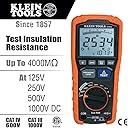
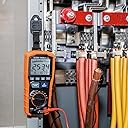
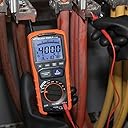
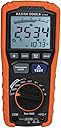
Cart Confessions: Electrical test equipment is one place where a tiny letter can make a very large difference. This Klein ET600 is an insulation resistance tester as well as a meter for several other checks. I like the clear, specialized role: a tool that can apply a selected DC test voltage and measure insulation resistance, with voltage, resistance, and continuity functions also listed. It is more specific than simply buying something called a multimeter and hoping the right mode will be somewhere on the dial. The job should choose the tool, rather than the tool choosing a job because it has a very confident yellow case.The first useful fact is the unit in the insulation range. Klein lists up to 4,000 megohms, written 4000 MΩ. A megohm is one million ohms, so this is not the same thing as a 4,000-ohm range. That missing M can quietly change the scale by a million. I would use the manufacturer's specifications and the actual mode and unit shown, not a shortened retail title as the whole explanation. The display is also described as 4,000 count, which is another separate specification. Similar numbers can answer very different questions, and electrical measurements are a poor place to let the numbers swap name badges.The insulation-test voltages are listed as 125, 250, 500, and 1,000 volts DC. Those are test outputs for the intended insulation function. They are different from the meter's ability to measure AC or DC voltage up to 1,000 volts. I like having that distinction clear before choosing the instrument. This is not simply a passive reading in every mode. The right test setting and method have to suit the equipment and the required procedure. A higher number is not automatically the better choice. The tool's options are there for defined tasks, not an invitation to turn every dial to the most dramatic setting available.Klein's own guidance says not to attempt insulation resistance, resistance, or continuity measurements on live circuits. I would follow the complete manual and the required electrical work practices for the task rather than treat a feature summary as an operating procedure. The warning alarm and high-voltage icon are useful features to notice, with the usual need to use the tool correctly. An icon does not replace the required checks or turn a specialized instrument into a shortcut around them. The useful purchase is the right tool as part of a proper method, not a new way to guess more confidently.The category ratings also deserve their full wording. Klein lists CAT IV at 600 volts and CAT III at 1,000 volts. That is more specific than saying only "rated for a thousand volts" and stopping there. I would match the complete rating and the leads to the application, following the instructions. The product lists appropriately rated test leads and alligator-clip leads among the supplied pieces. I like seeing the intended system described together. A meter and its accessories need to be suitable as an arrangement; one strong line on the specification sheet does not silently upgrade every other piece connected to it.For the AC measurement function, Klein lists automatic-ranging True RMS technology. That is a useful feature to consider, while the actual accuracy, range, and use conditions still come from the specifications. I would not treat the letters TRMS as a personal calibration check or a guarantee that every reading under every condition is exact. The backlit display, bar graph, and Hold and Max/Min features are practical parts of the design too. They offer ways to view and retain information without needing to turn the tool into a notebook balanced in one hand. Clear controls matter when a measurement needs attention rather than an argument with the interface.The built-in stand and lock function are also useful design details for the intended work, with their use governed by the manual. I like a case and a defined place for the leads, batteries, and instructions, since test equipment benefits from being kept together and checked before use. The low-battery indicator is another practical feature. None of that is a substitute for inspecting the instrument and accessories or meeting any required accuracy checks. Organization is valuable because it supports the routine, not because a tidy carrying case can certify the contents by looking professional on a shelf.Would I Buy It Again? Yes, for the ET600's defined insulation-test role, selectable DC test voltages, and additional meter functions when they match the required work. I would choose it by the full specifications, ratings, and instructions. The most useful shopping reminder is to keep the units and functions separate: megohms, display counts, test outputs, and measured voltage are different facts. I appreciate a tool with a clear purpose. The little M in MΩ may not take up much room, but it is doing far too much work to be casually left out of the conversation.