We remain fully operational. Our teams are working around the clock to ensure your deliveries continue safely.

DOWNLOAD THE APP


Customer Services
Copyright © 2025 Desertcart Holdings Limited
DOWNLOAD THE APP
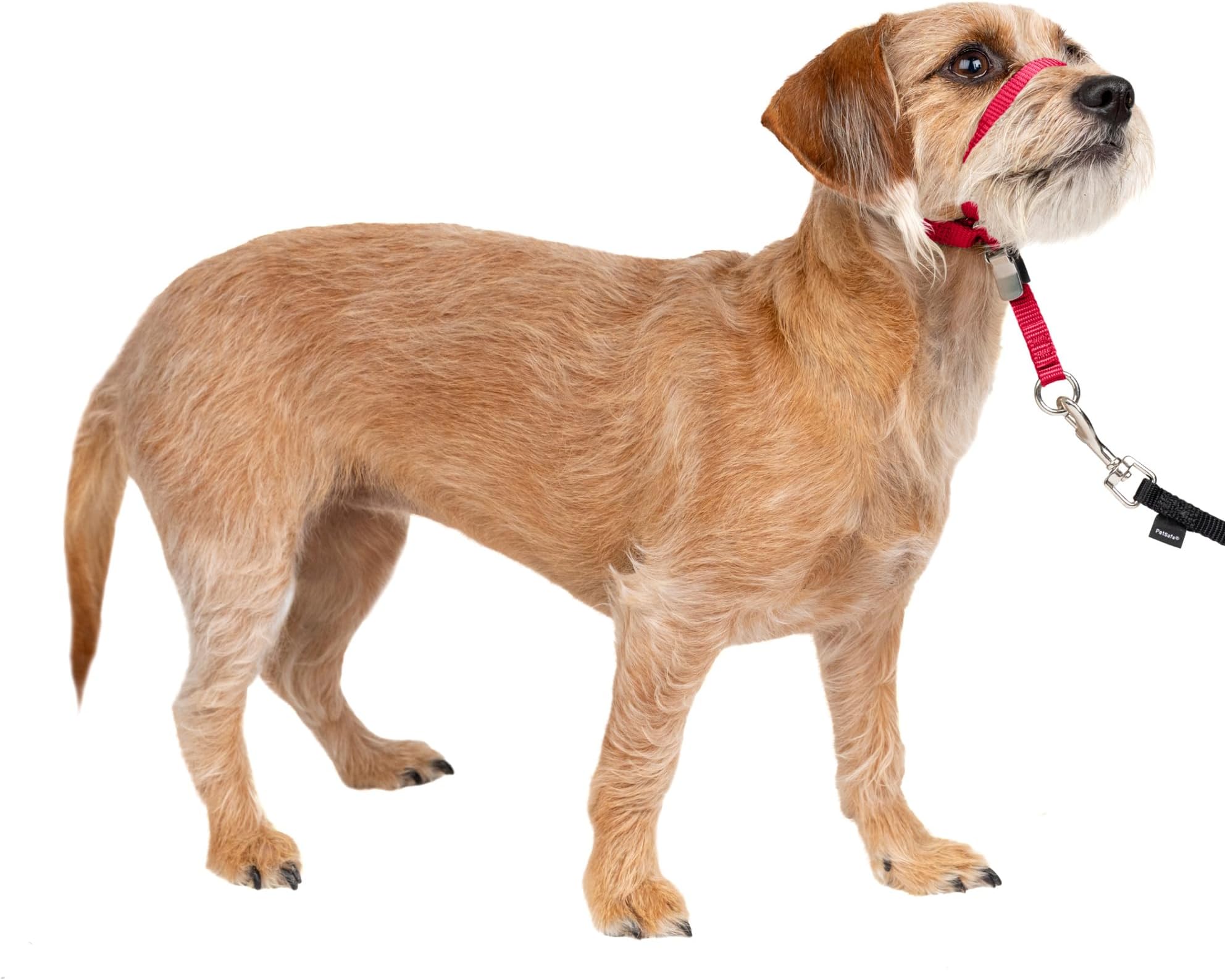


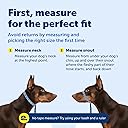
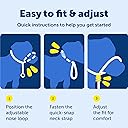
🐾 Master the walk, own the moment.
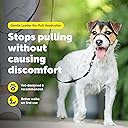
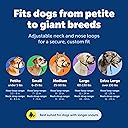
The PetSafe Gentle Leader Headcollar is a vet-designed, no-pull dog collar crafted from durable nylon with a padded nose loop and adjustable quick-snap neck strap. It gently redirects your dog’s head to reduce pulling by up to 90%, ensuring safer, more enjoyable walks. Trusted for over 25 years and recommended by trainers, it balances control with comfort for small breeds, making daily walks and training effortless and effective.


| ASIN | B0002H3ZI0 |
| Age Range Description | All Life Stages |
| Best Sellers Rank | #508 in Pet Supplies ( See Top 100 in Pet Supplies ) #1 in Headcollars |
| Brand | PetSafe |
| Brand Name | PetSafe |
| Breed Recommendation | Small Breeds |
| Closure Type | Snap |
| Color | Red |
| Customer Reviews | 4.3 out of 5 stars 70,429 Reviews |
| Dog Breed Size | Small |
| Included Components | PetSafe Gentle Leader Head Collar |
| Item Dimensions L x W | 8"L x 1"W |
| Item Display Dimensions | 7.99 x 0.98 inches |
| Item Type Name | PetSafe Gentle Leader Head Collar |
| Item Weight | 0.09 Kilograms |
| Manufacturer | Radio Systems Corporation |
| Manufacturer Part Number | 66914 |
| Material | Nylon |
| Material Type | Nylon |
| Model Number | GL-Q-HC-S-RED |
| Number of Items | 1 |
| Occasion | dog walking and training |
| Pattern | Solid |
| Product Care Instructions | Machine washable in gentle cycle, air dry. |
| Product Style | Headcollar |
| Size | Small |
| Target Species | Dog |
| UPC | 759023011752 |
| Unit Count | 1 Count |
| Warranty Description | 1 year manufacturer |
A**R
Gentle Leader causes dramatic and immediate positive changes, but has vulnerabilities
The Gentle Leader has dramatically changed for the better how our dog behaves on walks and runs. Our dog is an extremely strong and athletic 50 pound pointer-pit bull mix. With only a chest-attachment harness (or a back-attachment harness), he pulls constantly and lunges at whatever he wants (rabbits, cats, dogs, or whatever, whether close or far, real or imagined). With the Gentle Leader, these problems decrease by 90% or more. He still may try to lunge when he gets excited for his target, but it is easy to give him a moderate tug to control his behavior. There is no longer any risk he will pull one of us off our feet or take himself into danger. Walks and runs with him now are truly pleasant. It's made a huge difference in our relationship with him. There are some costs to get these benefits. First, we followed the manufacturer's directions on how to get the dog comfortable with the Gentle Leader. These directions worked for us, although he still doesn't like wearing it, even now after a month of multiple times a day use. Sometimes he tries to paw away it, and if we don't stop him quickly, he'll take it off. Fortunately, he's distracted enough during a walk or run that he rarely tries to take it off during those times. Also, a couple of times during a run the Gentle Leader came off (for some unknown reason, but not due to his pawing at it). All of these episodes highlight a vulnerability of the Gentle Leader: it's not a heavy duty standalone harness or collar. Any dog that needs a Gentle Leader likely has problems behaving well on walks or runs. We read prior reviews before buying the Gentle Leader and noticed that some customers had experienced it falling off or breaking while their dogs were wearing one. Therefore, what we have done from the beginning is to attach the leash to the Gentle Leader AND to a chest-attachment harness (we added some links of chain and a carabiner to give some extra slack to the connection with the harness). This way, if/when the Gentle Leader fails, we will still have a good way to hold on to our dog. We think the manufacturer designed the Gentle Leader appropriately so that it is lightweight and comfortable for the dog. But for most dogs that need the Gentle Leader, it's probably not enough, so other connections to the leash may be necessary as an insurance policy against a failing Gentle Leader. A dog with all of these connections can look a little like Hannibal Lecter from the "Silence of the Lambs" movie, but that's a small price to pay for ensuring the dog's safety and good behavior on walks and runs.
B**A
It works great for our dog
Totally ripped off the below article from --> (http://drsophiayin.com/blog/entry/are-head-collars-on-dogs-dangerous-or-safe) ...but it says it all. It works great for our dog Attached to leashes are tools designed to help you control your dog by guiding its head, just as halters and lead ropes are used to help control horses. An animal tends to go where its head goes. So, if the dog (or horse) wants to pull on the leash and its head can’t move, it can’t pull you so well. If the dog (or horse) wants to head in one direction and you want to go in another, gently (but not daintily) guide its head in the direction you want to lead the animal. The nice thing about head collars is that with some dogs, owners can just slap a head collar on and the dog suddenly walks nicely on leash, including around distractions that the dog would have barked and lunged at in the past. But in some cases, dogs randomly paw at the funny gear hanging off their faces the way you’d paw at pesky flies buzzing around your head. In other cases, the dog walks nicely and on a loose lead but, when he sees a distraction, he starts to sprint several feet to the end of the leash or barks and lunges and flails to get at the dog, cat, or person in the distance while fighting to get its head loose. Now if this were a person, flailing on the end of a leash attached to an apparatus on his head, he’d surely have a neck injury. But anyone who has seen a dog that goes to town playing tug-o-war knows that a dog’s neck is built differently. Because of this neck strength, few cases of injury due to head collars have been proven or medically documented (I actually haven’t seen any). Not to say injury could not happen. However, veterinary documented injuries caused or exacerbated by choke chain corrections and electronic collars are easy to find. . Most likely if dogs are pulling on their head collar a lot or running to the end, they may need massage or chiropractic care just the way people who work or study at a desk all day need back adjustments periodically. In fact, I think I need a lower back adjustment right now. The Basics of Teaching Dogs to Understand Head Collar Guidance The fact of the matter is, that as a trainer, if you’re concerned about injury due to head collars or difficulty accepting the collar, it’s best to learn the skills needed to actually train the dog to love wearing the head collar and walk politely on a head collar, as well as to teach the owner how to correctly guide the dog in an anatomically natural way. The first step of training dogs to love the head collar is easy. Just pair the head collar with food and systematically train the dog to stick its head further and further through. In most cases where the food and the collar are handled correctly, the dog can learn to shove his nose through in just a minute or two. Practice over several sessions if you’re worried that your dog will especially dislike wearing something odd on his head. On a side note, this method for training dogs to love their head collar is virtually identical to training dogs to love wearing a muzzle. Once the dog is good at shoving his nose into the head collar, then put the head collar on. Keep the dog focused on you instead of the funny thing on his face. You can lure him with a treat to hurry and follow you a few steps at a time; if he’s doing well after you repeat this five to ten times, increase the number of steps he must take to get the treat. You can also use targeting instead of luring if he already knows how to touch a target with his nose and loves it. Once your dog’s walking nicely and no longer has the desire to paw the head collar, it’s time to teach him that the leash has a limit. Every time his front feet pass yours, meaning he’s just a second or two from getting far enough ahead to pull, stop dead in your tracks. That will make it clear you’ve stopped and even the slightest pull will mean a halt to his forward movement. Once he clearly steps back towards you and then stands with a loose leash (or better yet, sits), walk forward briskly on a loose leash. In other words, he learns the leash hanging in a lazy “U” means he gets to walk forward. If the leash starts to tighten, it means you’re stopping. By doing this consistently for as little as one 5-10 minute session, Fido can learn that the leash has a limit that’s predictable. Note: in order for Fido to learn this and continue walking nicely you have to be consistent about how you walk and hold the leash. If you sometimes let him walk ahead and pull a little such that the leash is hanging but like a wide smiley face, or if you stop when his feet get ahead of yours but instead of keeping your leash–holding hand down low at your side-- you let Fido pull your hand forward when he continues to walk, you’re sending mixed signals about what you want. Fido may never clearly get what you’re imagining in your head. Have someone watch you so that you can see if you’re always being clear. Now that Fido can walk with a head collar on in a non-distracting environment, you may be ready to guide him better when distractions appear. When you see something that normally catches his eye, react ahead of time so that he can’t run to the end of a his 6-foot lead. Hold his leash so it’s just one to two feet long but still handling loosely so that you can easily and quickly guide Fido in the direction you want to go. If you hold the leash that way, it will only tighten when you head in the new direction if Fido does not immediately follow. Then, so that Fido knows you have a direction in mind, you must clearly and quickly move in the different direction the same way you’d move if you and a friend were jogging and you had to grab her arm to guide her away from the hole she was about to fall in (To understanad the importance of movement, read Dealing with Difficult Dogs at the Vet: 5 Tips That Don't Involve Food or Training Time). Head Collars Are Most Effective and Safe if You Have the Necessary Skills Of course the choice to use a head collar is up to the individual; however, if you’re a dog trainer, it’s helpful to know why a head collar might be useful and how to use it more skillfully, beyond the basics described above. The number one reason I recommend head collars to some owners is that a head collar can level the playing field for owners who have mediocre timing and speed. Because the owners are able to guide the head, they can more easily get their dogs’ attention. The use of a head collar can greatly speed up the process of training dogs to focus on their owners and perform fun, polite behaviors instead of reacting to other dogs, people and stimuli. When used correctly, a head collar can even help control anxious dogs so that they can calm down enough to focus and take treats.
P**H
works phenomenally
This item was recommended by my dog trainer. I could not believe what a difference it made. My 75 pound dog no longer pulls me around. You do have to slowly introduce your dog and give them time to adjust.
A**Y
Worth it.
Does this product work? The short answer is yes, but it's not a miracle device (surprise surprise). I have a 60+ lb catahoula leopard dog. When he gets outside he has a mind of his own, i.e. he could care less about the leash and his owner(s). He puts his nose to the ground and goes, resulting in a lot of errant tugging on the leash and self-induced whiplash on his part. It's the weirdest thing because indoors (or tied-up outside) he seeks out our attention constantly, i.e. his behavior is much more manageable / controllable. So, what did we do? First, we tried a "pronged" collar. I do not recommend this option. This solution was temporary. Our dog seemed to have a high pain tolerance and he largely became immune to his own tugging on the collar. Now that I am aware of other solutions I feel a bit badly about turning to this option, but such is life. Perhaps this review will spare future dogs from a pronged collar. What did I learn from the "pronged" collar experience? I had an ineffective device for communicating with my dog while outside on the leash. I knew with my particular situation that I was going to need a device that worked a different angle. Enter the Gentle Leader. I had the fortunate opportunity to try this device first-hand with my brothers 100+ lb giant schnauzer. His dog was completely responsive (most importantly, when his attention wasn't focused on me) while on leash and I felt like I was in complete control while walking him. I couldn't believe it, no tugging. He encouraged me to try it with my dog, so I finally broke down and ordered one. The device comes with an instructional DVD which I recommend (seriously) you watch as there are several nuances (such as the fit, and expected dog behavior) to the device. Within the first walk my dog was behaving a million times better than he ever had before, but that is not to say it went perfectly. There were times where he wanted to claw the collar off his nose and made some erratic fits (squirming around), but after a short while that behavior subsided, with only the occasional flare up. I was surprised with how responsive he was to the collar, the slightest tug (I'm talking feint pull), and he stopped tugging and looked directly back at me. It was exactly the kind of communication I was looking for. I used the Gentle Lead for a straight week (2 walks per day) and saw drastic improvement in my dogs outdoor behavior. I continually use the device to this day, but not on every walk / run (see below). However, in that week (and since) I did notice a couple things I didn't care for in the device. It's not as simple as clipping your leash onto your dogs collar and out the door you go. The device has to be fit properly, and constantly adjusted (even mid walk), so that its used properly and has the desired effect with your dog. The whole collar can slide around depending on the tug strength of your dog, and once its out of position, it becomes less effective. The collar also stretched with use (although that is described in the DVD). Either way, I feel like I'm constantly wondering if the device is too tight, or not tight enough. With practice this has gotten better, but its still a bit of a nuisance. To conclude, the device works quite admirably. Its proved to be an extremely effective tool (albeit with some subtle nuances) for communicating with my dog outside. His overall awareness of his owners while on leash has improved drastically, even to the point where we do not need to use the Gentle Leader on every walk, although it might be better if we did. He's quite comfortable with the device and has no trouble breathing or interacting with his environment. It's no miracle device, but it's pretty darn close.
F**N
Perfect for that "difficult to walk" dog
I have a 60 pound Boxer with leash aggression/reactivity. She is pretty much a nightmare to walk if a jogger, stroller, biker, garbage truck, walker, school bus, or UPS truck drives by and FORGET it if we pass another dog. We've tried harnesses, shock and prog collars, positive rewards- you name it, we've tried it- with the prong collar she pulled so hard when a jogger went by that she literally cut off her the ability to breathe (but continued to pull while I was at a stop)- she just, as a white girl would say, 'cannot' when there is other stimulus in the area. I have found that these Gentle Leaders are the best option for her. She's not a fan of it and you can tell that she's embarrassed wearing it (which I explain that if she didn't act like an idiot on walks she wouldn't have to wear it) but she is far more focused and able to keep her marbles together when we pass a stimulus target and also listens better to commands. There are great instructions included with this leader that help you get the proper fit for your pup. Once that it done putting it on each time is a breeze. There are a few observations I would like to make from our extended use that may be helpful to others with similar situations: 1. I've had a similar leader in the past (different brand) that had an additional clasp that hooked onto the collar for extra security- while that's a nice feature (I'd love to see added to this one) I will say that no matter what we pass Lucy has been able to pretty much keep her wits about her and has not been able to break free of this leader. 2. Because their mouths are held fairly closed it's almost impossible for the dog to pant and cool down- they can open their mouths enough to eat small treats but not to pant- just keep that in mind if you are taking your pup on a long walk on a hot day. Take breaks to take the leader off and offer her a place to cool off and some water. 3. My dog apparently loses the ability to go potty with this thing on her face. I'm not sure HOW it's connected to the bladder/intestines but somehow she is convinced it is and WILL NOT go potty with it on her face. We usually walk with it on to a place and then remove it so she can do her thang. Maybe your dog is smarter/less stubborn than mine and can figure it out but just watch for that- she's come home and peed on the floor after a long walk because she couldn't go during the walk (durrrrrrrrrr....special). 4. The strap that hangs down and attaches to the leash can go up depending on the angle how you hold the leash and into their mouths...even with the leader on. My chewer sees this as her chance to escape to freedom so I really have to watch to see if she's somehow gotten it in her mouth and remove it before she gnaws though and escapes (again this is where the extra security strap that hooks onto the collar would come in handy). "Curses, foiled again!" I can almost hear her say. Just keep an eye on it (Lucy has a habit of making a chomping/smacking/chewing sound the whole time she wears this, presumably to assure herself that she can still get her mouth open, so I have to peek from time to time to make sure it's just air she chomping at and not the strap). Overall- this is a fantastic option for those with difficult to walk dogs. They may not love it (there is a sheet included on how to introduce them to the leader and how to get them to love it) but it's effective and easy to use. Definitely recommend!!!
C**.
Gentle Leader — Early Impressions from a 146‑lb Rottweiler Owner
My groomer has been telling me about this for a few months now, and honestly, when I first looked it up it seemed flimsy and useless for my 146‑lb, 2‑year‑old Rottweiler who loves to pull. But I took the time to adjust the fit correctly and did a trial run in the backyard to get him accustomed to the new connection. For reference, I went with the XL size to properly fit his head and snout, and the sizing feels accurate once adjusted correctly. I usually use a harness with a handle and do re‑guidance to keep him on cue, but he still pulls very hard. After taking him on a few mile‑long walks with the Gentle Leader, the difference is remarkable. He heels, stays with me, and goes to the end of the leash without pulling. After using it consistently for four days, I can actually feel relief in my knees and elbows compared to managing him on the harness — that alone is a noticeable improvement. However, I did encounter another dog during a walk, and this exposed a real limitation. He was sitting nicely, calm and controlled, and then suddenly bolted toward the other dog. In that moment he broke out of the Gentle Leader entirely. My original concern about the construction feeling flimsy turned out to be valid. While it works extremely well during solitary, low‑distraction walks, he can break out of the connection at any time if he decides to lunge. I’m not sure I feel confident relying on something with that level of potential for easy breakaway.
A**I
BEST INVESTMENT
11/10 on this gentle leader. If you have dogs that pull, I mean PULL you for anything you need this! Do the dogs hate it in the beginning, 100%, but they eventually get over it when they know it’s time for a walk. I will say it’s the most control you will have with your dog while it’s on. They can’t run or do reactive things because you have their head locked in with the collar. Quality wise and durability is fantastic, I’ve had ours for over a year and it still looks great. Because it’s so close to their mouth, you definitely gotta wash it so it doesn’t smell from all the drool but overall I highly recommend it. My dogs will not go out anywhere without it!!
M**L
Unless you've got a super agreeable dog, skip this and get a no-pull harness
We have two dogs, a Great Pyrenees that we've had since she was a puppy, and a 2 year old Pit Bull that we just rescued from a pretty bad situation. He didn't know how to live in a house, didn't know how to interact with other animals, had never been on a walk, etc. Despite being a rescue who was crated almost 24/7, he has not only taken to the life of a pampered pet very quickly and very well, he has so far tolerated, and in some instances downright embraced, everything we've introduced him to without freaking out. Baths? A little worried, but no major issues. Beds? He didn't get the point the first time I showed him one, but he's definitely a fan now. Car rides? Wow, those things are great! Toys, especially squeaky or plushy toys, are AMAZING. We're still working on teaching him that he can't chase cats, but he *loves* his new "sister," even though she's much larger than him. It took less than a weekend to get him to understand that his crate wasn't a punishment but a place where he can calm down when there's too much going on. He's incredibly smart and highly trainable, which I was surprised by given his previous situation. He even loves walking on a leash, but because he's not well socialized and still very young, he has a tendency to pull. Our Pyr pulled as well when she was a puppy so we got her an anti-pull harness, but I want our daughter to be able to walk our boy eventually because he's much more trainable. Since he's strong she's a little intimidated, and I figured the Gentle Leader would be perfect to give her confidence when we walk him together without requiring some of the brute strength an anti-pull harness sometimes requires. I could not have been more wrong. First, the size defaults to "large," which I did not notice, so make sure you click the correct size. That was my bad, but it's still irritating. Frankly I didn't even notice there were different sizes, I was too thrilled at the prospect of not having my arm ripped out of my socket every time Jasper sees a squirrel. I was still able to fit it to him because while he's still a little underweight, he will eventually fill out enough to be between 50 and 70 pounds. Second, you fit this in two separate steps. You have to fit it around the neck initially (and it's supposed to be snug enough that it can't move), then you fit it around the muzzle, which is no easy task even if you treat the dog as they suggest to get him to put his muzzle through the straps. Jasper already was put off by the first step of fitting it. Even after I took a break and got him to let me put the darned thing on for the second step of fitting it, he was *chewing the treat* so I couldn't properly tighten it and had to go back with it off him and guess at how tight it needed to be (I got it right, but imagine this could be very uncomfortable for a dog if it's not properly sized). Third it's confusing which way you put it on (you tighten it one way but it goes on kind of backwards from that), and since Jasper learned the first time that the straps went around his muzzle, he wouldn't hold still so we could hook the other part around his neck. Mind you, I fitted it to him one day and didn't attempt to put it on him for a walk until the next day after I had *very thoroughly* reviewed the instructions to figure out why it didn't look right when I was holding it up to put it on him. I needed my daughter's help to secure the neck straps, and we'd have taken another break only I was pretty sure if we did, he'd never let us get near him with it again. That's when the real struggle began. I should have thrown in the towel, but I figured, "This will be like the bath and the car. Once he realizes it's not going to kill him, he'll settle down." Oh, how foolish I was. After we finally succeeded in hooking it around his neck, he pawed at the straps *relentlessly* until he managed to get them off his snout. He didn't care about anything else, he just wanted it OFF. Treats? Nope. Pets? Nope. His favorite Lampchop squeaky plush? Nope. We might as well not have even been in the room with how singularly focused he was on removing it from his face forthwith. We'd gotten his leash hooked to the Gentle Leader by that point, which I thought would help me get him calmed down because we should have been able to control him with it better, right? I mean, that's the whole reason we bought it. But no, I had even less control than I do just with his collar, and after fighting with it for only a few minutes he freed himself, then immediately relaxed and went, "Okay, walk now?" I absolutely did not expect this reaction because he's been so agreeable and receptive to literally everything else we've introduced him to. This thing? This thing he *hated.* The entire process did nothing but frustrate me, hype him up, and I can't even return it, which I understand because of the type of product it is, but still. Unless you've already got an easy-going dog, and that's probably not likely if you're buying this (they're more likely trying to drag you around the block every time you take them for a walk), save yourself the headache and go with something else. I had super high hopes and this was just an utter disappointment. Edit: I also tried this on our Pyr, because it's winter, she loves winter, and even now at the age of 7 she occasionally forgets that she's not supposed to pull when there's a nice fresh pile of snow *just out of reach* that she can roll in if she can only manage to drag me over. We long ago stopped using her anti-pull harness because 99% of the time she doesn't need it, but now that we've got two dogs to walk I figured, "Well, this doesn't work on Jasper. Let me try it on Loki so my daughter can walk her while I work with him and not get dragged across someone's lawn." Loki likewise hated it. Not as vehemently as Jasper, but she, too, pawed at it until it came off. She was much more calm about the process of removing it, but no less determined. It's officially going in the trash.
Trustpilot
1 day ago
2 weeks ago