
Desertcart purchases this item on your behalf and handles shipping, customs, and support to Cyprus.
๐ฉบ Where science meets soul โ the surgeonโs story you canโt afford to miss!
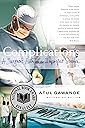
Complications: A Surgeon's Notes on an Imperfect Science by Atul Gawande is a 269-page first edition paperback that offers a compelling, humanized exploration of modern surgery. Published in 2003 and a 2002 National Book Award Finalist, it blends gripping true cases with reflections on medical uncertainty, ethics, and the limits of technology. Praised for its lucid storytelling and insightful perspective, this book is a must-read for anyone intrigued by the complexities behind the science of healing.


| Best Sellers Rank | #30,229 in Books ( See Top 100 in Books ) #4 in General Surgery #11 in Medical Education & Training (Books) #303 in Diseases & Physical Ailments Health |
| Customer Reviews | 4.6 out of 5 stars 6,015 Reviews |
W**N
A captivating narrative on science and human judgement
Having worked as an analyst in the healthcare industry, Atul Gawande's name is no stranger to me. His high profile work as an advisor in healthcare reform and authoritative figure in the world of medicine prompted me to pick up his most popular book, Complications. To my surprise, this book turned out to be quite different from what I expected. I began reading with the impression that it would be more in tune with the healthcare reform-directed rhetoric ubiquitously heard in the media and other public debates these days. Instead, I found Complications to be an intriguing narrative on a wide range of lesser known issues in the medical practice. Complications explores a hodgepodge of topics through each chapter. Through captivating anecdotes, situations explored include areas such as the systemic problems resulting from the way healthcare is practiced, philosophical thoughts relating to limitations in understanding the human body, and the vital role that a physician's intuition still plays in decision making despite the improvements in technology and evidence based studies. Some of the systemic issues addressed include: the ethical dilemma in training new doctors by allowing inexperienced hands to operate on patients, how a good physician can go "bad" because of a the perverse incentives of our reimbursement system, and how performing autopsies can help improve the delivery of care. I was particularly fascinated by the medical mystery chapters of the book, which presented some common but poorly understood areas of medicine such as pain, nausea, and eating disorders. I think an underlying theme is the uncertainty of medicine - that doctors are human and the complexity of their work requires intuition based decisions, even if at times such decisions may lead to unforeseen error. Although the memoirs make some very suspenseful reading and provide an eye-opening perspective on certain problems facing healthcare, I feel that Atul steers clear of the potentially politically charged ideals. While the reading is informative, it isn't very opinionated. I think this makes the book more enjoyable to read and leaves the reader with a greater sense of awe from the narrative. I feel like it was written not with the intention of advocating an ideology, but to tell a good story. If you are looking for a specific commentary on the social issues of healthcare familiar to public debate, you won't find it here. However, you will find interesting views on a number of other intriguing areas in medicine, from the eyes of a surgeon. Even though Complications turned out different than I anticipated, I found it to be a very entertaining and worthwhile read.
A**J
The human side of doctoring
This book was a fascinating look into the modern doctors world. It is a job more defined by statistics than in the past, but personality and experience still play a great part. I really enjoyed reading this doctor/author's book book on Checklists and their usage in medicine so I was not disappointed with his more random thoughts on doctoring in general. Some of it is quite unsettling as in the case of surgery and interns learning. You hate to be a learning experience when your life is at stake, but how else do interns learn? Still...most doctors insist that their loved ones, are not part of this experience. Doesn't seem really fair; does it? Doctors like everyone else do better with practice, and this is well demonstrated with these specialized practices that only do Hernia operations. It also makes it possible for robots and computers to be quite effective at simple procedures. However that gives me pause. Here the blue screen of death might have greater implications than a reboot. I liked the fact where he dealt with some of his mistakes and diagnoses of patients and how there was a struggle of procedure and how to approach things. One person was nearly harmed by a minor oversight and another person was saved with a hunch. Given that both of these areas (oversights and hunches) are in the gray areas of human cognition it shows how much luck plays a factor, or a sixth sense, that doctors with experience start to develop. A quick synopsis of what this book includes: INTRODUCTION FALLABILITY *Education of a knife: How interns are trained in surgery. Odds are, you are their training. *The computer and the hernia factory: Repetition = perfection and efficiency *When doctors make mistakes: How mistakes happen. Like all of us they are human, but unlike all of us the ramifications are greater. *Nine Thousand Surgeons: Conferences provide an opportunity to compare notes and keep up to date. *When Good doctors go Bad: Peer review is necessary but whistle blowing on a colleague is rare. Not surprising there are remediation schools, but few and far between. Important note, if some doctors push you away from others...take note. MYSTERY Full Moon/Friday the 13th: Is there any truth to this. Statistically no, but the jury is still out. The pain perplex: Pain stumps most doctors as how and why it exists is not clear cut.There is no test for pain. A queasy feeling: Nausea is not one symptom, nor does it have a single cause and can be very difficult to treat. Crimson tide: Blushing, for some it undermines their confidence, but is it only cosmetic? The man who couldn't stop eating: Overeating is a life altering issue and surgery to address this is gaining ground as in the case of the morbidly obese, it works. UNCERTAINTY *Final Cut: Autopsy is not done as much any more unless there is a mystery surrounding the death. However, it helps educate doctors as to the accuracy of their diagnoses. Unfortunately to many it is a violation of the dead, who will gain nothing in return. *The dead baby mystery: Sometimes the answers are obvious *Whose body is is anyway: Doctors these days advise, not dictate and patients struggle to make the right choices. *Doctors have to let patients make bad choices despite their objections. *The case of the red leg: Gut feeling are sometimes all you have and often they are dead on. In the absence of this all that is left is statistics. SUMMARY This book was interesting, as it was a mix of topics. Some associated with specific symptoms like pain, blushing and nausea. Others associated with medical errors, bad doctors, cases that were swayed by errors and hunches. If you have any interest in medicine, but not the background, these are great books to read, as you get the human side of it, rather than the scientific.
M**I
Perfection in imperfection
Dr. Gawande is a genius! This is a view into the secret culture of medicine and surgeons. It's an exhilarating read that is a must for anyone who wants a little insight on medical science. He peels away the deception of the perfect doctor. He goes over all the tools doctors use in their decision making. The best part of Dr. Gawande's writing is that he is a deep thinker and parses the medicine in a way that fly's over the head of many doctors. He offers ways to improve patient care and the decision making process. I read this book at the beginning of medical school when diseases and pathologies were mere words on paper. It was a time I was trying to understand physiology, microbiology, and the rest of the basic sciences. This book opened the door to a deeper understanding of disease processes. Dr. Gawande describes cases of chronic pain to necrotizing fasciitis from both a patient centered and disease centered perspective. Medicine is a profession where the clients (ie: patients) desire ... no, expect physicians to never make a mistake, never miss a diagnosis, and offer a cure that will magically take them to a healthy state.... Patients want their physician to be perfect in practicing a perfect science. In truth, medicine is made up of imperfect humans practicing an imperfect science.
E**L
Fascinating!
Gawande is a remarkable writer with masterful ability to weave facts and patient accounts together like a compelling fiction novel. Highly recommend.
A**T
Realistic and Entertaining
I bought this book a year back but started reading just a month ago and finished it in no time. The theme of the book is to underscore medicine being an imperfect science. I hope all people read this book and understand that medicine is an imperfect science and the result of any surgical or medical intervention may not be what they expect. Unfortunate result doesn't always mean doctors were negligent. The first chapter highlights the dilemma of allowing novice trainees to practice the procedures to become experts. While no patient wants to be treated by a trainee resident how shall we get doctors for the future? I particularly liked the chapters on impaired physicians, 'When Good Doctors Go Bad.'. He depicts the life of an orthopedic surgeon who suffers from depression and is forced to leave the practice. And there is very little support for the impaired physician from the hospital they work for, the state they work in. A real tragedy. The chapters on Annual Surgeons' conference - Nine Thousand Surgeons, The computer and the Hernia Factory, The pain Perplex are readable and very informative but not as dramatic as 'Full Moon Friday the Thirteenth.' The 'Dead Baby Mystery' depicts how criminals can take advantage of mysterious facts of medicine where in a woman killed several of her babies and claimed her babies died from 'Sudden Infant Death Syndrome.' The last chapter 'The Case of the Red Leg' is written like a suspense story. I couldn't put this book down. The writing flows nicely, the human drama is depicted like a TV series based in the hospital setting and it is backed by scientific data just enough to make us believe, nay, live through the incidents. My only grievance is while Dr. Gawande works every time in the OR with anesthesiologists why did he write so little about the imperfect science of anesthesiology? I hope may be he will in the future.
E**Y
Compelling non-fiction?? Yes
How many non-fiction books have you read which you would describe as โhard to put down?โ Describing a work of fiction as such is high praise. Non-fiction? It is a unique thing to write and indeed high praise. โComplicationsโ is hard to stop reading. I appreciate Gawandeโs attempts at candor, exposรฉ (which it is not not but approaches), and balance. I appreciate his efforts to provide generalized / generalizable insights, illustrated by poignant anecdotes; and, I appreciate reading his point of view about those aspects of care which defy generalization. All writing has bias. It is inherent even if accepted conventions are followed flawlessly. It is therefore well to acknowledge that statements made in this book are also subject to error; and it is well to illustrate at least one specific instance. The author has written (page 249 of the Kindle edition), โHis [Jack Wennbergโs] research has shown, for example, that the likelihood of a doctor sending you for a gallbladder-removal operation varies 270 percent depending on what city you live in; for a hip replacement, 450 percent; for care in an intensive care unit during the last six months of your life, 880 percent. A patient in Santa Barbara, California, is five times more likely to be recommended back surgery for a back pain than one in Bronx, New York. This is, in the main, uncertainty at work, with the varying experience, habits, and intuitions of individual doctors leading to massively different care for people.โ The last sentence is inaccurate. Publications available at DartmouthAtlas.org, demonstrate that availability is a statistically significant factor in explaining much of the variation in surgical utilization from region to region. In other words, where surgery centers exist, surgeries which that center specializes in will indeed be done disproportionate to optimal care or even need. Stated more harshly, surgeons get paid to do surgeries. One cannot rule out financial incentive as a reason for the observed phenomenon.
S**B
Fascinating read
For anyone interested in the behind the scenes of the medical world this is a book worth reading. It delves into unusual diagnosis and treatment of often only rarely seen diseases. As a nurse I enjoyed going behind the scenes.
S**Y
A Gripping, Thought-Provoking Dive into the Human Side of Medicine
Complications: A Surgeonโs Notes on an Imperfect Science by Atul Gawande is a compelling exploration of the human side of medicine. Gawande, both a skilled surgeon and an eloquent writer, shares personal stories and reflections that illuminate the fallibility of even the most trained practitioners. The book provides a fascinating look at how doctors grapple with mistakes, uncertainties, and the daunting responsibility of their profession. Gawandeโs writing is clear and accessible, making complex medical issues understandable for any reader. What stands out is the honesty with which Gawande addresses the imperfections of medicine. He doesnโt shy away from discussing errors and the inherent unpredictability of the field, offering a humbling reminder that even in the most advanced hospitals, doctors are human. This thought-provoking book will resonate with both healthcare professionals and laypeople, leaving you with a deeper appreciation for the challenges doctors face every day. Highly recommended!
S**I
Realista e convincente
Atul Gawande mostra com exemplos e com linguagem simples um mundo que รฉ vivenciado por mรฉdicos e por vezes incompreendido pelos pacientes. Mostra ainda a arte que cerca essa ciรชncia imperfeita que รฉ a Medicina. Recomendo tanto para mรฉdicos quanto para pacientes.
M**G
Very Well Written Book
I thoroughly enjoyed reading this book. The author takes you on a journey through just a few issues within their industry, dabbling on personal experience, hardships, and backs it up with factual research. In addition, I found the grammar to be nearly perfect, which I personally find makes for an easier read.
M**7
EXCELLET !!
Highly recommend !!
C**N
Eccezionale
Un libro molto interessante da leggere se masticate l'inglese. Drammatico e comico allo stesso momento. Lo scrittore ha avuto un grandissimo successo con vari libri basati sulla sua esperienza da neurochirurgo che ho immediatamente ordinato poco dopo. A me รจ piaciuto molto e l'ho finito in meno di due settimane.
F**N
Thrilling and informative
One of the most thrilling books I read in a long time. It is picked with real-life experiences, interrupted by insights and thought experiements that keep you thinking. Highly recommended for everyone interested even slightly in medicine.
Trustpilot
1 month ago
2 days ago