
Buy anything from 5,000+ international stores. One checkout price. No surprise fees. Join 2M+ shoppers on Desertcart.
Desertcart purchases this item on your behalf and handles shipping, customs, and support to Cyprus.
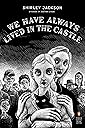
desertcart.com: We Have Always Lived in the Castle (Penguin Classics Deluxe Edition): 9780143039976: Jackson, Shirley, Lethem, Jonathan, Ott, Thomas: Books Review: Idiosyncratic Fun! - If you haven't read it, you might want to go ahead and get her read before reading what I am posting here. It's a great little book. I loved the message it sent. You can still be happy, even in the midst of destruction, so long as you aren't around annoying people. Also, notice how the villagers started leaving goodies for the girls only to make themselves feel better? It was a selfish way to gain control of the situation since the girls completely and utterly ignored them with every ounce of their beings. If the townsfolk really were doing something truly for the girls, they would have just left them alone like they wanted. Still wasn't really sure why Charles called them old maids. It's not like they were that old. All and all We Have Always Lived in A Castle is written in a captivating style that holds your attention. What moves the story along is this idea that every time the youngest daughter, Mary, is threatened, something bad happens, like contaminated food or a fire, and she manages to keep her existence intact. Nothing changes. No asylums to attend and she gets to keep her caregiver, too. A castle is a safe place that protects members of the royal caste and that's pretty much what this house does for Mary or MerryKat as she is nicknamed, and Constance, her older sister. It keeps people away. So yeah, the title of the book does it justice. Its just a good, down home, anti social read in the voice and experience of someone who wants nothing at all to do with a single soul except one other person and I love it! This story definitely has a Lizzie Borden quality to it. I was so reminded of that particular story just by the circumstances - the two women for instance, and one of them murdering their parents. So much reasonable doubt, too, so that we never know exactly who it was that murdered them. Toward the story's (non) conclusion, we are made aware it was quite possibly Merrikat who did it due to an argument her parents had, perhaps over sending her away. She is rather destructive at times. I got the feeling all she wanted was to live that existence forever, with Constance to look after her, whom she trusted. The story is told entirely from her point of view, not taking into consideration of anyone's needs but hers. I felt sad the only one she felt she could trust in life was Constance. Everyone else seemed to let her down. She does her best to turn Constance into a shell of a person, kind of lobotomizes her through circumstance or trial by fire or something. Constance ends up surviving but only if she fulfills the role of guardian and caretaker to Merrikat. She is terrorized and traumatized by putting on trial for the murder of her parents and eventually acquitted. She is too fragile to ever face the hatred and scorn of the townspeople, so she hides in the house with Merrikat, whom it seems to work out fine for. The circumstances constantly cocoon her as she manages to manipulate them without really seeming to look as if she is. Perhaps she is such a person, no one would afford her that power so it is easier for her to get away with it. She is pretty much an innocent only not exactly. She is very protective of her own way and if someone perishes in preserving it, so be it. Preservation is a theme in this tale. The family cellar is full of generations of home grown food canned over the generations which everyone is too afraid to eat. So they just sit there on the shelves for thousands and thousands of years, well, eventually. Things took a turn for the worst when their father locked up the property, banning the locals from taking a cherished short cut to the highway. That must have been where the ill will started between the townsfolk and the family and it only gets worse from here. I really liked the story but one thing I think would have made it more interesting, for me, personally, is if Jackson would have included Charles in the family's "last supper" and toyed with the idea of not knowing, for sure, who murdered the family - Merrikat or Charles. I like that mysterious, unknown element. Life's question marks. Review: Due to the success of the TV adaptation of Shirley Jackson’s, ‘The Haunting of Hill House’... - ...and with Halloween just around the corner, Jackson’s 20th century horror classics are making a comeback, and ‘We Have Always Lived in the Castle’ is no exception. Eighteen year old, Mary Katherine Blackwood (Merricat), her older sister Constance, their Uncle Julian, and cat Jonas, happily co-exist together in their isolated mansion on the outskirts of town, shut away from the outside world in their own private, protective bubble. The gates are kept locked, and the Blackwoods receive few visitors, and Merricat’s weekly excursion into town to buy food, is her only contact with the villagers. They have lived this way for six years – since that fateful dinner where four members of the Blackwood family were poisoned via arsenic in the sugar bowl (Shirley Jackson’s 1962 far more drastic solution to the anti-sugar campaign). That is until, estranged cousin, Charles Blackwood knocks at their door, and changes their lives irrevocably… Even though I tagged this as horror, it wasn’t essentially scary, a gothic horror tale sums it up nice and neatly. Although there was one scene that raised the hairs on my arms, and if you think too much about the specifics of the Blackwoods demise – I mean one of the family members was a 10 year-old boy, then that’s pretty horrific. I really loved Merricat, Constance, and Uncle Julian – all three had such distinct and varied personalities. Our narrator, Merricat, had an imaginative, insane innocence, and her thoughts were as wondrous as they were disturbing. Constance was the one in charge, carer and protector, crippled with agoraphobia. Because she prepared the final meal, Constance was the one arrested of the crime, later acquitted. She was often lonely, and at least a part of her wanted to rejoin society, which meant she was eager and excited, as well as the most vulnerable, over Charles’ visit. Julian (who consumed a small amount of arsenic that day which left him paralysed) was obsessed with his family’s deaths, living that day over and over in his head, writing detailed accounts of what he recalled, desperate to make sense of it all. Ignorance, intolerance, and fear of anyone who is different, as well as lack of understanding in regards to mental illness, was a prevalent theme throughout. The very existence of the Blackwoods frighten the villagers because they are viewed as strange, odd, and anti-social, and such people do not belong in their town. On top of that, they know that at least one of them is a mass murderer. The three Blackwoods are just as scared of the villagers, live in constant terror that one, or worse a group, will invade their property, and all they want is to be left alone, and live a quiet live in peace and security. Light spoiler ahead! The mystery isn’t who poisoned the Blackwood family (I think that’s pretty much a given), but the why is left purposely ambiguous, and not knowing the reason, or what lead up to it, freaked me out even more. I had my theories of course, but will never know for sure. The close of the book will leave you feeling unsettled, haunted, and saddened, yet touched. An eerie, poignant read for Halloween, perfect for those who don’t like to be too scared, as well as a must read for hardcore horror fans.


| ASIN | 0143039970 |
| Best Sellers Rank | #5,596 in Books ( See Top 100 in Books ) #50 in Contemporary Literature & Fiction #92 in Gothic Fiction #448 in Literary Fiction (Books) |
| Customer Reviews | 4.1 4.1 out of 5 stars (16,225) |
| Dimensions | 5.71 x 0.47 x 8.43 inches |
| Edition | Deluxe |
| ISBN-10 | 9780143039976 |
| ISBN-13 | 978-0143039976 |
| Item Weight | 6.6 ounces |
| Language | English |
| Print length | 160 pages |
| Publication date | October 31, 2006 |
| Publisher | Penguin Classics |
R**R
Idiosyncratic Fun!
If you haven't read it, you might want to go ahead and get her read before reading what I am posting here. It's a great little book. I loved the message it sent. You can still be happy, even in the midst of destruction, so long as you aren't around annoying people. Also, notice how the villagers started leaving goodies for the girls only to make themselves feel better? It was a selfish way to gain control of the situation since the girls completely and utterly ignored them with every ounce of their beings. If the townsfolk really were doing something truly for the girls, they would have just left them alone like they wanted. Still wasn't really sure why Charles called them old maids. It's not like they were that old. All and all We Have Always Lived in A Castle is written in a captivating style that holds your attention. What moves the story along is this idea that every time the youngest daughter, Mary, is threatened, something bad happens, like contaminated food or a fire, and she manages to keep her existence intact. Nothing changes. No asylums to attend and she gets to keep her caregiver, too. A castle is a safe place that protects members of the royal caste and that's pretty much what this house does for Mary or MerryKat as she is nicknamed, and Constance, her older sister. It keeps people away. So yeah, the title of the book does it justice. Its just a good, down home, anti social read in the voice and experience of someone who wants nothing at all to do with a single soul except one other person and I love it! This story definitely has a Lizzie Borden quality to it. I was so reminded of that particular story just by the circumstances - the two women for instance, and one of them murdering their parents. So much reasonable doubt, too, so that we never know exactly who it was that murdered them. Toward the story's (non) conclusion, we are made aware it was quite possibly Merrikat who did it due to an argument her parents had, perhaps over sending her away. She is rather destructive at times. I got the feeling all she wanted was to live that existence forever, with Constance to look after her, whom she trusted. The story is told entirely from her point of view, not taking into consideration of anyone's needs but hers. I felt sad the only one she felt she could trust in life was Constance. Everyone else seemed to let her down. She does her best to turn Constance into a shell of a person, kind of lobotomizes her through circumstance or trial by fire or something. Constance ends up surviving but only if she fulfills the role of guardian and caretaker to Merrikat. She is terrorized and traumatized by putting on trial for the murder of her parents and eventually acquitted. She is too fragile to ever face the hatred and scorn of the townspeople, so she hides in the house with Merrikat, whom it seems to work out fine for. The circumstances constantly cocoon her as she manages to manipulate them without really seeming to look as if she is. Perhaps she is such a person, no one would afford her that power so it is easier for her to get away with it. She is pretty much an innocent only not exactly. She is very protective of her own way and if someone perishes in preserving it, so be it. Preservation is a theme in this tale. The family cellar is full of generations of home grown food canned over the generations which everyone is too afraid to eat. So they just sit there on the shelves for thousands and thousands of years, well, eventually. Things took a turn for the worst when their father locked up the property, banning the locals from taking a cherished short cut to the highway. That must have been where the ill will started between the townsfolk and the family and it only gets worse from here. I really liked the story but one thing I think would have made it more interesting, for me, personally, is if Jackson would have included Charles in the family's "last supper" and toyed with the idea of not knowing, for sure, who murdered the family - Merrikat or Charles. I like that mysterious, unknown element. Life's question marks.
N**M
Due to the success of the TV adaptation of Shirley Jackson’s, ‘The Haunting of Hill House’...
...and with Halloween just around the corner, Jackson’s 20th century horror classics are making a comeback, and ‘We Have Always Lived in the Castle’ is no exception. Eighteen year old, Mary Katherine Blackwood (Merricat), her older sister Constance, their Uncle Julian, and cat Jonas, happily co-exist together in their isolated mansion on the outskirts of town, shut away from the outside world in their own private, protective bubble. The gates are kept locked, and the Blackwoods receive few visitors, and Merricat’s weekly excursion into town to buy food, is her only contact with the villagers. They have lived this way for six years – since that fateful dinner where four members of the Blackwood family were poisoned via arsenic in the sugar bowl (Shirley Jackson’s 1962 far more drastic solution to the anti-sugar campaign). That is until, estranged cousin, Charles Blackwood knocks at their door, and changes their lives irrevocably… Even though I tagged this as horror, it wasn’t essentially scary, a gothic horror tale sums it up nice and neatly. Although there was one scene that raised the hairs on my arms, and if you think too much about the specifics of the Blackwoods demise – I mean one of the family members was a 10 year-old boy, then that’s pretty horrific. I really loved Merricat, Constance, and Uncle Julian – all three had such distinct and varied personalities. Our narrator, Merricat, had an imaginative, insane innocence, and her thoughts were as wondrous as they were disturbing. Constance was the one in charge, carer and protector, crippled with agoraphobia. Because she prepared the final meal, Constance was the one arrested of the crime, later acquitted. She was often lonely, and at least a part of her wanted to rejoin society, which meant she was eager and excited, as well as the most vulnerable, over Charles’ visit. Julian (who consumed a small amount of arsenic that day which left him paralysed) was obsessed with his family’s deaths, living that day over and over in his head, writing detailed accounts of what he recalled, desperate to make sense of it all. Ignorance, intolerance, and fear of anyone who is different, as well as lack of understanding in regards to mental illness, was a prevalent theme throughout. The very existence of the Blackwoods frighten the villagers because they are viewed as strange, odd, and anti-social, and such people do not belong in their town. On top of that, they know that at least one of them is a mass murderer. The three Blackwoods are just as scared of the villagers, live in constant terror that one, or worse a group, will invade their property, and all they want is to be left alone, and live a quiet live in peace and security. Light spoiler ahead! The mystery isn’t who poisoned the Blackwood family (I think that’s pretty much a given), but the why is left purposely ambiguous, and not knowing the reason, or what lead up to it, freaked me out even more. I had my theories of course, but will never know for sure. The close of the book will leave you feeling unsettled, haunted, and saddened, yet touched. An eerie, poignant read for Halloween, perfect for those who don’t like to be too scared, as well as a must read for hardcore horror fans.
P**D
It may be surprising to some people, but I had never heard of Shirley Jackson before reading this book, and so I was surprised to find that she has such a following. Stephen King, Neil Gaiman and the amazing Richard Matheson – author of one of my favourite books – I Am Legend, are just a few well-known authors who claim to have been inspired by her writing. I must point out that I only looked into that once I was halfway through the book. I found her writing so powerful, affecting and strangely melancholy, that I had to find out more about the author before I had finished the book. The story is told in first person through the eyes of a young tomboy-girl called Merricat, who lives in the Blackwood family home with her sister, Constance, her cat, Jonas, and her uncle Julian. Uncle Julian is the man of the family, but it is Constance who does all of the cooking, cleaning and tending to the garden. We learn that the rest of the family have all since died from an unfortunate incidence of food poisoning. Constance was put on trial for the murders of all that died, but we learn that she was cleared of all charges. Now they live a rather solitary life in the house, whilst being surrounded by the staring and cruel evil eyes of people from the village, who believe that Constance, or her sister Merricat, did in fact kill their family. They are treated mostly as outcasts by all of their neighbours, and every time Merricat goes into the village to get food, they all give her plenty of space, that is apart from the brave few who bully her in the hope that the sisters will pack up and leave town for good. It is always Merricat who has to go to the village for supplies, for since the incident of poisoning and the trial, Constance will only go as far from the house as the vegetable garden. And she is also very busy tending to Uncle Julian, who is wheelchair-bound and gradually losing his memory. The only thing he is sure about, and quite obsessive about, is his papers, which contain his memory and details about the family poisoning. I must say this story hooked me from the very start, and what made it so brilliant for me were the sad, mellow undertones that come from Merricat. She often says how happy she is to her sister Constance, but I sensed an aching and desperate sadness beneath her skin. And Jackson does a brilliant job of turning the mundane actions in the house, into illuminations of spirit and character. For there are numerous scenes, especially those with Jonas, where the strange and perverse melancholy within the house is almost like a thunder rattling the floorboards, but the fact that thunder makes no sound, only strengthens the eerie and bleak atmosphere of the story. Having said that, the characters are so likeable, and the daily chores they get up to are so simplistic and pleasing, that as a reader we feel a strange cosiness within that world, and perhaps a need for it not to be disturbed. For after all, perhaps to them this is happiness, and we the reader are merely projecting some melancholy onto the page. The ambiguity raised by the author in this point is stunning, and the sense that this humble world that they exist in, will not, and cannot last for long, is what carries are curiosity along. The arrival of Cousin Charles sure puts an end to the cosy and in some ways perfect lives led by the two sisters, for though Constance is happy to accept him into their home, Merricat doesn’t take to him at all, and in fact does almost everything in her power to make him feel ill at ease, everything from destroying his room, to talking at the dinner table about the different tasteless poisons that can kill. I shall not go into what happens with Charles in the second half of the book, but just when you wonder exactly where, or how Jackson will move the story on, she does so with effortless and cunning invention, and somehow guides the story to a wholly fitting and satisfying end. That end is perhaps a little predictable, but as a reader I was actually pleased, and wouldn’t have wanted it to end any other way. In summation then, I found this to be a marvellous read, and one whose characters will live on in my head for a long time to come. They are written with such skill and warmth, that they perfectly contrast with the cold, dark and treasure filled house in which they live. I especially loved the relationship with Merricat and Constance, a sisterly love that you feel no secret could ever break.
V**O
Conforme o esperado. Recomendo.
D**I
Great product. Recommended seller.
W**.
Fantastisches Buch, tatelloser Druck.
A**B
Didn't realise the book was supposed to looked very diy and a bit ripped up. Great book.
Trustpilot
1 month ago
1 day ago