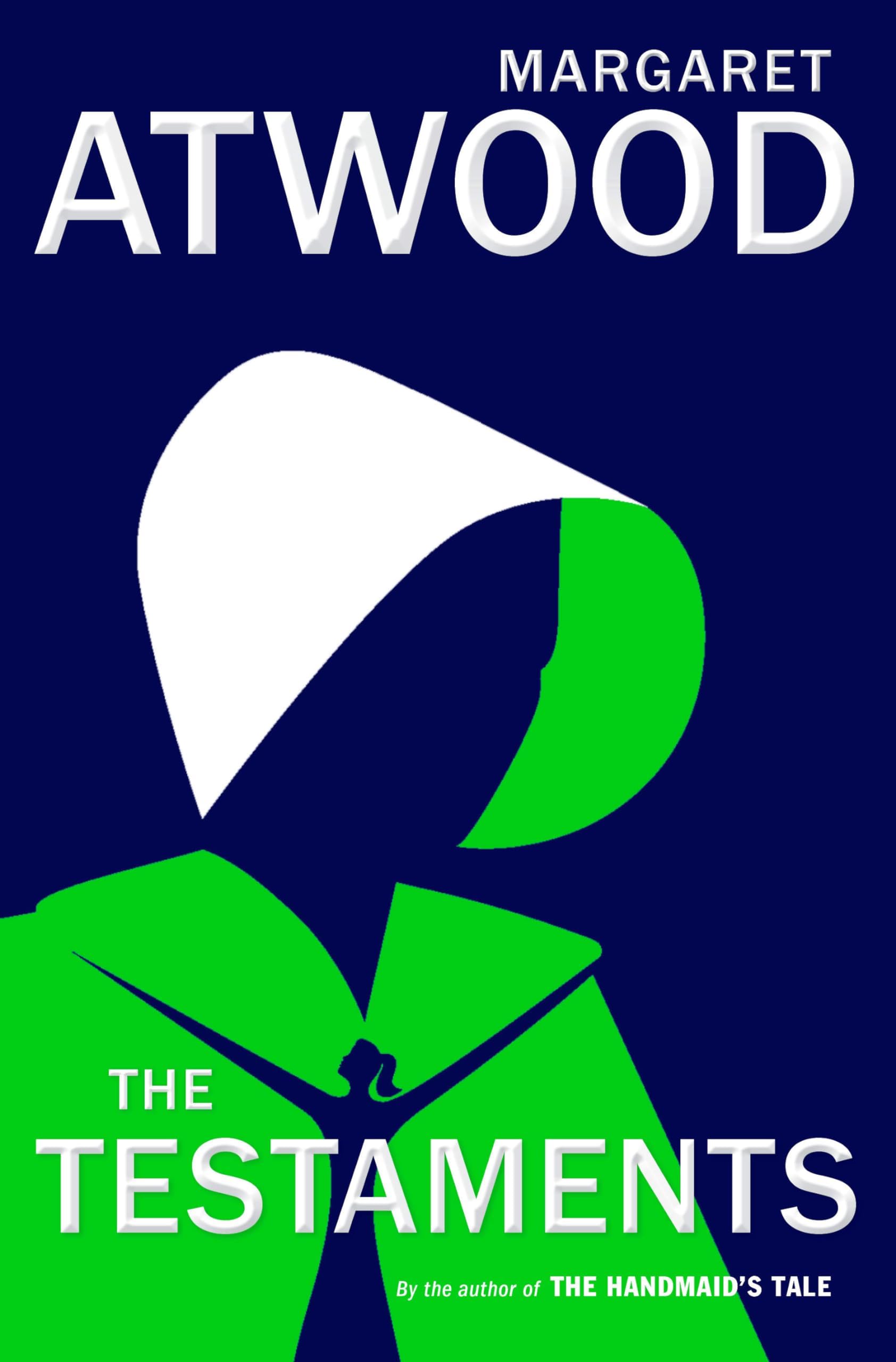
The Testaments: The Sequel to The Handmaid's Tale
Product ID: 109078169
Desertcart purchases this item on your behalf and handles shipping, customs, and support to Cyprus.
#1 NEW YORK TIMES BESTSELLER WINNER OF THE BOOKER PRIZE desertcart EDITORS’ PICK FOR THE BEST BOOK OF 2019 The Testaments is a modern masterpiece, a powerful novel that can be read on its own or as a companion to Margaret Atwood’s classic, The Handmaid’s Tale . More than fifteen years after the events of The Handmaid's Tale, the theocratic regime of the Republic of Gilead maintains its grip on power, but there are signs it is beginning to rot from within. At this crucial moment, the lives of three radically different women converge, with potentially explosive results. Two have grown up as part of the first generation to come of age in the new order. The testimonies of these two young women are joined by a third: Aunt Lydia. Her complex past and uncertain future unfold in surprising and pivotal ways. With The Testaments, Margaret Atwood opens up the innermost workings of Gilead, as each woman is forced to come to terms with who she is, and how far she will go for what she believes. Review: Must-Read Story - “You don’t believe the sky is falling until a chunk of it falls on you.” I don't think there is a greater pleasure in reading, than experiencing a Margaret Atwood book narrated by the likes of Ann Dowd, Bryce Dallas Howard and Mae Whitman! I put off diving into this book because 'The Handmaid’s Tale' remains one of the most unforgettable stories I have ever read. This sequel to that book focuses on the horrors of the current Gilead, some years in the future after the events of the first book. There has been a whole generation of girls who have grown up in Gilead, and who know nothing different than violence and persecution. But for them, this is their normal. The Testaments is told through three points of views. One of them is Baby Nicole, who now lives in Canada and is an internationally-known figure. The other is Aunt Lydia, and the final one is Agnes, a young woman who has grown up in Gilead and in an almost neutral voice, describes the everyday horror of Gilead: rape, execution and violence against the citizens, especially women. Aunt Lydia's chapters are the most fascinating: how did a seemingly ordinary and educated woman become such a monster? “And how easily a hand becomes a fist.” Ordinary people became swept up in the totalitarian regime and extreme religious persecution that swept through what was once the United States of America. Margaret Atwood has an uncanny ability to take current events and expand upon them to predict the future. Men rule Gilead with an iron fist and citizens are turned against each other. Women are kept repressed through illiteracy and arcane laws against abortion and clothing. The ability for free thinking and individually is of course forbidden in Gilead. Propaganda rules the day. The contrast between the oppressive regime and free societies is seen though the eyes of narrators from Canada, the place where people escape to from Gilead. One of the most chilling aspects of this story was they way in which women' voices were silenced. In Gilead, four women equal the testimony of one man. It is easy to compare how dangerous religious zealots become when put into positions of power. One cannot hep but compare the events of today with the stories told in 'The Testaments'. Aunt Lydia's narration is the most surprising and the most enlightening. Whether you can sympathize with her or not, her story is both tragic, violent and at times, sharply funny. An educated woman before the overthrow of the United States, she has used her intelligence and wits to survive. She was once a family court judge and now has become a symbol of the violently repressive Gilead regime. She of watched as many of her colleagues were captured, tortured and executed all in the name of the new fanatical regime. “All that was necessary was a law degree and a uterus: a lethal combination.” I can't stop thinking about this story and its main characters. 'The Testaments' is a fast-paced, smartly-written and extremely thrilling tale that is more than thought-provoking. It is a must-read story for our modern times. “As they say, history does not repeat itself, but it rhymes.” Review: A unique, essential sequel that tastefully incorporates the current TV series as canon - Not in a very great while have I been able to finish a 400+ page book in 24 hours, which is precisely what happened with "The Testaments". I love reading and am a fairly fast-paced with a good book, but with my day job and my second "professional hobby" as a sound engineer it's very difficult for me to get in 20-30 pages of quality reading in any given day/night. It sadly takes me close to 3-4 weeks each to read fantasy novels like the A Song of Ice and Fire or Wheel of Time series. However...I basically put my life on pause for this book, as soon as I started reading it (and listening to it, more on that in a bit). Having binged "The Handmaid's Tale" series on Hulu earlier this summer and subsequently reading the original 1985 novel, the way this book adds to its previous media (including, very heavily I might add, the TV series) is absolutely delightful. This is an example where the author has the readers'/viewers' interest in mind, and is not just some bombastic continuation of the story just to sell copies. That being said, the book is broken up into 3 sections, all being told retrospectively some years after the last season of "The Handmaid's Tale": 1) Aunt Lydia, from her stance as basically the matriarch of Gilead; 2) Daisy, a teenager in Toronto during the prime days of Gilead; 3) Agnes, who, if you've watched the TV series, you already know who this character is. This book finds itself in a very unique position not common in sequels because of the mixed background of any possible reader. It could stand alone okay, but not nearly as well as serving as the direct follow up to just the novel. But for the ultimate experience - it does fan service to those who have read and watched "The Handmaid's Tale". Because the show still has a little bit to go (who knows how long) the time distance and the plot points set in "The Testaments" surprisingly do not write each other into a corner, but provides even more anticipation for how the entire timeline of Gilead will be explored. It's like the tightening of a fishing line in a pond - you know something's at the end and you're excited to have caught it, but reeling it all in is part of the experience - and that will be the job of the last seasons of the show. There are some great twists and turns in this book as there is in the preceding media, however it is best to leave all detail out. I am going to admit - being the harsh critic that I am - some of the ending does seem a bit forced especially on Aunt Lydia's part and I was able to predict a few things quite far in advance - but I've consumed all the previous media. A few predicable details did not deter me from reading any further, particularly during the beginning it even had a paradoxical effect: enhancing the experience as I turned the pages...or the seconds of the audiobook. In another unique twist of my own accord - I actually started 'The Testaments' with Audible when I was at work (and I typically despise audiobooks unless I'm on a solo road trip) and this is one of those rare exceptions (to me) where the audiobook might be even more compelling than just the text on a page. The main reason: Ann Dowd, the phenomenal actress that plays Aunt Lydia in the TV series, reads her sections in that familiar piously strict voice of hers that we all love to hate from the Show. Bryce Dallas Howard and Mae Whitman also NAIL their respective characters' "voice" and I was sucked into the beginning 10 chapters while crunching numbers at work and I'm so glad I did. It felt more like a radio broadcast than anything else and is part of why I sped through this book. Even if you've read this already, play the audiobook if you have some hours to kill. You won't regret it. If you're a fan of the Gilead alternate universe (let's face it, no one is a fan of Gilead itself...but you know what I mean) then this is essential reading, obviously. If you've only read the novel, I highly suggest watching the entire series (and if you are in the middle of it, you should finish it). The whole is MUCH greater than the sum of its parts, a rare feat for a "mixed media" type of experience.


| Best Sellers Rank | #38,929 in Books ( See Top 100 in Books ) #52 in Dystopian Fiction (Books) #97 in Science Fiction Short Stories #322 in Literary Fiction (Books) |
| Customer Reviews | 4.6 out of 5 stars 52,270 Reviews |
E**N
Must-Read Story
“You don’t believe the sky is falling until a chunk of it falls on you.” I don't think there is a greater pleasure in reading, than experiencing a Margaret Atwood book narrated by the likes of Ann Dowd, Bryce Dallas Howard and Mae Whitman! I put off diving into this book because 'The Handmaid’s Tale' remains one of the most unforgettable stories I have ever read. This sequel to that book focuses on the horrors of the current Gilead, some years in the future after the events of the first book. There has been a whole generation of girls who have grown up in Gilead, and who know nothing different than violence and persecution. But for them, this is their normal. The Testaments is told through three points of views. One of them is Baby Nicole, who now lives in Canada and is an internationally-known figure. The other is Aunt Lydia, and the final one is Agnes, a young woman who has grown up in Gilead and in an almost neutral voice, describes the everyday horror of Gilead: rape, execution and violence against the citizens, especially women. Aunt Lydia's chapters are the most fascinating: how did a seemingly ordinary and educated woman become such a monster? “And how easily a hand becomes a fist.” Ordinary people became swept up in the totalitarian regime and extreme religious persecution that swept through what was once the United States of America. Margaret Atwood has an uncanny ability to take current events and expand upon them to predict the future. Men rule Gilead with an iron fist and citizens are turned against each other. Women are kept repressed through illiteracy and arcane laws against abortion and clothing. The ability for free thinking and individually is of course forbidden in Gilead. Propaganda rules the day. The contrast between the oppressive regime and free societies is seen though the eyes of narrators from Canada, the place where people escape to from Gilead. One of the most chilling aspects of this story was they way in which women' voices were silenced. In Gilead, four women equal the testimony of one man. It is easy to compare how dangerous religious zealots become when put into positions of power. One cannot hep but compare the events of today with the stories told in 'The Testaments'. Aunt Lydia's narration is the most surprising and the most enlightening. Whether you can sympathize with her or not, her story is both tragic, violent and at times, sharply funny. An educated woman before the overthrow of the United States, she has used her intelligence and wits to survive. She was once a family court judge and now has become a symbol of the violently repressive Gilead regime. She of watched as many of her colleagues were captured, tortured and executed all in the name of the new fanatical regime. “All that was necessary was a law degree and a uterus: a lethal combination.” I can't stop thinking about this story and its main characters. 'The Testaments' is a fast-paced, smartly-written and extremely thrilling tale that is more than thought-provoking. It is a must-read story for our modern times. “As they say, history does not repeat itself, but it rhymes.”
T**M
A unique, essential sequel that tastefully incorporates the current TV series as canon
Not in a very great while have I been able to finish a 400+ page book in 24 hours, which is precisely what happened with "The Testaments". I love reading and am a fairly fast-paced with a good book, but with my day job and my second "professional hobby" as a sound engineer it's very difficult for me to get in 20-30 pages of quality reading in any given day/night. It sadly takes me close to 3-4 weeks each to read fantasy novels like the A Song of Ice and Fire or Wheel of Time series. However...I basically put my life on pause for this book, as soon as I started reading it (and listening to it, more on that in a bit). Having binged "The Handmaid's Tale" series on Hulu earlier this summer and subsequently reading the original 1985 novel, the way this book adds to its previous media (including, very heavily I might add, the TV series) is absolutely delightful. This is an example where the author has the readers'/viewers' interest in mind, and is not just some bombastic continuation of the story just to sell copies. That being said, the book is broken up into 3 sections, all being told retrospectively some years after the last season of "The Handmaid's Tale": 1) Aunt Lydia, from her stance as basically the matriarch of Gilead; 2) Daisy, a teenager in Toronto during the prime days of Gilead; 3) Agnes, who, if you've watched the TV series, you already know who this character is. This book finds itself in a very unique position not common in sequels because of the mixed background of any possible reader. It could stand alone okay, but not nearly as well as serving as the direct follow up to just the novel. But for the ultimate experience - it does fan service to those who have read and watched "The Handmaid's Tale". Because the show still has a little bit to go (who knows how long) the time distance and the plot points set in "The Testaments" surprisingly do not write each other into a corner, but provides even more anticipation for how the entire timeline of Gilead will be explored. It's like the tightening of a fishing line in a pond - you know something's at the end and you're excited to have caught it, but reeling it all in is part of the experience - and that will be the job of the last seasons of the show. There are some great twists and turns in this book as there is in the preceding media, however it is best to leave all detail out. I am going to admit - being the harsh critic that I am - some of the ending does seem a bit forced especially on Aunt Lydia's part and I was able to predict a few things quite far in advance - but I've consumed all the previous media. A few predicable details did not deter me from reading any further, particularly during the beginning it even had a paradoxical effect: enhancing the experience as I turned the pages...or the seconds of the audiobook. In another unique twist of my own accord - I actually started 'The Testaments' with Audible when I was at work (and I typically despise audiobooks unless I'm on a solo road trip) and this is one of those rare exceptions (to me) where the audiobook might be even more compelling than just the text on a page. The main reason: Ann Dowd, the phenomenal actress that plays Aunt Lydia in the TV series, reads her sections in that familiar piously strict voice of hers that we all love to hate from the Show. Bryce Dallas Howard and Mae Whitman also NAIL their respective characters' "voice" and I was sucked into the beginning 10 chapters while crunching numbers at work and I'm so glad I did. It felt more like a radio broadcast than anything else and is part of why I sped through this book. Even if you've read this already, play the audiobook if you have some hours to kill. You won't regret it. If you're a fan of the Gilead alternate universe (let's face it, no one is a fan of Gilead itself...but you know what I mean) then this is essential reading, obviously. If you've only read the novel, I highly suggest watching the entire series (and if you are in the middle of it, you should finish it). The whole is MUCH greater than the sum of its parts, a rare feat for a "mixed media" type of experience.
P**E
Fascinating, chilling and fast paced!
I read the Handmaid’s Tale years ago and loved it. I did not watch the TV series. The Testaments stands alone, but it is richer if you have read the Handmaid’sTale, even if you’ve forgotten the details. Excellent writing, as usual by Margaret Atwood. Great character development. Every day, I couldn’t wait to get back to reading it. If you read it, read all the way beyond the seeming end, to the Symposium and the interview with MA. Everything she writes in this story has happened or is happening somewhere in the world. I would like to give it 4 and a half stars. For me, five stars is for both a book that is excellently written ( this one is) AND I learn something about a place or time I didn’t know before. Sadly, although this is a fictional composite, we are living in a time when versions of this story are already happening. I recommend the book highly. Read it.
Z**❗
Perspective and context
It's tricky to mess with a classic. I think it's mostly because once a piece of art attains "classic" status, almost all of those who have experienced it - in the case of a classic book - read it, now feel like they own it. Books and films in particular have a hard to define participatory effect where the reader becomes part of the story and therefore defines the story and characters according to their own interior perspective and thought process. When it comes to either the most revered classics and/or books that achieve their renown via first person, possibly unreliable narrator who exists in a world not fully sketched out and purposely left hazy as a storytelling device, the more the reader will tend to go ahead and sketch that world out with their own assumptions. This means that said classic book becomes something slightly different for every fan, taking on a particular shape and form that becomes almost talismanic for some, quasi-holy for others. It would be hard to find a book published in the last half century more revered than The Handmaid's Tale, so when we all saw the announcement that Margaret Atwood was bringing a sequel, we also all knew there would much hand-wringing and kvetching no matter WHAT the next chapter focused on. For my money, you couldn't ask for a better continuation of the story. I first read The Handmaid's Tale last year. It had nothing to do with the TV show or cultural resurgence of the story and it's oh so prescient themes. It was just on my bookshelf of "VERY IMPORTANT BOOKS YOU SHOULD READ SOMEDAY" and I finally got around to it. As a 49 year old white middle-class male raised in a middle-class Mid-Atlantic USA type of world I really didn't think it would be a home run for me. I was wrong. I fell down the same hole that so many others have found themselves tumbling through into Gilead and the murky, strange world of Offred. I love the entire thing, including the post-script... thought about it for about two weeks, then moved on with my life. I haven't ever been interested in the TV show. When I saw The Testaments up for order, I figured I should at least see what shape the story would take and I hit the buy button. Now I have just finished it and not only was it what I was hoping for but I don't think anyone could hope for anything better than this, in regard to gaining perspective and context on what led up to the previous book as well as the fallout of the events that take place in The Handmaid's Tale. As mentioned, there will always be some that don't WANT perspective and/or context on a classic, timeless allegorical and prophetic novel. For me though, it was fascinating. Seeing motivations peeled back, repercussions revealed and a legacy played out over a new generation added immensely to the previous story and only made it more emotional and tender to me. Sometimes when a story ends you almost don't want to know what happens to a certain protagonist and sometimes you are just itching to know more. I wasn't sure how I felt about Offred and/or the entire cultural landscape in the Handmaid's Tale, but now that I know more, it all just feels deeper and more meaningful to me. I'm trying hard to not put any spoilers in this review, even light ones, so there's a lot I don't want to say. I will put it like this. If The Handmaid's Tale was a close-up on one character, The Testaments is a panning, wide-shot of an entire culture that encompasses three main viewpoints and ties together in a satisfying and logical way. It does take a few chapters to build up some steam, but trust me when I say, once the story gains momentum - it moves along quickly and flows in some unexpected directions. Sequels written decades later can end up really crashing hard sometimes, but in the hands of such a talented author, you get a book like The Testaments. It meshes perfectly with the previous story while still being timeless and speaking to current society at the same time. Since I'm just one person, that's just my opinion and many will find fault with this book, believing it's either too much or not enough, or not necessary or whatever. But I think it's a great gift from an author to her fans. Unwrap it and enjoy.
W**D
The background seems more interesting than the plot
The plot is a good one, with exciting escapes, bold maneuvering, and the Baby Nichole coming to light as a real person, not just a publicity campaign by Gilead. I could go into the horrifying public executions, the many different faces of brutality, and the machinations of Aunt Lydia - all that makes for a great story. But it's the society of Gilead itself that I'll remember longest. Power struggles, different factions of the government plotting toward different goals, corruption at the various concentrations of government, and the treatment of young women as baubles to be traded for favors, they all echo realities in the US today. Unfortunately. Even the struggle to release documentation of the corruption, hoping to overthrow it, sounds dismally familiar. The book ends on an optimistic note, with Gilead long gone but extensive study of it helping to inform a more humane society. There are signs that the US might right itself, but so many kinds of damage will take generations to undo, if that's even possible. -- wiredweird
R**9
A sequel that eclipses its predecessor
This book managed to really impress me so much more than The Handmaid’s Tale, which, as I discussed in my review after my first read, I felt had several weaknesses. I felt this book showed Atwood’s maturation as both an author and person. I found the writing to be much tighter. I took issue with the formation of Gilead after reading the first book because it did not seem all that plausible. This book does some work to bolster the believability of the fall of the government and how Gilead took power, but I still can’t say this is a work of speculative fiction. It would be improbable to remove the whole government, and the states would still have their governments. Since we still have the right to bear arms in this country, I feel many would be in a position to fight back and would. I also feel other countries would get involved really quickly. As I said in my previous review, this would have been more believable as a cult here or to take place under Sharia law in another country. Americans love their liberties. Now even more than ever. I can’t even imagine the rioting that would ensue if people’s smart phones were taken away. One of the things that bothered many readers about the first book was that Gilead was supposed to have been started by Christians. Obviously, it was clear that the leaders were anything but Christian. Many of the biblical quotes that were used to bolster their twisted set up were Old Testament and taken out of context of the Bible as a whole. I particularly enjoyed seeing some of the characters in this book being exposed to the Bible as a whole and realizing how different the whole take away was. To quote, “You can believe in Gilead, or you can believe in God, but not both.” I particularly found the way that faith played into the ending to be a perfect touch. I also was heartened by the inclusion of some men of worth in this novel. They were not the focus, but at least some men who had the best interests of others in mind and not sex addicts were represented. I get the feminism represented here and the importance, but I felt the men in the first novel were all deplorable. The “best” man in the first novel was Nick, and even he was pretty weak not even really speaking to Offred when alone per her account. Finally, as a story, this was much more compelling. The Handmaid’s Tale was interesting because of the concepts that it represented. The Testaments continue to bring a lot of hard questions and concepts, but it is packaged in a plot that I felt was more substantial than the first. I would recommend that, if you plan to read The Testaments, that you read or reread The Handmaid’s Tale. The book fills in a lot of questions that come up in the first one, but I think reading the first really sets one up to appreciate this book more. Finally, if you liked these books, I’d highly recommend Atwood’s Mad Adam series.
B**E
The power of hope! Not Handmaid's Tale but still a great read.
Overall: An interesting, engaging, fast-paced sequel that fans of Handmaid’s Tale will enjoy. Slightly contrived and predictable but still a very fun read that I could not put down. Hard to live up to the first one, but this one is definitely worth reading and did not disappoint. 7.5/10 Summary: In this sequel, we are following three separate storylines a decade and a half after the conclusion to The Handmaid’s Tale. The main story line in “The Testaments” is a spy-like thriller about a mole living inside Gilead. This individual is working with the Mayday resistance to help bring down the evil empire. The three narrators we follow include: Aunt Lydia (aunt in Gilead), Nicole who is now a young woman of 16 living in Canada under another name, and Agnes Jemima who has grown up in Gilead with foster parents. The Good: I had very high expectations for this book as I would for any sequel of an original book I adored; though this did not live up to all my expectations, it did not disappoint and I really enjoyed it. This is a fast-paced, can’t get out of your head or put it down type of read. I enjoyed the storylines of all three narrators. Several twists I did not see coming so I loved the anticipation and surprise. But overall, my favorite part of this book was the overall resounding theme of hope. In the Handmaid’s Tale, I felt like we were plunged head first into the nightmare that was Gilead whereas in this one, hope or the ability to achieve hope, is the biggest theme throughout all three storylines. The Bad: The main plot line is a bit contrived with a few two many coincidences to be believable. Some clichés and I found several parts to be predictable. Favorite Quotes: “Two roads diverged in a yellow wood, and I took the one most travelled by. It was littered with corpses, as such roads are. But as you will have noticed, my own corpse is not among them.” “You don’t believe the sky is falling until a chunk of it falls on you.” “Once a story you’ve regarded as true has turned false, you begin suspecting all stories.” “All that was necessary was a law degree and a uterus: a lethal combination.” “Still, I wanted to believe; indeed I longed to; and, in the end, how much of belief comes from longing?” “It’s better that way, and I am a great proponent of better. In the absence of best.”
J**A
Very thrilling!
I really enjoyed the different perspectives, that was a nice touch. I didn’t want to quit reading until I knew what happened next!
L**A
Excepcional
Se voce acha que handmaids tale foi bom, the testaments consegue ser ainda melhor. Atwood é excepcional em sua narrativa instigante. Eu nao conseguia parar de ler, do início ao fim. O mais incrível é o empoderamento que ela da às mulheres ao trazer a realidade nua e crua de uma sociedade distopica machista.
G**E
Non sarai deluso
Bellissimo libro
B**B
A brilliant sequel to The Handmaid’s Tale
Not wanting to be repetitive but; Margaret Atwood sits atop a class of master storytellers! I harbour little doubt – getting pretty close to infinitesimal – that this lady has yet to unleash her total wealth of writing energy. The Testaments is time-set a dozen or so years later than that of her powerhouse, The Handmaid’s Tale. Three narrators, all female of course, share the task of showing the reader the changes that have occurred; a world that is more corrupt and trust is, well, do you even dare take that chance? Atwood’s writing is fearless and brilliant and though supposedly about a dystopian future, I wonder if she is not an oracle or possesses the power of a seer given the recent tragic (and I think it nothing less) decision of the United States Supreme Court that delivered not only a near-knockout blow to women’s reproductive rights, but set back severely an eternity of struggle for rights of all kinds. It scares the hell out of me, it really does! Atwood’s future, if it remains such (and let us fervently pray it does!), illustrates very well what 18th century English historian Lord Acton wrote: “Power tends to corrupt and absolute power corrupts absolutely. Great men are almost always bad men, even when they exercise influence and not authority; still more when you superadd the tendency of the certainty of corruption by authority.” The Testaments is a powerhouse book that may actually prove a weapon to fight and defeat the kind of future it portrays.
4**K
Eins der besten Bücher die es gibt
Eins der Bücher die wirklich jeder gelesen haben sollte, unabhängig von der Serie. Ich gehe hier nicht auf den Inhalt ein, denn auch wenn man sich überraschen lassen will sollte man grob wissen ohne Spoiler ob ein Buch lesenswert ist. Wer 2026 immer mal wieder überlegt, was läuft hier eigentlich alles schief der wird dieses Buch mit Kopfschütteln, Tränen und Wut lesen. Genau wie man täglich die News aus aller Welt verfolgt. Und dann muss Mann und Frau überlegen wie die Welt wieder besser wird denn sonst lesen wir so ein Buch mal über unsere Zeit.
L**E
Book was delivered bent.
Book was delivered bent.
Trustpilot
2 weeks ago
3 days ago